





How to give effective feedback: behavior, impact, guidance
Effective feedback names an observable behavior, its actual impact, and what to do next — a sentence structure that works better than the sandwich it replaces.
Effective feedback names a specific behavior, states the impact that behavior had, and offers concrete guidance for next time. Nearly every source agrees on the principle — be specific, focus on behavior not personality — and then leaves out the part managers actually need, which is what the sentence sounds like when you say it out loud on a Tuesday to someone who is not expecting it.
That sentence has a structure. LeaderFactor teaches it as B.I.G.
Three sentences. The whole thing takes about twelve seconds and it is dramatically more useful than “you need to work on your listening,” which sounds like feedback, contains no information, and leaves the person to guess at both what happened and what to change.
Why each part is doing work
Behavior keeps it discussable. “You interrupted twice” is a fact. “You’re dismissive” is a character judgment, and character judgments get defended rather than acted on — reasonably, since nobody can change a trait they do not believe they have. The test: could a camera have recorded it? If not, you are describing an interpretation, and you should work backward to the behavior that produced it.
Impact supplies the reason. Without it, guidance is just a rule, and rules are followed narrowly or not at all. With it, the person can generalize to situations you never mentioned. This is also the part that keeps feedback from feeling arbitrary — you are not enforcing a preference, you are reporting a consequence.
Guidance makes it actionable. Criticism without direction leaves someone feeling worse with no idea what to do differently, which is the most common way well-intentioned feedback backfires. If you cannot name what you would rather see, you are not ready to give the feedback yet.
Skip the sandwich
The praise-criticism-praise sandwich is the most widely taught and most reliably counterproductive feedback technique in circulation. It fails three ways at once:
- It devalues praise. Once people learn that compliments arrive as packaging, every genuine piece of positive feedback becomes a signal to brace.
- It buries the message. Recipients frequently walk away remembering the bookends and not the middle — and then are surprised when the issue resurfaces in a review.
- It insults the recipient. Most people can tell exactly what is happening, which reads as being handled rather than being told.
The alternative is not brutality. It is separation: give positive feedback when it is earned, specifically, on its own; give corrective feedback plainly, on its own, with guidance attached. Warmth belongs in your tone and your evident intent, not in a structural disguise.
Positive feedback deserves the same structure
Praise fails for exactly the reason criticism does — it is too vague to use. “Great job on the launch” is pleasant and teaches nothing. Run it through the same three parts:
Behavior: “You caught the pricing error in the deck before it went out.” Impact: “That would have been a genuinely awkward conversation with the client, and you saved us from it.” Guidance: “Keep doing that pass on anything client-facing — it’s a real strength.”
Now the person knows precisely which behavior to repeat. Specific praise is also the cheapest way to make corrective feedback survivable later: a manager whose positive feedback is detailed and frequent has credibility that a manager who only speaks up when something is wrong does not.
Timing
Close to the event, once you can describe the behavior without heat. The details are still shared, the stakes are still low, and small corrections stay small.
Two exceptions worth honoring. When you’re angry, wait — not a week, but long enough that the delivery does not become the story. Feedback given in frustration is remembered for the tone, and you will spend the next conversation apologizing for how you said it instead of discussing what you said. And in public, never — corrective feedback in front of an audience creates a threat response that guarantees the content is not heard, whatever its merit.
The larger timing failure is the one that runs in the other direction: saving feedback for a scheduled review. By then the behavior has repeated for months, the person reasonably believes it was acceptable, and the conversation is now about a pattern that you allowed to form. Feedback delayed to a formal cycle is not feedback. It is a verdict on something the person was never given a chance to fix.
When it doesn’t land
- They get defensive. Expected, and usually temporary. Do not argue and do not retreat — restate the behavior and the impact once, plainly, and let it sit. Defensiveness in the moment is often followed by adjustment later; people rarely concede in real time.
- Nothing changes. One piece of feedback rarely shifts a habit. If the behavior repeats, you are no longer giving feedback — you are running an accountability conversation, which has a different structure and names the pattern rather than the instance.
- They disagree with the facts. Worth taking seriously; you may have been wrong about what happened. Get specific about the observable event rather than escalating your certainty about the interpretation.
- Nobody ever pushes back on anything you say. The likeliest explanation is not that you are always right. It is that the safety to disagree with you does not exist, in which case your feedback is being received the way weather is.
Ask for it too
The most reliable way to make feedback normal in a team is to be visibly on the receiving end of it. Ask a direct report what you should do differently — then, whatever the answer, do not explain why they are mistaken. How you take the first piece of critical feedback anyone offers you determines whether you are ever offered a second.
Where to go next
- Coaching skills for managers — the six skills feedback sits inside
- Performance coaching — turning feedback into development over time
- Effective one-on-one meetings — the standing container for the harder conversations
- How to hold employees accountable — what to do when feedback alone doesn’t move the behavior
- Accountability in the workplace — the system that makes commitments hold
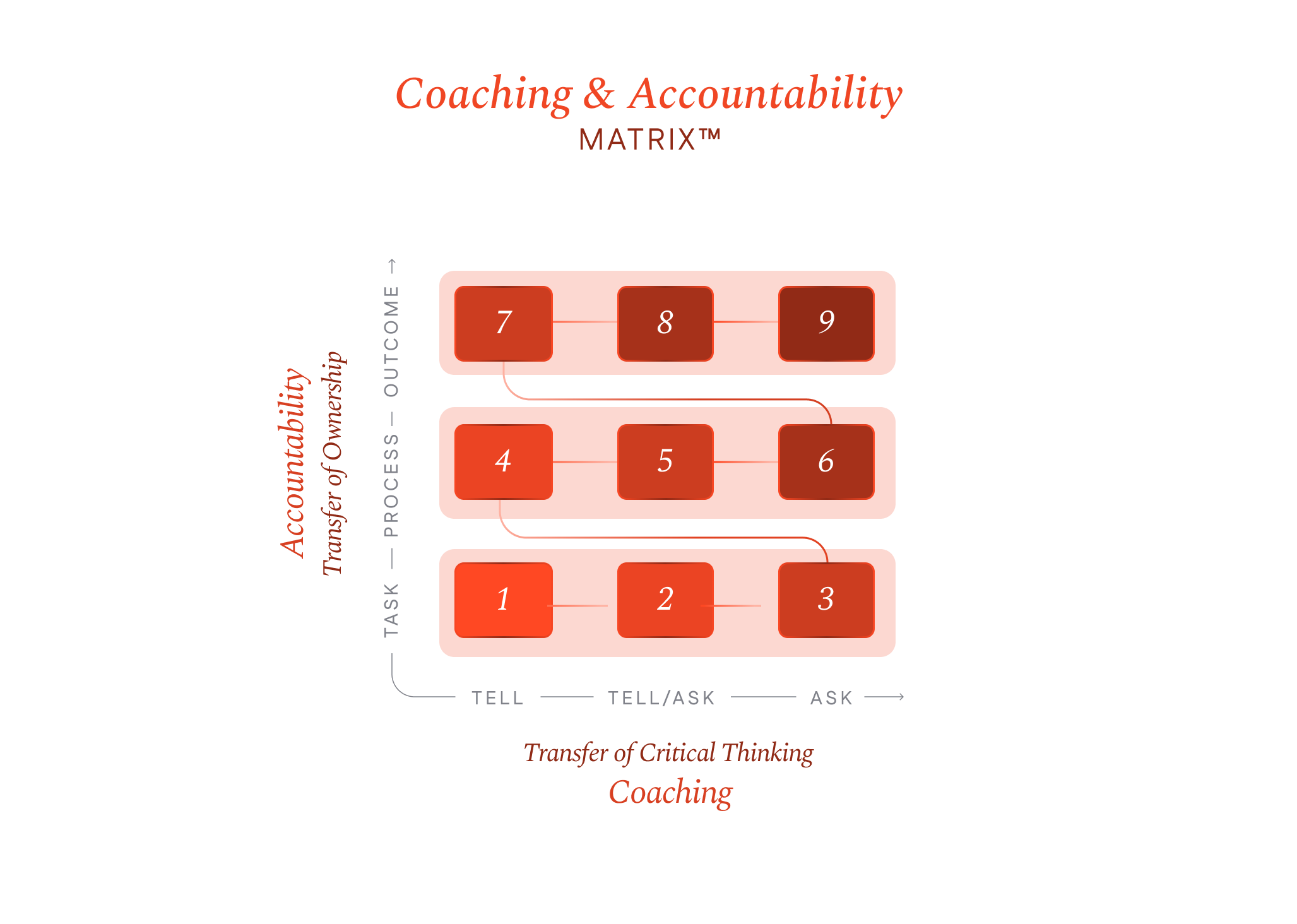
- Coaching & Accountability Matrix™ — LeaderFactor’s course for managers, and the COACHindex™ self-assessment
The B.I.G. Coaching Model was developed by Dr. Timothy R. Clark as part of the Coaching & Accountability Matrix™.
Frequently asked questions
- How do you give effective feedback?
- Name one observable behavior, state the impact it had, and give forward-looking guidance. 'You cut Priya off twice in standup. She stopped contributing for the rest of the meeting. In the next one, let people finish before you respond.' Specific, non-personal, and actionable — three qualities that vague feedback lacks.
- What is the B.I.G. feedback model?
- B.I.G. stands for Behavior, Impact, Guidance. Behavior is the specific observable action, not a trait. Impact is the effect it had on people, work, or outcomes. Guidance is what to do next time. The structure keeps feedback concrete and forward-facing rather than vague or personal, and it works for praise as well as correction.
- Should you use the feedback sandwich?
- Generally no. Wrapping criticism in praise teaches people that compliments precede bad news, which devalues the praise and buries the message. Many recipients hear only the bookends. Give positive feedback because it is deserved and specific, and give corrective feedback plainly on its own — the two do not need to share a sentence.
- How soon after should you give feedback?
- Close to the event, once you can describe the behavior without heat — usually within a day or two. Immediate feedback is most useful because the details are still shared. The exception is when you are angry: a short delay costs some precision and prevents the version that gets remembered for the tone rather than the content.