





Effective one-on-one meetings: making the 30 minutes actually count
How to run one-on-one meetings with employees that develop people instead of duplicating a status report — cadence, agenda ownership, and what belongs in the room.
An effective one-on-one meeting is a standing, private conversation between a manager and a direct report that exists to develop the person and surface what would otherwise stay hidden — not to review status. Most one-on-ones fail for a single reason: they get colonized by updates. The information is real, the meeting fills, everyone leaves feeling it was productive, and nothing happened that could not have happened in a document.
The fix is not a better template. It is deciding what the meeting is for and then defending it, week after week, against the status report that keeps trying to move back in.
What the meeting is actually for
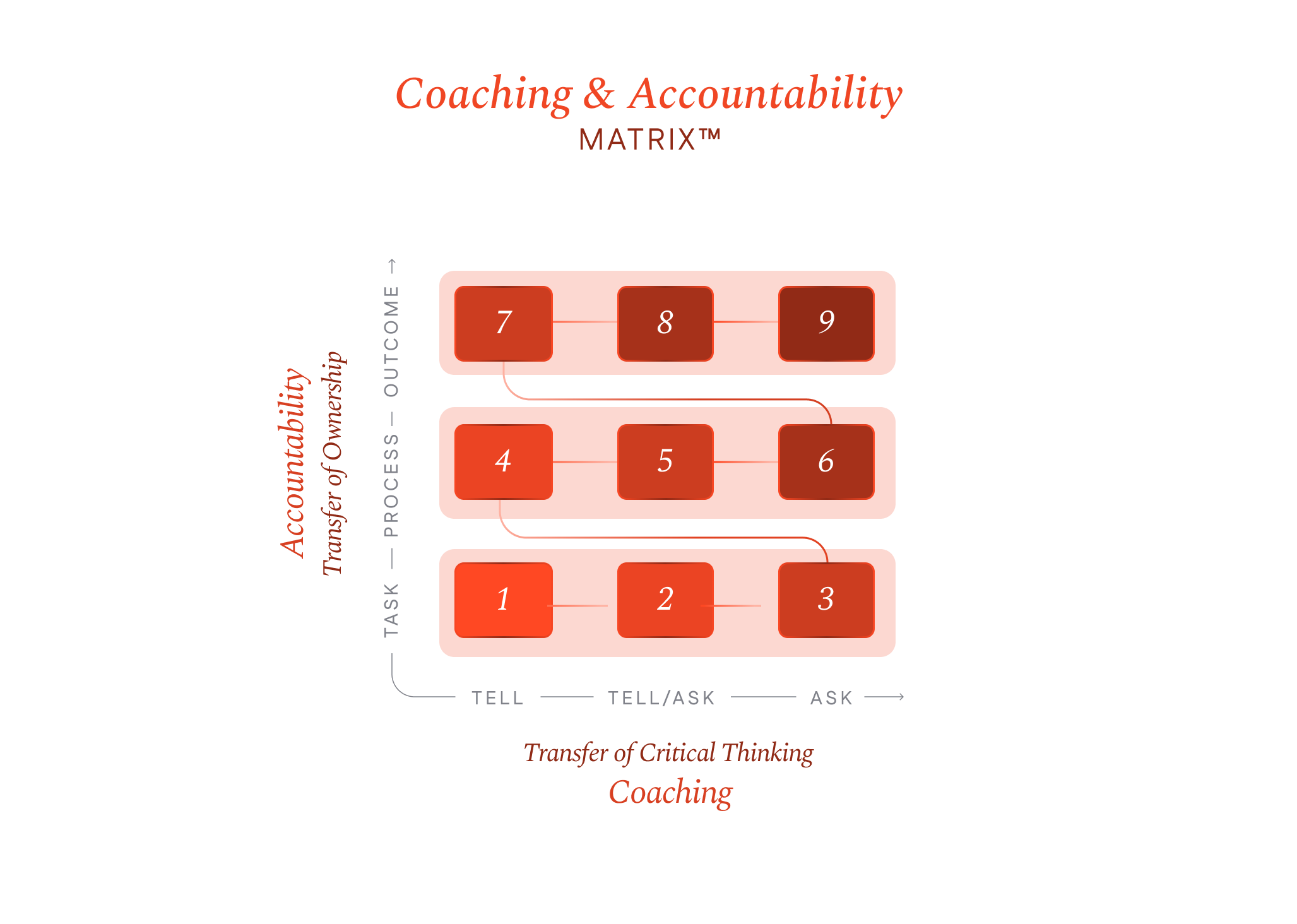
A one-on-one is the standing container for the two things a manager cannot do at scale: coaching and accountability. Everything else is a guest.
That gives you a working purpose statement: this is where we develop your thinking, agree what you own, and check what we agreed last time. Four things follow.
- Status is the enemy, not a component. Not because status doesn’t matter, but because it is infinitely expandable and always feels urgent. It will consume the entire meeting if allowed, every time.
- It is their meeting. The agenda belongs to the direct report, and you add to it. Manager-owned agendas turn into inspections, and people prepare for inspections by managing impressions.
- The good part comes late. The genuinely useful disclosure — the thing they are stuck on, the thing they are worried about — reliably arrives in the last third, after the easy material is used up. Meetings that consistently end early are not efficient; they are ending before the point.
- Follow-through is the product. What makes a one-on-one matter over months is that commitments made in it get revisited in the next one.
Cadence: how often and how long
| Situation | Suggested cadence |
|---|---|
| New to the role or the organization | Weekly, 45–60 minutes, non-negotiable |
| Established report, standard remit | Weekly, 30 minutes |
| Senior, autonomous, steady work | Biweekly, 45 minutes |
| Anyone in a stretch assignment or struggling | Weekly, and protect it hardest |
The variable that matters is not duration. It is whether it moves. A manager who reschedules the one-on-one twice in a month has communicated its priority far more clearly than any statement about caring for people’s development. If your calendar genuinely cannot support weekly thirty-minute meetings with each report, that is worth knowing — it means you have more direct reports than you can develop, which is a structural problem no meeting cadence will solve.
What belongs in the room
A workable default shape, which the direct report should be able to reorder:
- Their agenda first (10–15 min). What they brought. Where they are stuck, what they need a decision on, what they want to think out loud about.
- Your items (5–10 min). Feedback, context they are missing, anything you owe them.
- Commitments (5 min). What each of you will do before the next one, said out loud, written down.
- Development, at least monthly (5–10 min). Not career-ladder theater — one concrete capability they are building and what would move it.
Questions that consistently produce more than they cost:
- “What’s the thing you’re avoiding this week?”
- “Where are you spending time that doesn’t seem to matter?”
- “What do you think I’m wrong about?”
- “What would you do if I weren’t available for two weeks?”
- “What’s one thing that would make next week better than this one?”
The fourth is a coaching question disguised as a logistics question, and it does double duty: it surfaces dependency on you and it starts the transfer of ownership. Ask it often enough and people begin answering it before you ask.
Micro-coaching in the meeting
The one-on-one is where micro-coaching has its easiest home. When someone brings a problem, the reflex is to solve it — you have context, you have authority, and the solution takes thirty seconds. Resist it about half the time.
Instead: “What’s your read?” Then wait. Then narrow: “What happens if you’re wrong about that?” Then land it: “So what will you do?” The whole exchange takes three minutes rather than thirty seconds, and it is the difference between resolving one problem and building someone who resolves the next four alone. The question technique is the same funnel that works anywhere; the one-on-one just guarantees you a weekly opportunity to use it.
Note the “about half the time” — a manager who never answers anything directly is exhausting to work for, and there are weeks when someone needs a decision, not development.
The failure modes
- The status meeting in disguise. Symptom: you could reconstruct the entire conversation from the project tracker. Fix: move status to writing and open with “what’s on your list?”
- The meeting that gets cancelled. Symptom: it moves whenever something urgent appears. Fix: treat it as immovable for one quarter and watch what changes.
- The monologue. Symptom: you did most of the talking. Fix: count it once. Most managers materially overestimate how much of a one-on-one their report is speaking.
- The commitment black hole. Symptom: things get agreed and never mentioned again. Fix: keep a running note per person and open with the last item.
- The ambush. Symptom: significant negative feedback arrives in a one-on-one having never been raised in the moment. Fix: give the feedback when it happens; use the one-on-one for the pattern, not the first mention.
- Skipping it when things are tense. Symptom: the meeting disappears exactly when the relationship is strained. This is when it is doing the most work.
Where to go next
- Performance coaching — what to do with the time once you’ve protected it
- Coaching skills for managers — question technique, listening, and the derailers
- How to give effective feedback — the structure for the harder half of the conversation
- Accountability in the workplace — making commitments hold between meetings
- How to hold employees accountable — when the commitment keeps slipping
- Coaching & Accountability Matrix™ — LeaderFactor’s course for managers who want a system rather than a template
Frequently asked questions
- How often should you hold one-on-one meetings?
- Weekly for most direct reports, biweekly for experienced people in steady work, and weekly without exception for anyone new to a role. Consistency matters more than frequency — a predictable 30 minutes every week outperforms an hour that gets moved twice and then quietly disappears from the calendar.
- What should you talk about in a one-on-one?
- Anything that will not surface in a group setting: where they are stuck, what they are unsure about, how the work is landing, and where they want to develop. Status belongs somewhere else. If a topic could be covered in a written update, it is displacing the conversation the meeting exists for.
- How long should a one-on-one be?
- Thirty minutes weekly suits most working relationships. Sixty can be right for a new report, a complex remit, or a biweekly cadence. Shorter than twenty rarely gets past logistics, because the useful part of the conversation reliably arrives after the easy part is exhausted.
- Who should own the one-on-one agenda?
- The direct report, with the manager adding items. It is their meeting about their work and development, and having them bring the agenda is what stops it drifting into a status review. A manager-owned agenda quietly converts the meeting into an inspection, and people prepare for inspections differently than they prepare for help.