





Leadership training topics: a map, not a menu
Leadership training topics organized by the problem each one solves — the full landscape, which topics cluster into real skills, and how to choose for your team.
Leadership training topics usually arrive as a menu — twelve to seventeen items, alphabetical-ish, each with a paragraph — and menus are exactly the wrong shape for the decision buyers face. Nobody trains seventeen topics; organizations train two or three, and the useful question is which two or three for this team’s actual problem. So this page is organized as a map instead: the full topic landscape, arranged by the problem each topic exists to solve, with the clustering that turns scattered topics into coherent, trainable skills.
The map: topics by the problem they solve
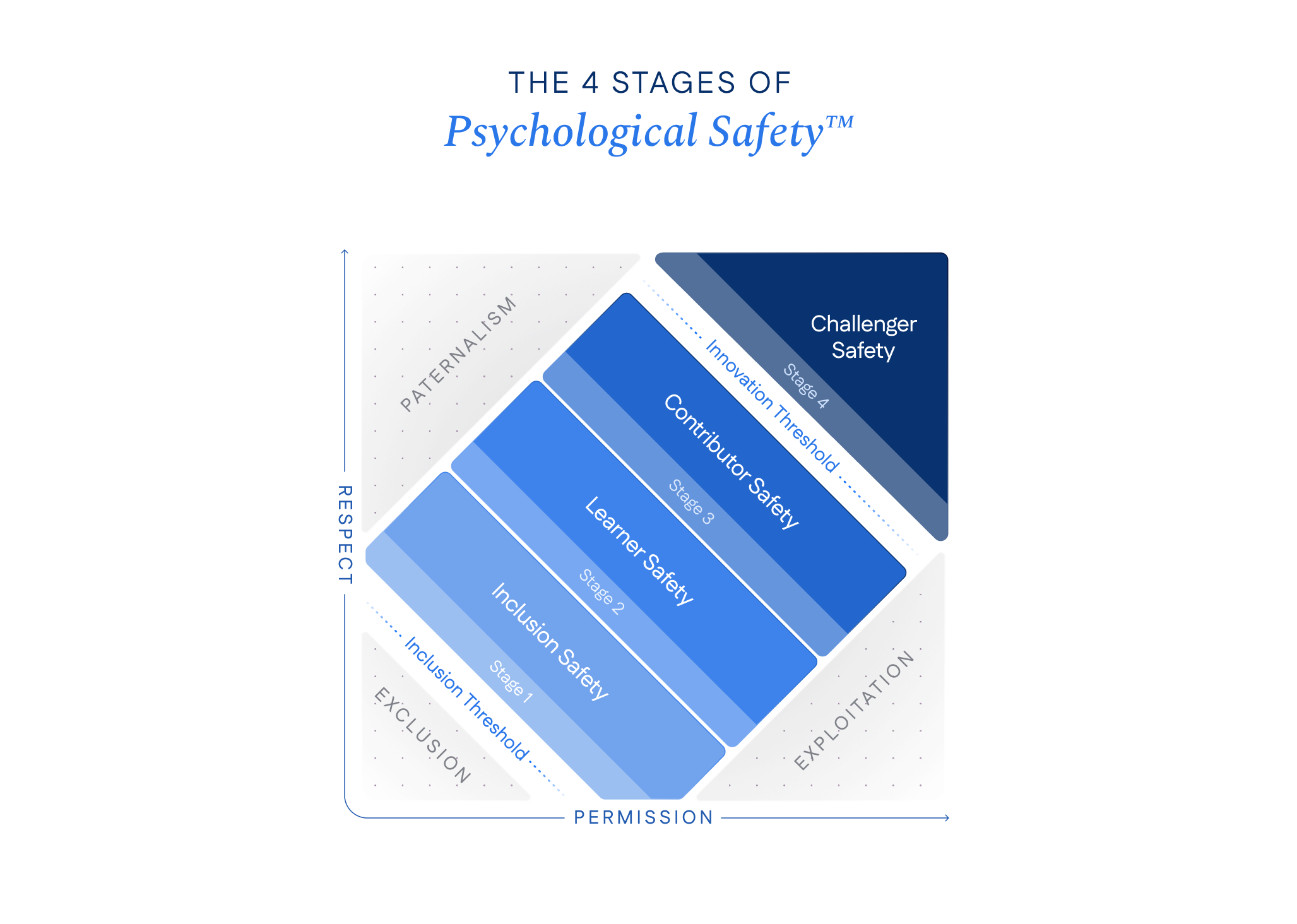
“People hold back — we hear about problems late, and meetings are quiet.” This is the psychological safety cluster: speak-up culture, trust-building, inclusive leadership, candor. It’s also the topic most other topics secretly depend on — feedback training in a team where honesty is unsafe trains a behavior no one will risk. If diagnostics point here, this cluster comes first; it’s the load-bearing floor. (The full framework: the 4 Stages.)
“Everything routes through the manager — delegation boomerangs, and nobody grows.” The coaching and accountability cluster: coaching conversations, delegation, feedback, effective 1
, performance conversations. This is the new-manager heartland, and the highest-volume training need in most organizations — covered as a discipline in coaching and accountability.“Decisions drag, reopen, or default to the loudest voice.” The decision-making cluster: critical thinking, problem-solving, cognitive bias, decision processes and rights. Often mislabeled as a communication problem; the tell is that the same decisions get made repeatedly.
“Changes launch well and die in month three.” The change cluster: change management, change leadership, buy-in, resistance. Train it before the transformation, not during the wreckage.
“Talented people, mediocre team.” The team performance cluster: collaboration, conflict, handoffs, cohesion — the team-as-system topics, distinct from individual leadership skills and frequently the actual gap when individual training hasn’t helped.
“Leaders manage well but nobody’s steering.” Strategic thinking, vision, prioritization, leadership vs. management itself as a topic. Rarer as a training need than the menu suggests; usually a senior-cohort topic.
“AI arrived and leadership hasn’t.” The newest cluster with real substance: leading through AI — workflow redesign, adoption, resistance, judgment. The one genuinely new topic of the decade.
The individual-capability layer. Emotional intelligence, communication, executive presence, resilience, time management — topics that strengthen the leader as instrument. Valuable, with a caveat the menu-vendors skip: these train best attached to one of the clusters above, where they get a context and a practice venue, rather than as freestanding self-improvement.
The misconception: topics are the unit of training
Here’s what the menu format quietly teaches, and it’s wrong: that leadership development is assembled topic by topic, a workshop per subject. Organizations run the communication workshop in March, conflict in June, feedback in September — three vendors, three vocabularies, no practice loop — and wonder why nothing compounds. Topics aren’t the unit of capability. Skills are: coherent bundles of framework, practice, and measurement, inside which the topics reinforce each other. Feedback, delegation, and 1
aren’t three topics; they’re one coaching skill, trainable as one thing with one instrument tracking whether behavior moved. That clustering is exactly how LeaderFactor packages its seven skills, and it’s the design logic worth demanding from any provider: fewer, deeper, measured — the argument made in full in corporate leadership training.Sequencing for common situations
New-manager cohorts: (structured leadership activities make good cohort openers) coaching and accountability first (the doing-to-developing transition is the job change), with feedback and 1
inside it; safety behaviors woven throughout. Senior teams: whatever the diagnostic says, plus the change cluster ahead of any major transformation on the calendar. Whole-organization programs: the safety floor first — every later topic trains better in an environment where practicing new behavior is survivable — then the cluster matching the year’s business problem, per the design sequence in how to create a leadership development program.And when the topic list is contested, let measurement referee: baseline the candidate areas with a real instrument (the assessment map covers what measures what) and train where the data says the gap is. It’s a Thursday in August at a distribution company in Reno, and the HR director is watching her carefully assembled topic survey lose to a baseline: managers voted for “strategic thinking,” the team-level instrument found the actual deficit in safety and coaching — problems strategic-thinking workshops would have decorated nicely while the silence underneath continued. The survey measured aspiration. The instrument measured the Tuesday.
Train the Tuesday. The topics will still be there when the floor is.
Frequently asked questions
- What are the main leadership training topics?
- The recurring core: psychological safety, communication, emotional intelligence, coaching and feedback, accountability, decision-making, change management, team performance, conflict, delegation, strategic thinking, and leading through AI. The list matters less than the clustering — topics train better as coherent skills than as a flat menu.
- What leadership topics should new managers learn first?
- The transition topics: delegation and coaching (the shift from doing to developing), feedback that names behavior and impact, running useful 1:1s, and creating the safety that keeps their team talking to them. New managers fail on people mechanics far more often than on strategy, so sequence accordingly.
- How do you choose leadership training topics for a team?
- Work backward from the presenting problem: silence in meetings points to psychological safety, boomeranging delegation to coaching and accountability, decisions that drag to decision-making, stalled rollouts to change management. Diagnosing before selecting beats popularity-based topic menus, and an instrument baseline beats guessing.
- What are emerging leadership training topics?
- Leading through AI is the significant new entrant — workflow redesign, adoption, and judgment as machines take the computational work. Hybrid-team leadership and resilience continue rising. The durable core hasn't changed underneath: safety, coaching, decisions, and change remain where most leadership actually succeeds or fails.