





360 leadership assessment: what it sees that you can't
A 360 leadership assessment measures how leadership is experienced, not how it's intended. How multi-rater feedback works, where it fails, and when to use it.
A 360 leadership assessment measures the thing self-assessment structurally can’t: how your leadership is actually experienced by the people living under it. Manager, peers, direct reports, and your own self-rating, collected on the same items and contrasted — the format’s whole value concentrated in one artifact, the gap between how you score yourself and how the room scores you. Search this term and you’ll find almost nothing but vendors selling their own instrument, which is understandable and unhelpful. Here’s the neutral version: how 360s work, where they genuinely fail, and how to decide whether one fits.
What the format uniquely produces
Every leader operates on a private model of their own behavior — I delegate well, I’m approachable, my door is open — and much of that model is built from information that flatters. Direct reports edit what they say upward. Peers stay diplomatic. The result isn’t dishonesty; it’s physics: power distorts the feedback field around itself, and the more senior the leader, the stronger the distortion.
The 360’s contribution is measuring through that distortion. When four direct reports independently score “asks for input before deciding” two points below the leader’s self-score, that’s not an opinion to debate; it’s a pattern that survived anonymity. The self-observer gap is the diagnosis — and, usefully, the gaps aren’t always negative. Hidden strengths (others score you higher than you score yourself) show up regularly, and knowing them matters as much as knowing the blind spots.
The design choices that decide the data quality
Raters. Real, recent exposure beats seniority or count: a manager, a few peers, and enough direct reports that no individual answer is identifiable — three is a common floor. Letting the leader hand-pick raters converts the exercise into a reference check.
Anonymity, protected visibly. Raters price the risk before they type. If the org has ever burned a rater, this 360 pays for that history, whatever the consent screen promises.
Items that name behaviors. “Communicates effectively” produces vibes. “Explains the reasoning behind decisions, not just the decision” produces something a leader can practice. Behavioral-frequency items are the standard the good instruments share (the market’s established names — CCL’s Benchmarks®, Zenger Folkman, the Leadership Practices Inventory, Leadership Circle Profile — all live in this territory, with different models underneath).
Development stakes, not promotion stakes. The same instrument produces different data under different uses. Feed development and raters tell the truth; feed promotion decisions and every score inflates toward safety. Keeping the 360 out of the personnel file isn’t softness — it’s data hygiene.
Where 360s fail, honestly
The misconception the vendor pages won’t touch: “the report is the product.” The report is the receipt. A 360 that ends at the readout reliably makes things worse than no 360 at all, because now the leader knows the room’s experience, the room knows the leader knows — and everyone watches nothing change. Feedback without development attached converts measurement into disappointment, at scale, with charts.
The fix is structural: no baseline without a practice plan, and no practice plan without a re-measure on the calendar. A 360 is one instrument family inside the broader leadership assessment landscape, and the discipline that makes any of them worth the money is the same — the second measurement is the product.
The question a 360 can’t answer
One boundary keeps this format honest: a 360 measures the leader, as experienced. It cannot measure the environment — whether the team itself is safe, cohesive, or clear — because averaging perceptions of a person is a different construct from measuring the conditions of a room. A leader can score beautifully on a 360 while their team sits in silence, and teams like that are common enough to have a name in the data.
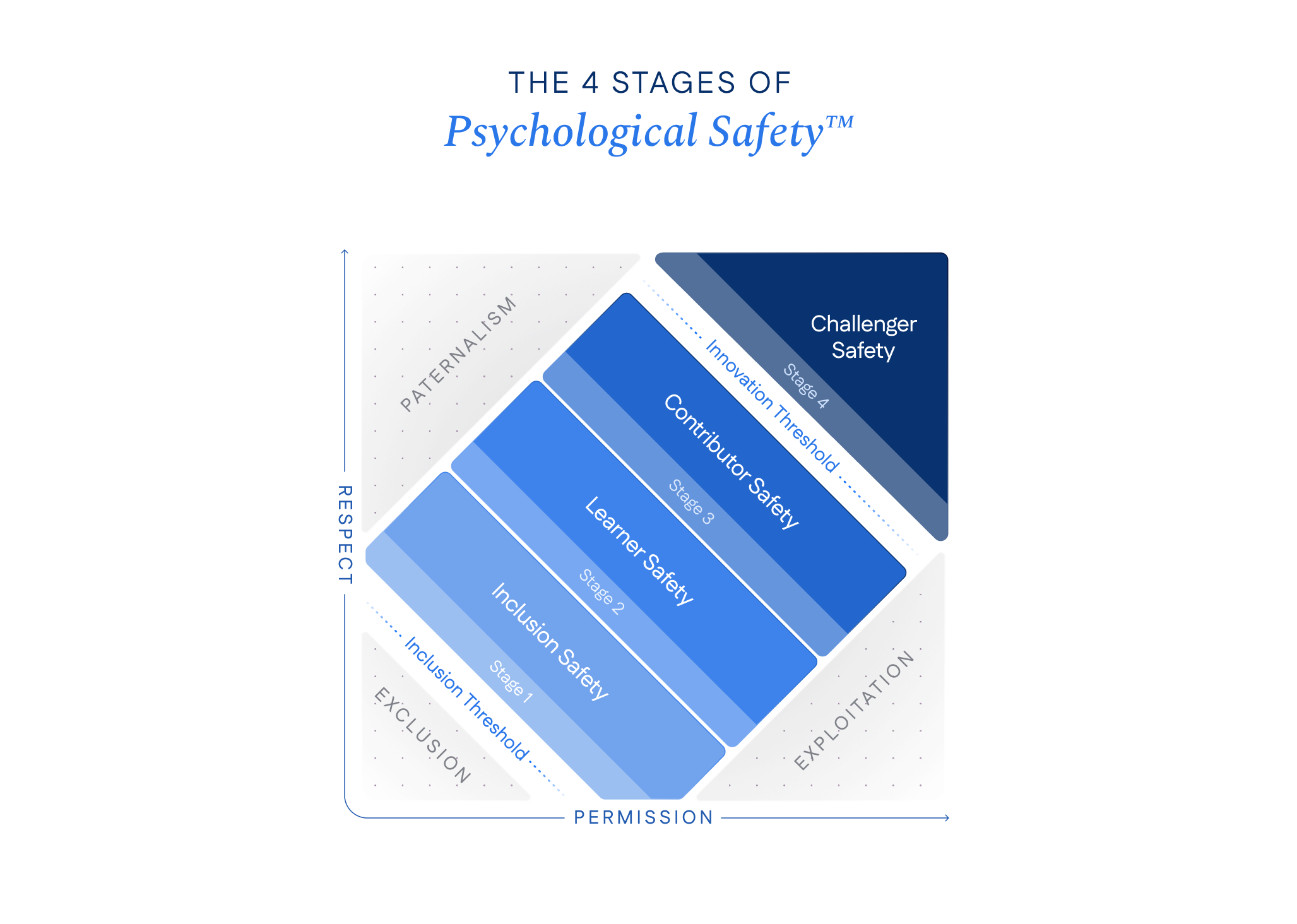
That’s the lane distinction worth knowing before you buy: LeaderFactor’s PSindex® is multi-rater but points the lens at the environment — the whole team reports its own experience of psychological safety, stage by stage — and COHESIONindex™ does the same for team cohesion. If the presenting problem is “how does this leader come across?”, a 360 is the right family. If it’s “why does this team hold back?”, instrument the room, not the reputation.
It’s a Thursday in February at a logistics software company in Columbus, and an engineering director is staring at the two-point gap between her self-score and her reports’ scores on “safe to bring me bad news.” She’d have bet her review on that item. Eight weeks later, after the coaching plan the 360 actually existed for — asking for the risk in every status meeting, thanking the first messenger publicly — the re-measure moves half a point, and the pipeline gets its first genuinely early warning in a year. The 360 didn’t do that. It just made the gap undeniable enough to work on.
Which is the whole case for the format, stated plainly: use a 360 when self-perception is the bottleneck, design it for candor, and treat the report as the start of a 90-day practice, not the deliverable. Then re-measure — the gap you close is the only score that matters.
Frequently asked questions
- What is a 360 leadership assessment?
- A 360 leadership assessment collects structured feedback about a leader from the full circle around them — manager, peers, direct reports, and the leader's own self-rating — and contrasts the views. Its distinctive output is the gap between self-perception and others' experience, which is data no self-assessment can produce.
- Who should give feedback in a 360 assessment?
- People with real, recent exposure to the leader's behavior: their manager, a handful of peers, and enough direct reports that individual answers stay anonymous — three is a common minimum. Rater selection matters more than rater count; a dozen distant observers add noise, not insight.
- What is the difference between a 360 assessment and a performance review?
- A performance review evaluates results against goals and feeds compensation and advancement. A 360 measures how a person's leadership is experienced, and it works best feeding development. Blending them backfires: the moment raters believe their answers affect someone's pay, candor gives way to diplomacy.
- What are the weaknesses of 360 feedback?
- Rater fatigue, politics when anonymity is doubted, scores without context, and the biggest one: feedback with no development attached. A 360 that ends at the report reliably makes things worse, because the leader now knows how people experience them and the organization visibly does nothing with it.