





Leadership assessment: the honest map of what measures what
Leadership assessment types compared honestly — self, 360, personality, team-level — which instruments measure what, and how to choose one worth acting on.
A leadership assessment is a structured instrument for measuring how someone leads — their behaviors, their capabilities, or the environment their leadership produces. Simple enough, except the market sells wildly different things under that one label: rigorous multi-rater instruments, personality quizzes with the psychometric weight of a horoscope, simulations, style sorters, and team diagnostics. Most guides respond with a neutral catalog, which is polite and useless, because the catalog question isn’t which tools exist. It’s what each family actually measures, which ones deserve trust, and which fits the decision you’re trying to make. That’s this page.
The five families, and the question each answers
Self-insight assessments ask the leader about the leader. Fast, cheap, and genuinely useful for surfacing patterns worth examining — with the built-in limit that they measure self-perception, and self-perception is exactly what needs auditing. Best as a development starting point, never as a verdict.
360 / multi-rater feedback asks the people around the leader: manager, peers, direct reports. This family answers the question self-assessment can’t — how is this leadership actually experienced? — and the gap between self-scores and observer-scores is routinely the most useful data it produces. Covered in depth in 360 leadership assessment.
Personality and trait inventories (Hogan, CliftonStrengths, DiSC, MBTI) measure durable dispositions. Here the validity range is widest: Hogan publishes serious psychometric evidence; MBTI and DiSC are popular, memorable, and treated by most of the research community as conversation starters rather than measurements. Useful for self-awareness vocabulary; risky as decision inputs.
Cognitive and situational-judgment tests measure reasoning and judgment under scenario conditions — strongest in selection contexts, where their validity evidence is comparatively good, and least common in development.
Team-level instruments measure the environment a leader produces rather than the leader directly: the team’s experience of safety, cohesion, or clarity. This family is the least cataloged and, for development purposes, often the most honest — because leadership is ultimately a property of what happens in the room, not of the person’s profile.
The validity question, answered plainly
The misconception that makes this market confusing: “an assessment is an assessment — they’re all measuring something.” They’re all producing scores, which is different. Underneath the label sit instruments with published construct evidence, instruments with none, and a large middle that substitutes scale for science: “built on two million assessments” is a database-size claim, not a validity claim, and vendors lean on it because most buyers don’t ask the follow-up.
The replacement discipline costs three questions. What exactly does this measure — behaviors, traits, perceptions, or environment? How was it constructed and scored? And what evidence, beyond the vendor’s adjectives, supports it? Instruments with good answers survive those questions comfortably. Instruments without them are still sometimes worth using — a well-designed self-assessment can start a valuable conversation — but you should know which kind you’re holding before a score shapes anyone’s career.
One more distinction does heavy lifting: development versus selection. Under development stakes, people answer honestly; under promotion stakes, they answer carefully. The same 360 that produces candid, useful data as a growth tool produces diplomacy the moment raters believe it feeds a decision. Choose the use before the tool, and hold selection uses to a much higher evidentiary bar.
What LeaderFactor measures, skill by skill
Every LeaderFactor skill carries its own instrument, built on one shared philosophy: measure observable behavior or lived experience, baseline before development, and re-measure after practice in real work — so the score’s job is proving whether behavior changed, not decorating a report.
| Instrument | What it measures | Format |
|---|---|---|
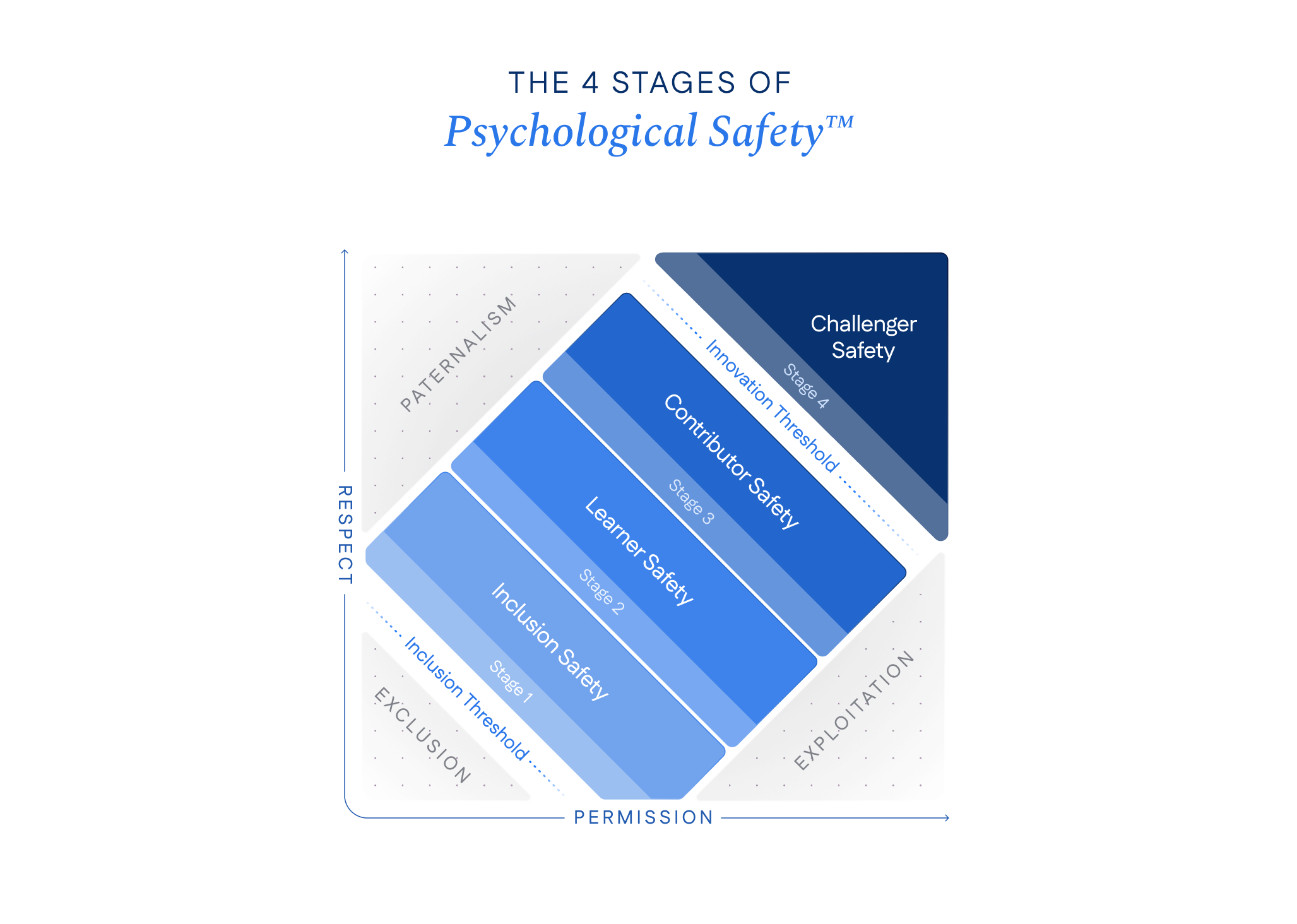
| PSindex® | Psychological safety across the 4 Stages | Multi-rater, whole team |
| EQindex® | The 6 Domains of Emotional Intelligence™ | Individual |
| COACHindex™ | A manager’s coaching patterns | Self-assessment |
| EPICindex™ | Change-leader credibility, five gauges | Individual |
| DECIDERindex™ | Decision behaviors across 7 steps | Self-assessment |
| COHESIONindex™ | Four dimensions of team cohesion | Team-level |
| AI Leadership Index | AI leadership behaviors, five disciplines | Self-assessment, pre/post |
PSindex® — the team’s experience of psychological safety. Multi-rater by design: every team member answers, so the score reflects the team, not one person’s impression of the team, read stage by stage across the 4 Stages. It’s LeaderFactor’s validated instrument and the anchor of the set — baseline before the first workshop, re-measure at day 90. Deeper treatment: psychological safety assessment and measuring psychological safety.
EQindex® — emotional intelligence, mapped to the 6 Domains. Profiles a leader against the 6 Domains of Emotional Intelligence™, so development targets specific domains rather than “be more emotionally intelligent.” Companion reading: measuring emotional intelligence.
COACHindex™ — how a manager actually coaches. The manager’s coaching self-assessment: where they sit on the Coaching Box, which steps of the coaching conversation they skip. A development diagnostic rather than a psychometric instrument — its value is the conversation it starts with yourself, and the Coaching & Accountability practice it aims.
EPICindex™ — the credibility people read before they follow. Measures a change leader across five gauges: character, competence, commitment, care, and capacity — the variables that decide whether people take the risk of following, applied to a live change in the Change Management skill.
DECIDERindex™ — decision behavior, step by step. Profiles how frequently a leader actually performs the behaviors of each of the 7 steps of the DECIDER™ model, which usually surfaces one or two habitually skipped steps. That personal baseline is where decision-making skill building starts.
COHESIONindex™ — the team, measured as a team. Agreement-scale items answered by the whole team across social, task, identity, and commitment cohesion — so leaders see the gap between how the team believes it’s doing and what members actually experience. The system it feeds is covered in Team Performance.
AI Leadership Index — a baseline for leading through AI. A self-assessment taken before and re-taken after the AI Leadership skill, measuring behavior frequency across the five disciplines — so you measure the shift, not the attendance.
Choosing without the vendor’s help
Match the family to the question. If the question is “how do I come across?”, you want multi-rater. If it’s “why does my team hold back?”, no individual assessment will tell you; that’s a team-level question and a team-level instrument. If it’s “who should we promote?”, slow down and demand real validity evidence, because that use carries the highest stakes and attracts the weakest tools.
It’s a Monday in October at a medical-products company in Salt Lake City, and the VP of people is auditing the assessment shelf her predecessor left: four personality tools, three vendors, six figures of annual spend, and not one instrument that measures anything her leadership problems are made of. Her teams go quiet in reviews; her assessments profile individual traits. The realization that reorganizes her budget isn’t about any tool’s quality. It’s that every instrument she owns asks about the leader, and her actual problem lives in the room.
Start where she ended up: name the question first, pick the family second, the instrument last — and whatever you choose, schedule the re-measure before you schedule the baseline. An assessment that’s never repeated is a souvenir. The second measurement is the one that tells you whether anything you did between them worked.
Frequently asked questions
- What is a leadership assessment?
- A leadership assessment is a structured instrument that measures how a person leads: their behaviors, capabilities, style, or the environment their leadership creates. The families differ by rater — self-assessments capture self-perception, multi-rater tools capture how others experience the leader, and team-level instruments measure the conditions the team actually works in.
- What are the different types of leadership assessments?
- Five families cover the market: self-insight assessments, 360 or multi-rater feedback, personality and trait inventories, cognitive and situational-judgment tests, and team-level instruments that measure the environment rather than the individual. Each answers a different question, which is why choosing by type matters more than choosing by brand.
- Are leadership assessments scientifically valid?
- Some are, and the range is enormous. A few instruments publish real psychometric evidence; many popular tools are better understood as conversation starters than measurements, and vendor claims often cite database size rather than validity. Before trusting any score, ask what the instrument measures, how it was constructed, and what evidence supports it.
- Should leadership assessments be used for development or selection?
- Development, primarily. The same instrument behaves differently under stakes: raters answer honestly when the output feeds growth and diplomatically when it feeds promotion decisions. Selection use demands stronger validity evidence and legal care. Most organizations get the most value using assessment to target development and measure whether it worked.
- How often should leaders be assessed?
- On a rhythm tied to development, not the calendar alone: a baseline before development starts, a re-measure after a defined practice window, commonly around 90 days, then periodic checks. A single assessment is a snapshot; the second measurement is where the value lives, because it shows whether anything actually changed.