





Leadership development goals that survive the quarter
Leadership development goals worth setting: behavioral, witness-verifiable, attached to a practice loop — with examples by category and the SMART caveat.
Leadership development goals fail at a rate that would embarrass any other goal category, and the failure is built in at the moment of writing: most are trait aspirations (“become a more strategic leader”) that no calendar can schedule and no witness can verify. The lists published on this topic — eight goals, nineteen goals, twenty SMART goals — mostly reproduce the problem at scale. What actually works is narrower and more demanding: goals stated as behaviors, attached to a practice loop, verified by someone other than the goal-setter. Here’s how to write those, with examples worth stealing.
The one test every goal must pass
Could a colleague, told your goal, say next Friday whether they saw it happen? That single test sorts the entire genre. “Improve my executive presence” fails — there’s nothing to see on Friday. “In leadership meetings, state my position in under two minutes and then ask for pushback” passes, schedulable and witnessable. The test works because it forces the translation that trait goals skip: from the leader you want to be described as, to the things that leader does, in rooms you’re already in.
SMART framing — the near-universal canon on this topic — is compatible with the test and no substitute for it. SMART disciplines a goal’s edges (specific, measurable, time-bound); it cannot supply behavioral content. “Increase my strategic thinking 20% by Q3” is fully SMART and completely unverifiable. Run the witness test first, then let SMART tidy the result.
Example goals, by category
Stealable and adaptable — each one behavioral, venue-attached, witness-verifiable:
- Coaching: For the next 90 days, open every 1 with a question about the person before any work topic, and ask “what have you considered?” before offering solutions to problems reports bring me. (The discipline: coaching and accountability.)
- Feedback: Deliver one piece of specific behavior-impact feedback each week — praise or correction — using the B.I.G. structure, tracked in a Friday note.
- Decision-making: For every significant decision this quarter, write the criteria before reviewing options, and document who decided and why. (Why this sequencing matters: cognitive bias in decision making.)
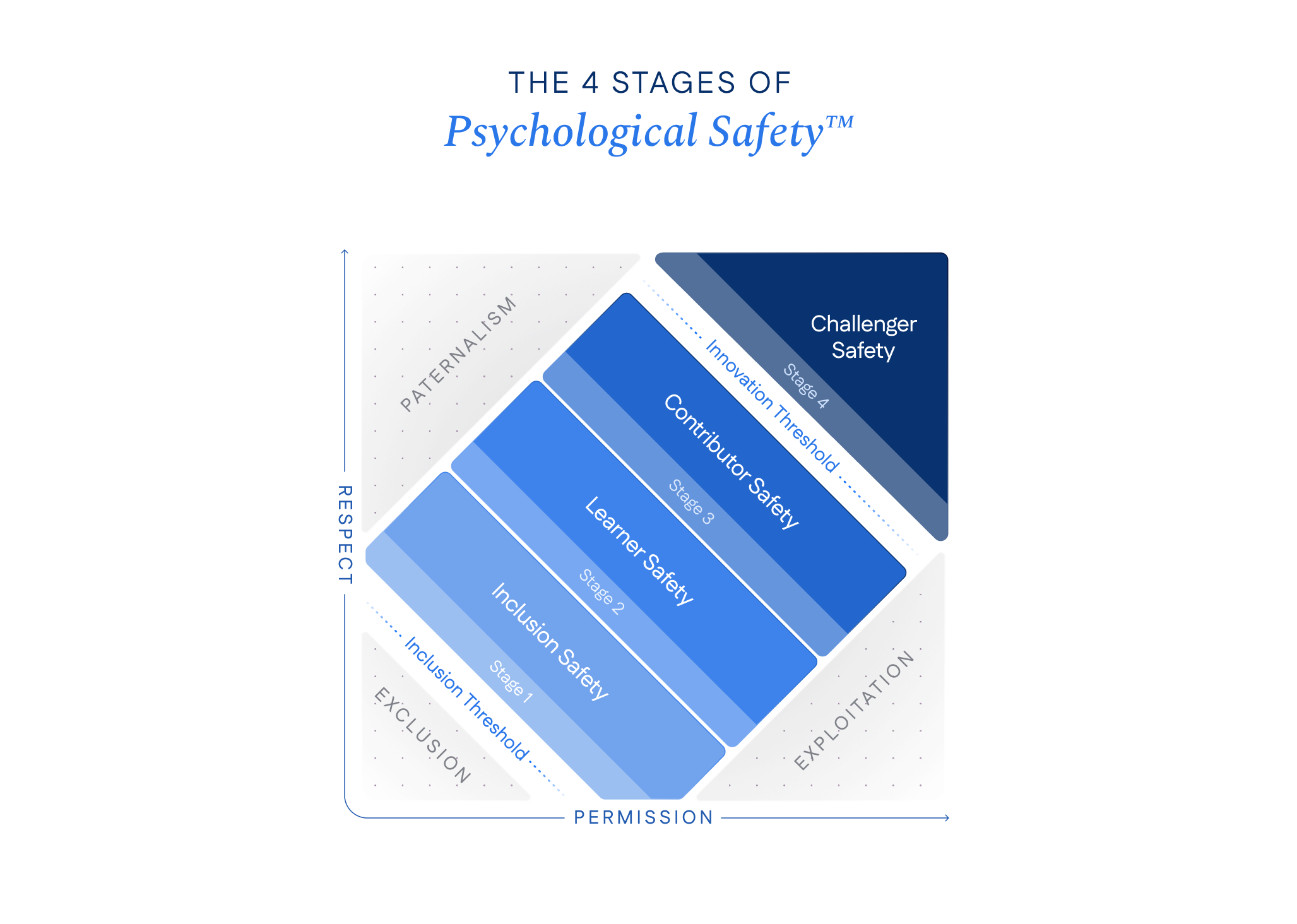
- Psychological safety: Respond to every piece of bad news by thanking the messenger before evaluating the content, and ask the quietest person in each meeting for their view before senior voices settle it. (The highest-leverage category on this list — the 4 Stages explains why.)
- Change leadership: Before announcing any change, have three affected people shape it and sign on visibly. (The coalition mechanics: getting employee buy-in for change.)
- Delegation: Move one direct report from task-level to process-level ownership this quarter, explicitly, with the raised autonomy named in a real conversation.
Notice the absence of a “communication” goal stated as communication: every goal above is one, resolved into its behavioral cash value — which is the only form in which communication improves.
The part every goal list omits: the loop
Here’s the misconception the genre installs: set the goal well and progress follows. Goal-setting research is routinely cited as if writing the goal were the intervention. It isn’t; for behavior, the intervention is the practice loop the goal sits inside — a named venue where reps happen, a witness who reports how they land, a weekly self-check, and a dated verdict. A perfectly written goal without the loop is a January gym membership. A mediocre goal inside a real loop outperforms it every time.
The loop also answers “how many goals”: one or two, because attention is the scarce input. And it answers “how long”: ninety days per cycle, long enough for behavior to become visible to others, short enough to stay honest — with the verdict verified by the witnesses, or, where the stakes justify it, by an instrument re-measure (the assessment families map what can baseline what). The full container for cycles like this is a leadership development plan; a mechanism-sorted menu of standing goals lives in leadership best practices; the method underneath is covered in how to develop leadership skills.
It’s a Friday in July at a credit union in Spokane, and a branch operations VP is closing out the least ambitious goal of her career: one behavior, ninety days — ask before advising, every 1
. Her January version had been grander: five development goals across four competencies, professionally formatted, abandoned by March as always. This one had a notebook, two lieutenants told to catch her advising early, and a day-90 check where all six reports confirmed, unprompted, that something had changed in how she runs the room. Her next goal starts Monday. It’s also one line — and her strongest report just asked for help writing one of her own, which is how these things actually spread.Write yours today, one line, Friday-testable. Then build the loop, because the loop is the goal.
Frequently asked questions
- What are good leadership development goals?
- Goals stated as observable behaviors with a practice venue attached: ask a genuine question before giving a view in every 1:1, state decision criteria aloud before deciding, deliver one piece of specific feedback weekly. The test is whether a colleague could verify the goal happened — trait goals fail it.
- What are examples of SMART leadership goals?
- SMART works when the measurable part is behavior: 'For Q2, respond to every piece of bad news by thanking the messenger before evaluating, tracked weekly, verified by my team at day 90.' Specific behavior, measurable frequency, a real deadline. SMART fails when it dresses vague traits in acronym clothing.
- How many leadership development goals should you set?
- One or two at a time. Behaviors form through repetition under attention, and attention doesn't parallelize well — five simultaneous goals produce five shallow efforts. Leaders who cycle through goals sequentially, ninety days each, build more in a year than goal-portfolio leaders build in three.
- How do you measure leadership development goals?
- By witness and instrument, not self-report. Tell the people around you what you're practicing and ask them to tell you when it lands; where stakes justify it, baseline with an assessment and re-measure at the goal's deadline. Self-assessed progress on leadership goals is reliably the most inflated data in any organization.