





Strategic thinking: the capability under the plans
Strategic thinking defined and made practicable: the four moves it consists of, what blocks it in organizations, and how leaders build it as a discipline.
Strategic thinking is the leadership capability everyone requests and almost no one specifies — the feedback “be more strategic” ranks among the most common and least actionable sentences in performance reviews. The vagueness is fixable, because strategic thinking decomposes into observable moves the way any thinking discipline does. Defined honestly: strategic thinking is the ongoing capability to see beyond the immediate — reading the landscape, generating real options, weighing trade-offs against long-term position, and converting all of it into choices. Four moves. Here they are as practice, along with what actually blocks them.
Strategic thinking decomposes into four moves
Zooming out. The perceptual move: from this quarter’s fire to the system it’s burning in — market shifts, competitor logic, second-order effects, the question behind the question. It looks like a talent and works like a habit: leaders who think strategically schedule altitude (a standing hour against a real question beats any offsite), and they ask the zoom-out questions out loud — “what’s changing around this problem?” “if we do nothing for two years, what happens?” — until the team asks them too.
Generating genuine options. Strategy dies fastest at the option stage, where the first workable answer forecloses the search. The strategic thinker’s discipline is the diverge-before-converge move: at least three real options on the table — including the uncomfortable one and the do-nothing baseline — before evaluation opens. More options mean better choices, and the research on how rarely managers generate even two is humbling.
Weighing trade-offs explicitly. The move that separates strategic thought from strategic vocabulary: every real strategy costs something, and strategic thinkers write the cost down — what we’re declining, what we’re risking, who bears it. A recommendation without named trade-offs hasn’t been thought strategically yet; it’s been preferred. This is where criteria discipline does its work, and where bias does its damage unchecked.
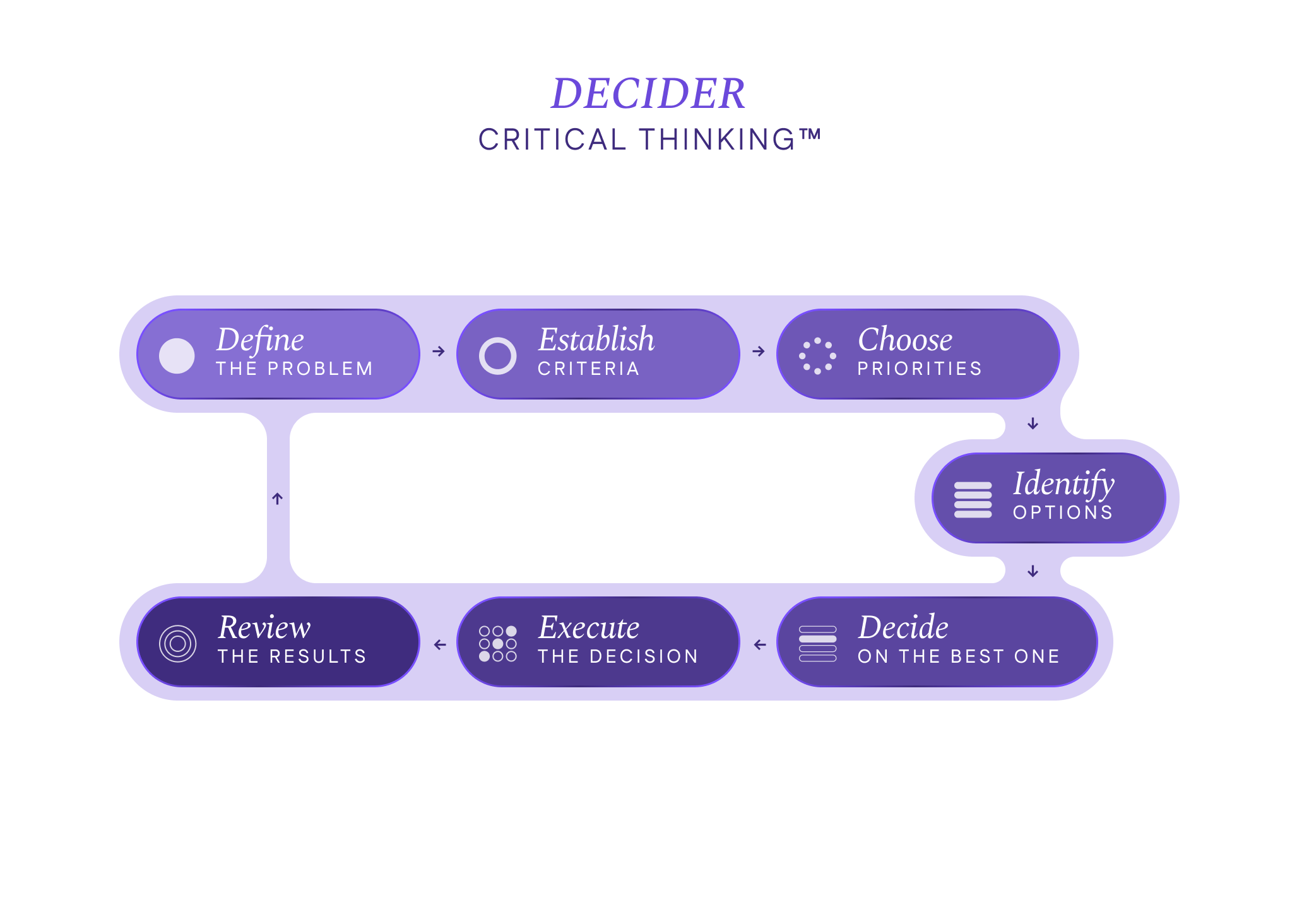
Converting to choice. Analysis that never lands is commentary. The closing move is a genuine call — documented, owned, with review conditions named — which is why strategic thinking, traced to its end, is a decision discipline: the same sequence, run at higher altitude and longer horizon.
What actually blocks it
The misconception embedded in “be more strategic” feedback: that strategic thinking is a mental gift some leaders lack. Audit real organizations and the blockers are mostly structural. The calendar: operational load consumes every zoom-out hour, and a leader with no altitude time doesn’t lack the capability — they lack the venue (organizational leaders who escape escalation traps recover it first). The option reflex: urgency culture rewards the first workable answer; the second option reads as delay. And the candor conditions: strategic thinking feeds on dissent — the market signal someone junior noticed, the flaw in the current direction someone hesitates to name — and an environment where challenging the strategy costs standing starves its leaders of exactly the inputs altitude requires. Plenty of “unstrategic” leadership teams are actually well-defended ones.
Building it deliberately
The capability trains like any other, with reps matched to the moves: a protected weekly altitude hour with a named question and a written output; the three-options rule imposed on your next significant call; trade-offs drafted before any recommendation leaves your desk; and — the compounding rep — a quarterly review of past strategic calls scored on process, not outcome luck. For teams, add the structural fixes: option generation assigned as work, dissent explicitly priced down, and the planning ritual fed by year-round thinking instead of substituting for it.
It’s a Monday in March at a packaging distributor in Reno, and a newly promoted general manager is running the first rep of a practice her mentor assigned when she confessed she’d been called “operationally excellent but not strategic”: Monday, 7–8 a.m., one question, one page. This week’s question — which of our top ten accounts would leave if a competitor built X? — produces an uncomfortable page: three would, and the reason isn’t price. By June, the Monday pages have generated the option her planning process never would have (a service tier nobody asked for yet), the trade-offs are written, and the board call lands. “When did you get strategic?” the CEO asks, mostly joking. Mondays, she doesn’t say. It was always just Mondays.
Schedule yours. The capability was never the missing part — the hour was.
Frequently asked questions
- What is strategic thinking?
- Strategic thinking is the ongoing capability to see beyond the immediate: reading the wider landscape, generating genuine options, weighing trade-offs against long-term position, and converting the analysis into choices. It's a standing discipline of perception and decision, distinct from the periodic ritual of strategic planning.
- How is strategic thinking different from strategic planning?
- Thinking is continuous; planning is periodic. Strategic thinking reads the landscape and generates options all year; strategic planning is the scheduled process that converts that thinking into committed direction and resources. Organizations with planning but no thinking produce documents; the reverse produces insight that never lands.
- How do you improve strategic thinking skills?
- Practice the four moves deliberately: schedule zoom-out time against real questions, force multiple options before committing to any, write trade-offs explicitly, and review past strategic calls on process rather than luck. The capability builds like any other — through structured reps on live material, not through reading about strategy.
- Why do capable leaders struggle with strategic thinking?
- Usually structurally, not intellectually: operational load consumes the zoom-out time, first-workable-option bias forecloses alternatives, and environments where challenging current direction feels risky starve leaders of the dissent strategic thinking feeds on. Fix the calendar, the option discipline, and the candor conditions before doubting the person.