





Decision-making styles: know your default, then outgrow it
The four decision making styles — directive, analytical, conceptual, behavioral — what each gets right, where each fails, and why style is a default, not a destiny.
Decision-making styles describe how you decide when nobody’s making you decide differently — your default pattern under time pressure, ambiguity, and load. The dominant taxonomy, decision style theory from Alan Rowe and James Boulgarides, maps four styles across two dimensions: how much ambiguity you tolerate, and whether you orient toward tasks or people. Knowing your style is genuinely useful. Believing it explains you is where the usefulness stops, and this page covers both halves.
The four styles
Directive. Low ambiguity tolerance, task-oriented. Directive deciders want the short version, decide fast, and value action over analysis. At their best they’re the reason anything ships. Their failure mode: running one-way-door decisions at two-way-door speed, and mistaking the first workable option for the best available one.
Analytical. High ambiguity tolerance, task-oriented. Analytical deciders are comfortable in complexity and want the data — all of it. At their best they catch what everyone else missed. Their failure mode: treating information-gathering as progress, so decisions ripen past their sell-by date. A good decision made too late is a bad decision, and analytical cultures make that trade daily without noticing.
Conceptual. High ambiguity tolerance, people-oriented. Conceptual deciders think in futures and options, and they’re the natural diverge-phase talent: more options mean better choices, and they generate them. Their failure mode is convergence — the call keeps not quite getting made, because another possibility just occurred to them.
Behavioral. Low ambiguity tolerance, people-oriented. Behavioral deciders read the room and optimize for acceptance, which matters, since execution runs on commitment. Their failure mode: mistaking comfort for correctness, and softening the decision until everyone can live with something nobody believes in.
Two honest footnotes on the taxonomy itself. Competing maps exist — you’ll meet a five-profile version, and an academic set that adds avoidant and spontaneous patterns — and they carve the same territory differently. And every style description flatters slightly by making your flaw sound like an excess of a virtue. Read your own with suspicion.
Style explains; it doesn’t excuse
Here’s the misconception the whole genre invites: “I’m just a directive decision-maker — that’s my style.” Style-as-identity turns a default into a license, and defaults are exactly the thing good deciders learn to override. Your style is where your decisions start. It doesn’t get a vote on where they end, because the fix for every style’s blind spot is the same: a sequence that forces the steps your default skips.
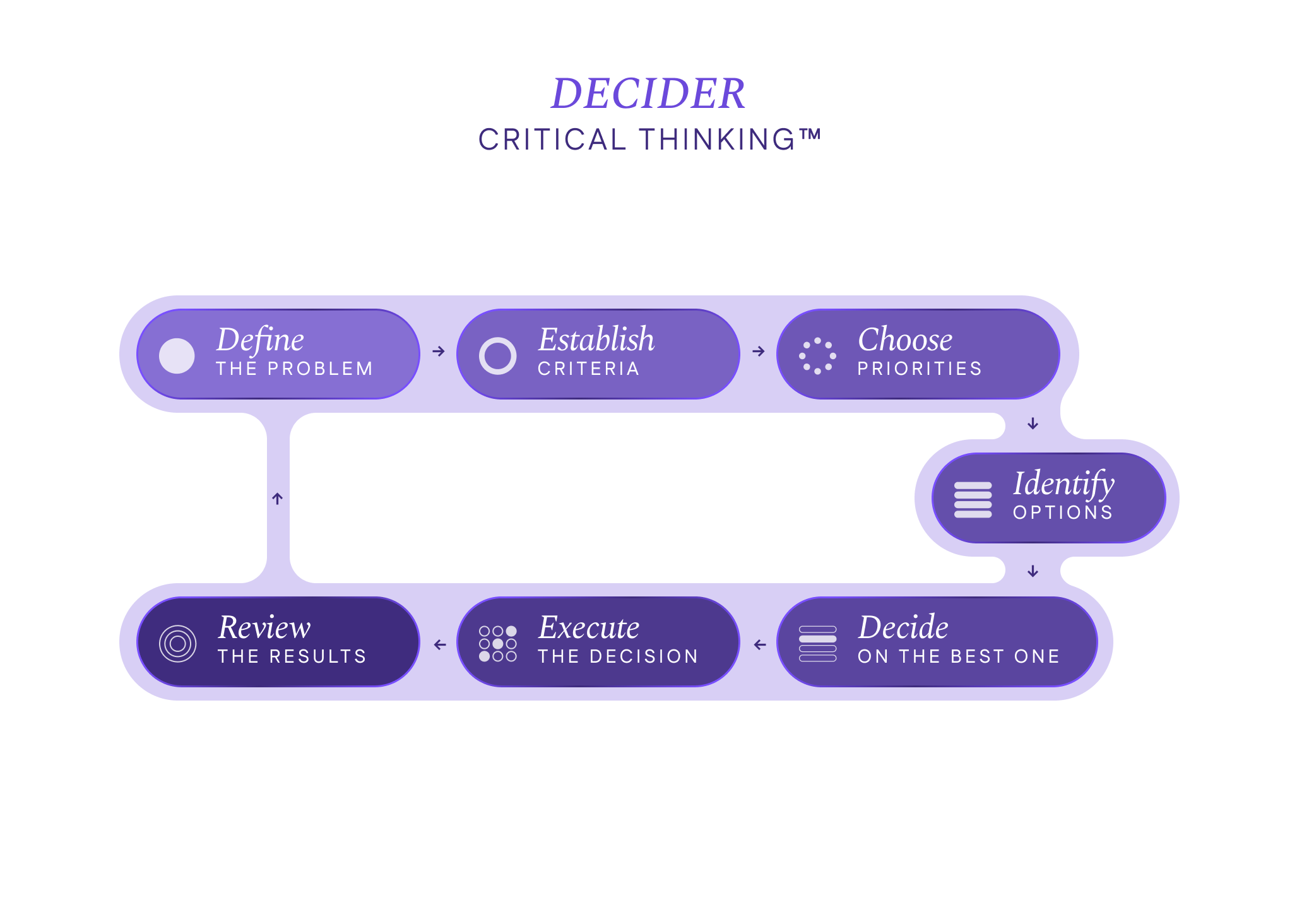
That’s the replacement idea, and it’s mechanical, not aspirational. A shared process is style-agnostic by design — the directive leader’s speed gets channeled into two-way doors, the analytical leader gets criteria and a deadline instead of an open-ended search, the conceptual leader’s options feed a scoring step that actually converges, and the behavioral leader gets a decision-rights model so consensus is a choice rather than a reflex. The steps are walked in the decision-making process; LeaderFactor’s DECIDER™ model is the version teams install, and the DECIDERindex™ gives each leader a baseline of which steps their style actually performs versus skips.
When styles collide
The under-written chapter of this topic is what happens between styles, because most real decisions are made by rooms, not individuals. An analytical CFO and a directive COO aren’t disagreeing about the decision; they’re disagreeing about what deciding is, and until someone names that, the meeting is two languages without a translator. The directive reads the analytical as stalling. The analytical reads the directive as reckless. The behavioral leader tries to make everyone comfortable, which both of them read as not deciding.
It’s a Tuesday in May at a medical-device company outside Minneapolis, and the quality director (analytical, twenty years deep) has asked for a fourth round of supplier data while the operations VP (directive to the bone) has already mentally signed the contract. The DECIDER™ sequence is what breaks the stalemate, not because either changes style, but because the argument relocates: instead of “more data” versus “decide now,” it’s a fight about criteria weights, on paper, which is a fight that can actually end. The styles didn’t converge. The process gave them one place to disagree.
For rooms that decide together regularly, style awareness plus explicit decision rights — who holds the call, who’s giving input — removes most of the friction; the models are covered in team decision making.
What to do with yours
Name your default out loud to the people you decide with; it’s the cheapest calibration available, and it converts your blind spot from a private flaw into a shared checklist item. Then practice the one step your style skips: alternatives if you’re directive, deadlines if you’re analytical, scoring if you’re conceptual, and the plain sentence “here’s my call” if you’re behavioral. The Critical Thinking skill builds that practice on live decisions, and decision-making skills breaks each capability into behaviors. Your style got you here. Your process is what gets the next decision made well.
Frequently asked questions
- What are the four decision-making styles?
- The most-used taxonomy, from Rowe and Boulgarides' decision style theory, names four: directive (fast, structured, low ambiguity tolerance), analytical (data-hungry, high ambiguity tolerance), conceptual (big-picture, option-generating, socially oriented), and behavioral (consensus-seeking, people-first). Each is a default pattern, not a fixed identity.
- How do I know my decision-making style?
- Look at your behavior under time pressure, when defaults take over. Do you decide fast with the information at hand (directive), keep requesting more data (analytical), generate one more creative option (conceptual), or check how everyone feels first (behavioral)? Your last three rushed decisions describe your style better than any quiz.
- Which decision-making style is best?
- None of them. Each style is an asset in the situation it evolved for and a liability outside it: directive speed becomes recklessness on irreversible calls, analytical rigor becomes paralysis on cheap reversible ones. Skilled deciders keep their default but run a consistent process that compensates for its blind spots.
- Can your decision-making style change?
- The default rarely disappears, but its grip loosens with awareness and process. Leaders who baseline their patterns, then deliberately practice the steps their style skips — an analytical leader setting decision deadlines, a directive leader forcing one extra alternative — behave differently within a quarter, even though the underlying preference remains.