





Why leadership development matters: the mechanism, not the stats
Why is leadership development important? Because organizations reflect their leaders — the causal chain from leader behavior to business results, argued honestly.
Why is leadership development important? The genre answers with statistics — engagement deltas, retention percentages, revenue correlations — stacked like sandbags in front of a budget request. The stats are mostly directionally fine and rhetorically weak, because they skip the part a skeptical CFO actually needs: the mechanism. Why would training leaders move those numbers at all? Absent the causal chain, leadership development sounds like an act of organizational self-care. With it, the case makes itself, and it also explains — usefully — why so many programs fail to deliver what the statistics promised.
The mechanism: leaders set the price of everything
Here is the causal chain, link by link. An organization’s results come from what its people do. What people do — beyond the minimum — is voluntary: the early warning, the extra iteration, the honest objection, the discretionary care. And the volume of that voluntary behavior is set, more than by any other factor, by how leaders behave, because leaders control the local price of everything that matters: the price of admitting a mistake, of bringing bad news, of trying something that might fail, of telling the boss the plan won’t work.
A leader who punishes the first messenger has raised the price of early warnings; the team pays by going quiet, and the organization pays months later, at compound interest, when the problem surfaces on its own schedule. A manager who answers every question has priced thinking at zero and dependence accordingly; the team routes everything through one desk. None of this appears on a dashboard as “leadership deficit.” It appears as attrition, slow decisions, stalled change, and silence — line items with other names. Organizations don’t outperform their leaders; they reflect them, and the reflection compounds. That’s the whole argument for development: leader behavior is the multiplier position, so behavior change there pays everywhere it touches.
Following one link end to end
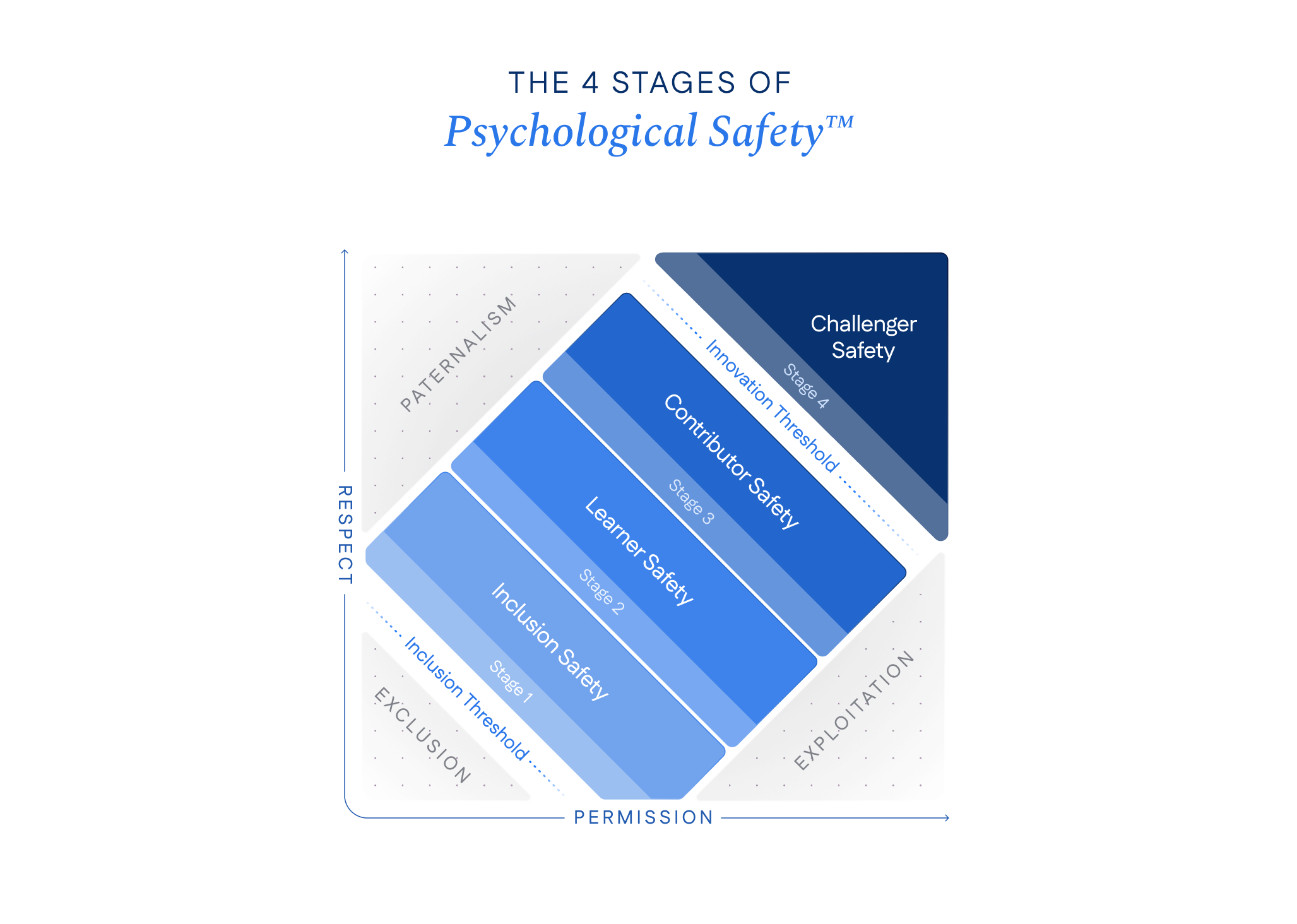
Take the mechanism through a single concrete chain. Trained behavior: responding to bad news by thanking the messenger before evaluating the content — a coachable, practicable act (psychological safety work, at the learner-safety stage). Immediate effect: the price of reporting problems drops. Team-level effect: problems surface days or weeks earlier, while they’re cheap. Business-level effect: fewer late-stage failures, faster cycle times, and — because people stay where they can speak — retention. That’s what “engagement correlates with leadership” looks like with the hood open, and every serious development outcome has a chain like it: coaching behaviors → ownership transfers → managers stop being bottlenecks; decision discipline → decisions stay decided; credibility behaviors → change survives month three.
The chains are also why the absence of development is expensive rather than neutral: untrained leadership isn’t a vacuum, it’s a default — and the default settings (tell rather than ask, evaluate rather than thank, announce rather than enlist) run the prices in the wrong direction on their own.
The same mechanism explains the failures
Here’s what the benefits-listicle version of this topic can’t do: explain why leadership development so often doesn’t work. The mechanism can. If results come from changed leader behavior, then development that doesn’t change behavior can’t produce results — however good the content, however high the completion rate. Programs fail when they train knowledge (consumed, quizzed, certificated) and leave Tuesday untouched; they succeed when they run the loop that behavior change actually requires: named behaviors, practice on the leader’s real team, reinforcement past the launch, and an instrument that baselines and re-measures so everyone can see whether the behavior moved. The design details live in how to create a leadership development program and the buyer’s version in corporate leadership training — but the principle fits in a sentence: fund behavior change, not content exposure, because only one of them is connected to the chain.
It’s a Tuesday in September at a food distributor in Toledo, and the CFO who has rejected three leadership-development proposals in four years is approving one. The difference isn’t the deck — it’s smaller and plainer than its predecessors. It names five behaviors for eleven operations managers, ties each to a cost he already tracks (late problem discovery, decision rework, the two-year supervisor turnover cycle), baselines in October, and re-measures in January against numbers he’ll recognize. “The other proposals asked me to believe in leadership,” he tells the HR director, signing. “This one showed me the wiring.”
Show the wiring. That’s the answer to why leadership development is important, and to why it earns its budget only when it’s built to move the wires: because the leader is the multiplier, the behaviors are the mechanism, and everything else the statistics promise is downstream. Start where the chain starts — with which behaviors, for which leaders, measured how — and the importance question answers itself.
Frequently asked questions
- Why is leadership development important?
- Because leader behavior is the multiplier on everything else an organization does: it sets whether problems surface early, whether decisions hold, whether change survives its rollout, and whether talented people stay and grow. Organizations don't outperform their leaders over time — they reflect them, at compounding rates.
- What are the benefits of leadership development?
- The mechanism-level benefits: teams that speak up sooner, managers who develop people instead of bottlenecking work, decisions that stay decided, changes that reach adoption, and leaders promoted from within rather than hired blind. Each traces to specific trained behaviors, which is why serious programs name and measure them.
- Why do leadership development programs fail?
- Mostly by training knowledge instead of behavior: content is consumed, completions are counted, and nothing about anyone's Tuesday changes. Programs succeed when they run the full loop — named behaviors, practice in real work, reinforcement, and a baseline-to-re-measure instrument that makes results checkable.
- Is leadership development worth the investment?
- When it's built to change behavior, yes — the leader is the highest-leverage variable in team performance, and small behavioral shifts compound across everyone a leader touches. When it's built to deliver content, the honest answer is usually no, which is why the design question matters more than the budget question.