





Managing employee resistance to AI: it's not resistance
Employee resistance to AI is usually rational self-protection, and sometimes grief. What your most capable people are actually weighing, and what unlocks them.
Managing employee resistance to AI starts with a diagnostic correction: most of what gets labeled resistance is rational self-protection, working exactly as designed. Your people are weighing what AI adoption might cost them — competence on display during a clumsy learning curve, standing if the tool makes them look replaceable, blame if they trust an output that turns out wrong — and concluding, often correctly, that the safest move is quiet minimal compliance. You can’t manage that as a persuasion problem, because nobody is unpersuaded. They’re unprotected.
What the resistance is made of
Pull apart the behavior and you find distinct materials, each needing different work:
Exposure risk. Learning AI means being publicly bad at something for a while, and adults with reputations avoid public beginnerhood with professional-grade skill. This is the cheapest layer to fix and the most commonly ignored: the question is simply whether people can be bad at this without being punished — in LeaderFactor’s terms, whether learner safety extends to AI specifically, where competence anxiety runs hottest.
Verification risk. People are being asked to sign their names to output they didn’t produce and can’t always check. An employee who distrusts fluent-but-unverified output isn’t a laggard; they’re doing quality control on a system that occasionally invents things confidently. Their skepticism is an asset with bad PR.
The adoption paradox. The people closest to the work have the most to gain and the most hesitation. Expertise is exactly what the model approximates, so your strongest performers face the sharpest version of the trade — which is why “our best people are the most resistant” isn’t a paradox at all. It’s the pattern.
Identity. And underneath the others, for your veterans especially: who am I here, if a machine drafts what I was valued for drafting? That is not resistance. That is grief — for a professional self that took twenty years to build — and it’s the layer no pressure campaign, dashboard, or lunch-and-learn has ever reached.
The misconception: resist harder back
The standard playbook treats resistance as friction to overcome: more communication about the why, more training, more dashboard visibility, champions to evangelize the holdouts. Some of that helps at the margins. But notice the frame — it treats the employee’s assessment as an error to be corrected, and then applies pressure. Pressure works on compliance, and compliance is what you’ll get: attended trainings, performed logins, unchanged work. Speed without safety produces surface compliance, and adoption and compliance look the same from a dashboard, so the pressure campaign even reports as success while the actual capability sits unused.
The replacement frame: resistance tracks perceived risk, and leaders control most of the risk. Change what the adoption costs, and the resistance re-prices itself.
The moves that re-price the risk
- Go first, badly. The single highest-leverage act available to a leader: use the tool on real work, in front of people, including the part where it fails you and you catch it. A leader’s survivable fumble licenses everyone’s learning curve. Polished demos do the opposite; they raise the bar for what beginnerhood is allowed to look like.
- Answer the identity question before it’s asked. For each role: here’s what AI changes, here’s what stays irreducibly yours, here’s what your judgment becomes worth. If you can’t fill in those blanks, that’s your homework, not theirs — the own-augment-automate audit in upskilling your workforce for AI produces the answers.
- Involve, don’t install. People defend workflows done to them and improve workflows designed with them. Redesign sessions where the skeptics hold the marker convert more resistance than any champion program, partly because the skeptics are usually right about several things.
- Build the verification step into the workflow. Formalize “human checks X before it ships” and you’ve turned a private anxiety into a designed role — one that honors exactly the expertise your veterans feared was being discarded.
- Have the one-to-one, as inquiry. The conversation the research says nobody scripts: name what you observe, without the prosecution (“you’ve kept the old process running alongside the new one — walk me through what the tool would have to prove”). Then listen for which material you’re actually dealing with: exposure, verification, or identity. They sound identical from a distance and need entirely different responses up close.
It’s a Wednesday in February at a specialty publisher in Nashville, and the editorial director finally has the conversation she’d been avoiding with her most senior editor — nineteen years of house style in his head, and three months of finding reasons the AI-assisted workflow wasn’t ready. She’d planned reassurance and metrics. She gets ten seconds of silence and then the actual sentence: “If the machine does the first pass, what exactly am I for?” The re-onboarding that follows makes him the designer of the verification standard the whole team now works to — the person who decides what good looks like, which was always the irreplaceable part. His resistance didn’t need managing. It needed the real question answered.
Where this fits
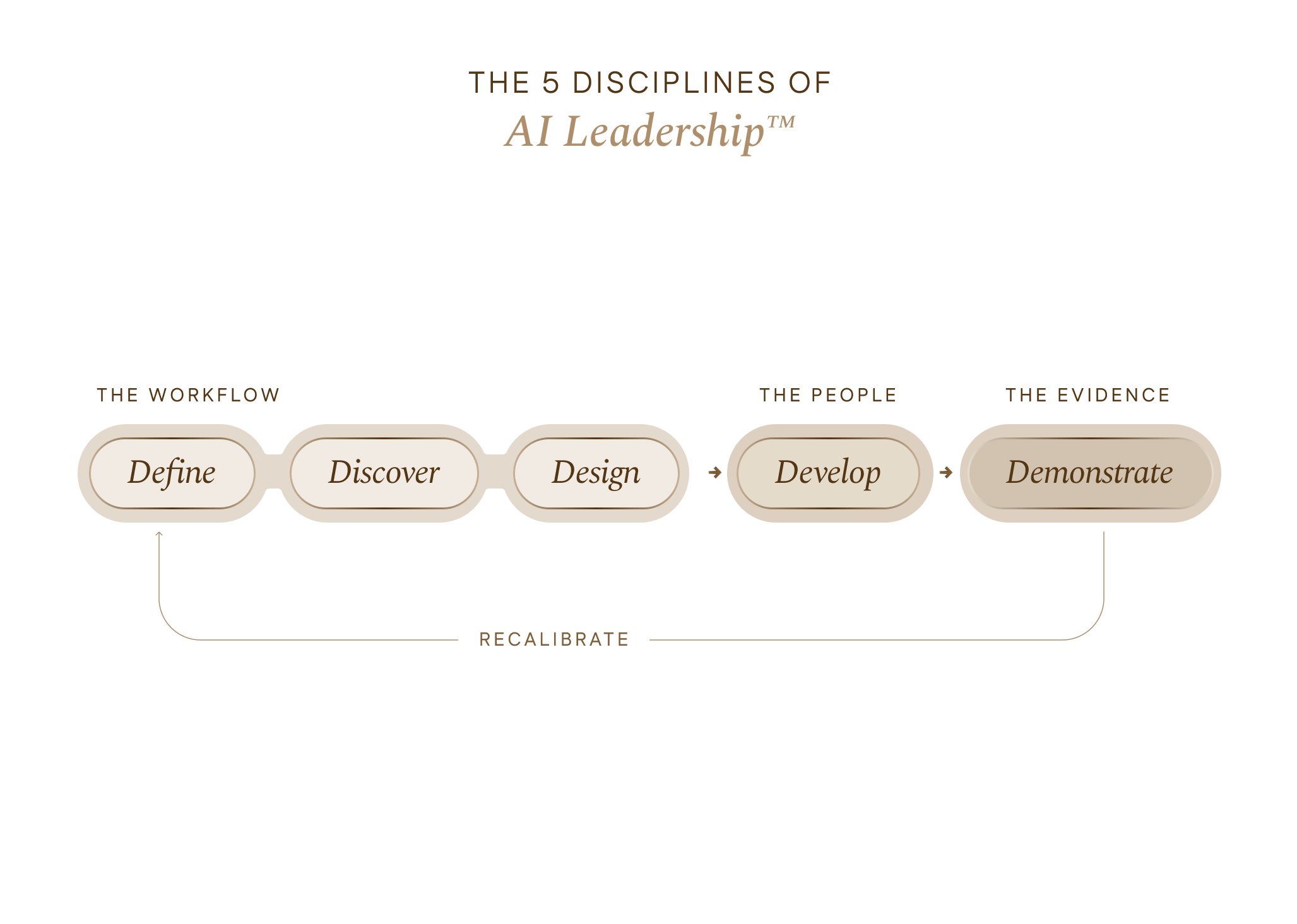
Resistance work is one front of the larger adoption discipline: AI adoption in the workplace covers the system-level view, AI change management the organizational mechanics, and AI leadership the full operating discipline they serve. The AI Leadership skill trains leaders through it on their own workflows and teams.
Start with your most respected resister — not your loudest one — and trade the persuasion campaign for one honest conversation about risk and role. The rest of the team is watching what happens to them, and that observation will do more of your change management than the deck will.
Frequently asked questions
- Why do employees resist AI?
- For rational reasons, mostly: fear that fumbling with new tools will make them look incompetent, uncertainty about what happens to their role, distrust of AI output they can't verify, and — for experts especially — a genuine identity threat when a model approximates the skill they built a career on. Information campaigns don't reach any of those.
- How do you overcome employee resistance to AI?
- Make the risk rational instead of arguing people out of it: make public learning safe, involve people in redesigning their own workflows rather than mandating tools onto them, name honestly what changes about each role and what stays human, and let a respected early adopter's survivable fumbles do the persuading.
- Is resistance to AI a generational or skills issue?
- Rarely. The strongest resistance often comes from the most capable people, not the least — their expertise is what the model approximates, and their competence is what's on display while they learn. Treating resistance as a deficiency to be trained away misses that it tracks perceived risk, which leaders can actually change.
- What should a manager say to an employee resisting AI?
- Less persuasion, more inquiry. Name what you observe without judgment, ask what the tool would have to prove for them to trust it with a real task, and answer the unasked question honestly: here's what your role becomes, and here's what stays yours. One safe conversation moves more than a quarter of reminders.