





Leadership and teamwork: the leader builds the between
How leadership produces teamwork: the behaviors that build coordination between people — connection design, decision clarity, candor pricing, handoff repair.
Leadership and teamwork usually get discussed as parallel virtues — be a good leader, foster good teamwork — which hides the actual relationship: teamwork is a product, and leadership is its main production process. Teamwork is coordinated behavior between people, and the “between” is precisely the territory individuals can’t fix on their own: no team member, however cooperative, can supply clear decision rights, owned handoffs, or a safe price on speaking up. Those are leadership outputs. This page is the leader’s-side view: the behaviors that build the between, one condition at a time. (The training-program version of this territory lives in teamwork training; this is the day-to-day craft.)
Work the between, not the roster
The instinctive response to weak teamwork is roster management — coach the individuals, replace the difficult one, hire the collaborative one. Sometimes right, usually premature, because most teamwork failure lives in the connections: the decision nobody knew they owned, the handoff both sides assumed the other had, the concern someone priced as unsayable. Leaders improve teamwork fastest by auditing the between — trace the last three collaboration failures to their exact joint, and you’ll usually find the same joint twice — and redesigning it explicitly: this decision is yours, this handoff confirms in writing, this meeting hears juniors first.
The conditions worth auditing, in rough order of leverage:
- Decision clarity. Ambiguous decision rights convert every significant call into a negotiation about who’s negotiating. One sentence per recurring decision — who holds it, what input means — removes the friction that gets misdiagnosed as personality conflict.
- Handoff ownership. Work leaks in the handoffs; the system view treats them as the team’s real architecture. The leader’s job is making each joint owned, explicit, and repaired when it fails — publicly and blamelessly, so the repair teaches.
- The price of candor. Coordination runs on early information, and early information flows at the rate the leader’s responses allow. Thanking the messenger, receiving challenge with curiosity, treating “I’m behind” as data rather than confession — these responses are teamwork infrastructure, laid one reaction at a time.
- What gets rewarded. Teams read the recognition pattern precisely: praise only the closer and you’ve priced the assist at zero. Leaders who name the unblocking, the handoff caught, the credit shared — out loud, specifically — are programming the cooperation they keep requesting.
The leader’s own behavior is a broadcast
The participation question — should leaders model teamwork or direct it? — resolves by layer: direct the structure (the conditions above don’t emerge; they’re decided), model the behavior, because the team’s cooperative norms calibrate to the leader’s visible conduct. A leader who asks for help publicly licenses asking; one who admits “I got that wrong” cheapens error-admission for everyone; one who runs solo heroics — however brilliantly — teaches heroics, and then wonders why the team won’t pass the ball. The broadcast is always on; the only choice is the content.
It’s a Tuesday in May at a custom-fabrication shop in Wichita, and the production manager is doing the audit her mentor suggested instead of the personnel change she’d planned: tracing the quarter’s five worst collaboration failures to their joints. The verdict embarrasses her slightly: four of five trace to one joint — engineering-to-floor drawing handoffs, unowned since a retirement eight months ago — and the fifth to a scheduling decision two people each believed the other held. Nobody on her “problem roster” appears twice. The fixes take a week: one named handoff owner with a confirmation step, one sentence of decision clarity, and — her own rep — a public thank-you to the welder who’d flagged the drawing problem months ago and been waved off. The quarter’s teamwork scores improve without a single roster move, which is the finding she carries forward: the team was never the problem; the between was.
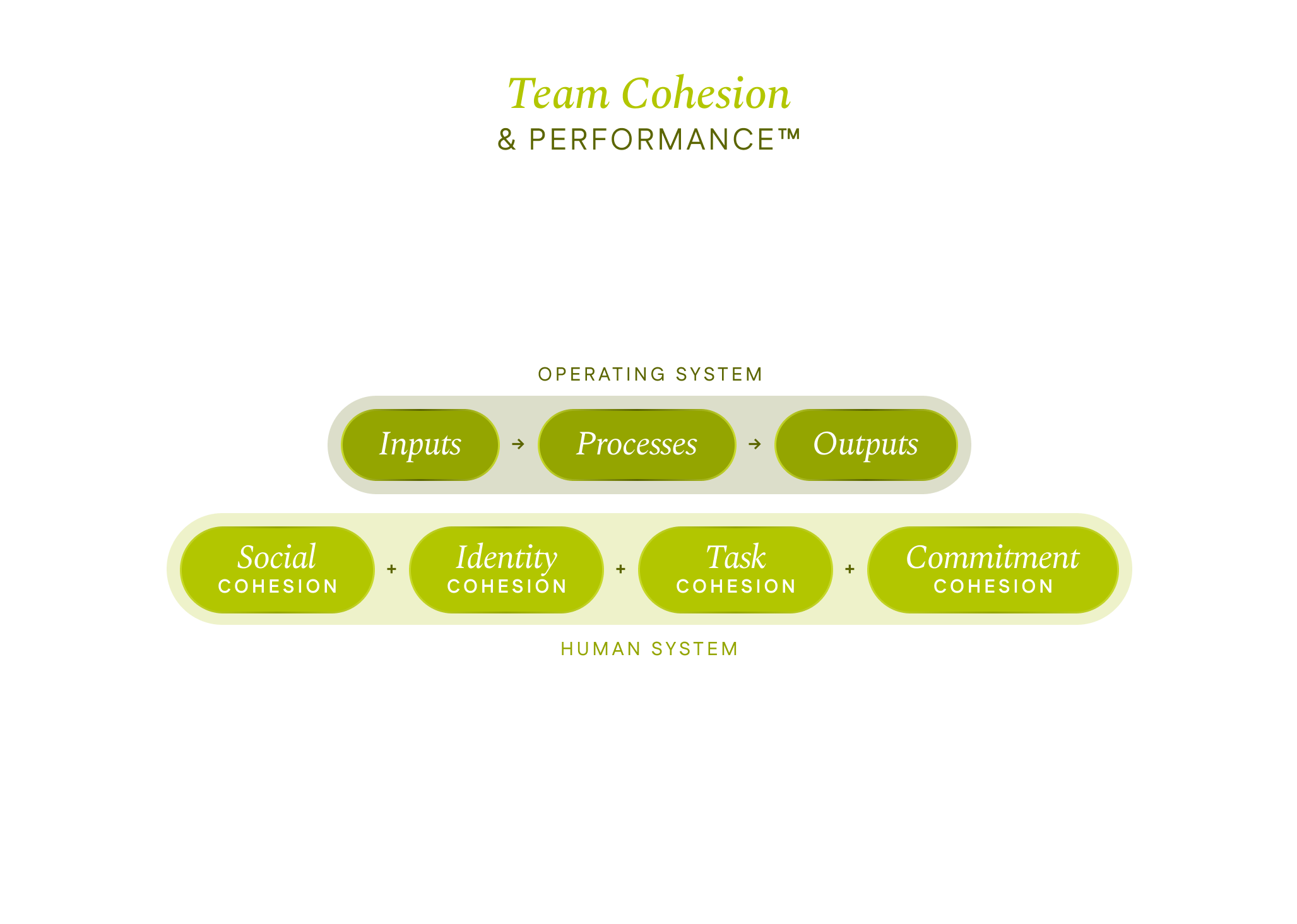
Run the same audit this week — three failures, traced to joints — and fix the joint that repeats. The team-level instrument will tell you what moved; the Team Performance discipline carries the full system. The roster can wait. It usually could have all along.
Frequently asked questions
- How does leadership affect teamwork?
- Decisively, and mostly indirectly: teamwork is coordinated behavior between people, and leaders set the conditions coordination runs on — whether decisions are clear, handoffs owned, problems safe to surface, and cooperation rewarded over solo heroics. Teams reflect those conditions faster than any values statement.
- What can a leader do to improve teamwork?
- Work the between, not the individuals: clarify who decides what, repair the handoffs where work leaks, make surfacing problems visibly cheap, and reward the assist as loudly as the score. Teamwork improves when the connections between people improve — which is the part only the leader can redesign.
- Why do teams of good individual performers work together badly?
- Because coordination is a system property no individual can supply: unclear decision rights, unowned handoffs, and expensive candor defeat any roster. Leaders who respond by upgrading individuals miss the diagnosis — the gaps are between the people, where hiring can't reach.
- Should leaders participate in teamwork or direct it?
- Both, by moment: direct where structure is missing (decisions, handoffs, priorities), participate where modeling matters — asking for help publicly, admitting error, crediting others. A leader's own cooperative behavior licenses the team's; their heroics license everyone's heroics instead.