





Transformational leadership, minus the mythology
Transformational leadership from Burns and Bass to practice: the four I's, what the research supports, the charisma trap, and the behaviors that actually train.
Transformational leadership carries more mythology than any other model in the field — it has become shorthand for the visionary on the stage, the charismatic founder, the leader as lightning bolt. The actual theory is better and humbler than its reputation. James MacGregor Burns introduced it in 1978 as a contrast: transactional leaders motivate through exchange (reward for performance), while transforming leaders raise followers’ motivation by engaging purpose and developing capability. Bernard Bass built it into an organizational model in 1985, specified its components, and — with Bruce Avolio — gave it the MLQ, the instrument most of its research runs on. Strip the stage lighting and what remains is a set of describable, trainable behaviors. That version is the useful one.
The four I’s, as behaviors
Idealized influence — the leader is a credible model: visibly consistent between stated values and actual decisions, willing to absorb cost for principle, trusted enough that people extend benefit of the doubt. It’s earned in small observable acts, which is why it deserves its own page; the summary is that people follow what you do at cost, not what you say at podiums.
Inspirational motivation — work gets connected to meaning and challenge: a future articulated concretely enough that people can locate their own contribution in it, and standards framed as worthy rather than merely required. The behavioral core is translation — strategy into “here’s why your part matters” — done repeatedly, not annually.
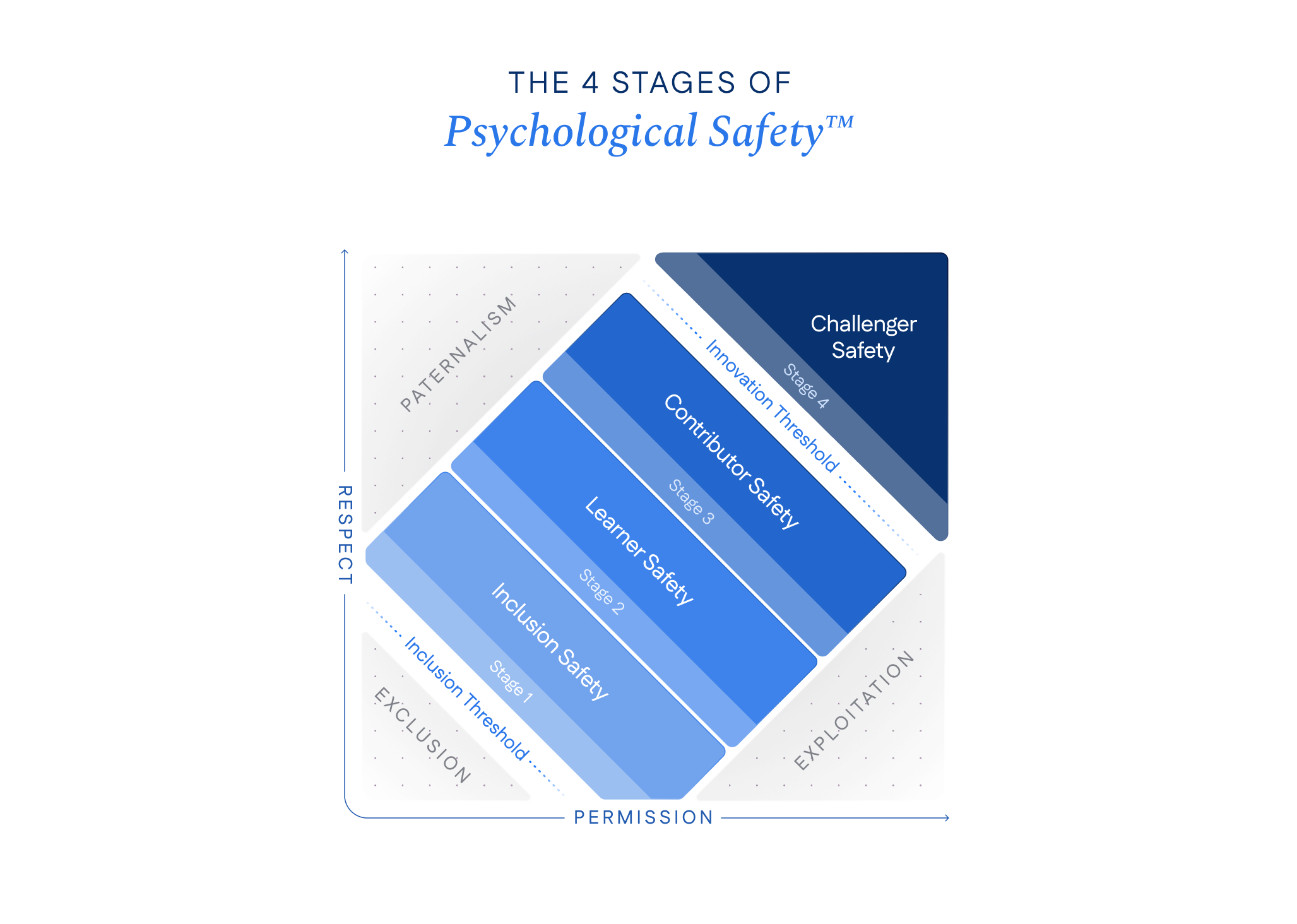
Intellectual stimulation — assumptions get questioned, and questioning gets rewarded: the leader invites challenge to their own plans, reframes problems, and treats mistakes-in-pursuit-of-better as tuition. This is the component most obviously entangled with psychological safety — a leader cannot stimulate thinking their team has priced as dangerous, which is why challenger-safety work is intellectual stimulation’s precondition rather than its competitor.
Individualized consideration — each person is developed as an individual: known, coached, stretched according to their particular next step. Operationally this is coaching practice — 1
that develop rather than merely report, delegation calibrated to growth.Read as a set, the four I’s describe a leader whose team trusts them, knows why the work matters, thinks out loud, and grows. Nothing in that requires charisma. Everything in it requires reps.
What the research supports, and the honest caveats
The model’s evidence base is unusually large — decades of MLQ studies associating transformational behaviors with engagement, satisfaction, and performance — and its critiques are equally established, worth knowing because they sharpen practice rather than undermine it. The components correlate so highly that researchers question whether four distinct things are being measured; the construct can drift into celebrating charisma, exactly the mythology Burns’s follower-centered original resisted; and causality runs murky in both directions — thriving teams make leaders look transformational. (Serious commentary, notably Van Knippenberg and Sitkin’s critique, goes further still.)
The practitioner’s takeaway from the critique literature is surprisingly actionable: don’t chase the aura, train the behaviors. The four I’s survive the critiques precisely when treated as practices — translation, modeling, inviting challenge, individualized coaching — because behaviors can be practiced, observed, and measured regardless of how the academic construct debate resolves.
The charisma trap
Here’s the misconception the model attracts: “transformational leaders are the magnetic ones — hire or promote for presence.” Organizations acting on it select confident performers, and the components quietly invert: idealized influence becomes image management, inspirational motivation becomes speechcraft, and the two development-facing I’s — the ones that do the heavy lifting — atrophy, because stimulation and consideration are unglamorous, repetitive, one-person-at-a-time work. Burns’s original distinction is the corrective: the transforming leader’s signature is what happens to followers — they become more capable, more purposeful, more likely to lead. Presence is optional. The follower outcomes aren’t.
It’s a Wednesday in November at a packaging plant outside Louisville, and the operations VP is comparing two shift managers for promotion. One interviews transformationally: vision language, command of the room. The other is understated in the interview and unmistakable in the data — her shift questions procedures openly and has upstreamed eleven adopted improvements this year, three of her operators have promoted out, and her team can explain why their quality metrics matter to the customer in their own words. Four I’s, fully operational, no stagecraft. The VP promotes the evidence. Within a year, so does everyone else’s benchmark.
For the model’s contrast class — and when exchange-based leadership is actually the right tool — see transactional vs. transformational leadership; for the component deep-dive, idealized influence; for the whole style landscape, types of leadership styles. And to practice rather than admire the model: pick the I your team would say you skip, convert it to one weekly behavior, and run it like any skill worth building. Transformation, it turns out, is mostly attendance.
Frequently asked questions
- What is transformational leadership?
- Transformational leadership is the model, originated by James MacGregor Burns and developed by Bernard Bass, in which leaders raise followers' motivation and performance by appealing to purpose and growth rather than pure exchange — developing people into leaders themselves, not just directing their compliance.
- What are the 4 I's of transformational leadership?
- Bass's four components: idealized influence (being a credible model worth trusting), inspirational motivation (meaning and challenge that mobilize), intellectual stimulation (questioning assumptions and inviting challenge), and individualized consideration (developing each person as an individual). Together they describe behaviors, not charisma.
- Who created transformational leadership theory?
- James MacGregor Burns introduced the transforming-versus-transactional distinction in his 1978 book Leadership, studying political leaders. Bernard Bass extended it to organizations in 1985, defined the four components, and with Bruce Avolio built the MLQ — the questionnaire most research on the model uses.
- What are examples of transformational leadership?
- The textbook examples are famous change-makers, but the model's own components favor humbler evidence: a plant manager whose team questions assumptions freely, stretches into growth roles, and understands why the work matters is exhibiting all four I's — transformation shows up in the followers, not the leader's stage presence.
- What are the criticisms of transformational leadership?
- Serious ones: the components overlap heavily in measurement, the theory can drift into celebrating charisma, and causality is murky — good teams may make leaders look transformational. The practical response is behavioral: treat the four I's as trainable practices rather than an inspirational personality type.