





Idealized influence: the credibility component
Idealized influence — the first of transformational leadership's four I's — explained: attributed vs. behavioral, how it's earned in small acts, and its limits.
Idealized influence is the component of transformational leadership with the worst name and the most fundamental job. In Bass and Avolio’s four-I model it comes first because the other three draw against it: inspirational motivation, intellectual stimulation, and individualized consideration all require a leader people already trust — and idealized influence is that trust, formalized. Strip the academic label and the concept is instantly recognizable: the leader as credible model, whose stated values demonstrably survive contact with pressure, and whom people therefore identify with and extend benefit of the doubt. This page treats it as the model does — a component with structure, evidence, and limits — rather than as the charisma it keeps being mistaken for.
The two halves: what you do, what they grant
The model’s most useful technical detail is the split into two measured facets. Behavioral idealized influence is the input side — the observable acts: articulating values and purpose, emphasizing the collective mission, making decisions whose values-reasoning is visible, and accepting personal cost for principle. Attributed idealized influence is the output side — what followers come to grant: perceived confidence, trustworthiness, being worth emulating.
The split matters because it locates the leader’s actual leverage. You cannot install attribution; you can only perform the behaviors and let attribution accrue — or fail to. Leaders who chase the attribution directly (image management, borrowed gravitas, the performance of conviction) are working the wrong side of the ledger, and teams detect it with unnerving reliability, because the attribution forms from a specific kind of evidence: values-consistency observed at cost. The value upheld when it was expensive is worth a hundred upheld when it was free. Which means idealized influence is earned in small, mostly unglamorous moments — the deadline extended because the shortcut violated a stated standard, the mistake owned publicly when deflection was available, the policy applied to the favorite as to everyone else — each one a data point in the ledger followers are always keeping.
Its relationship to the other three I’s
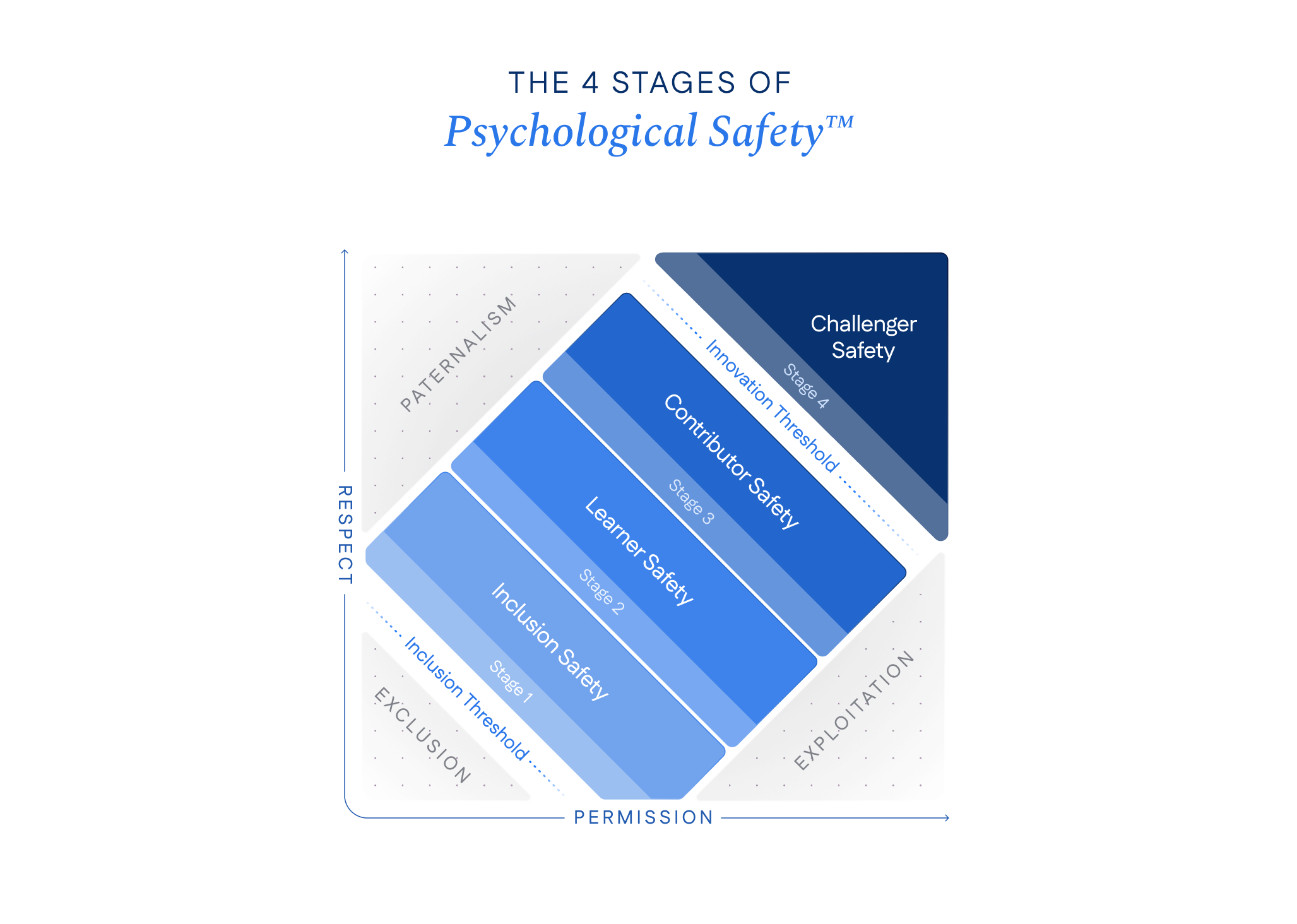
Idealized influence is the credit line the rest of the model spends. Inspirational motivation — meaning and challenge — lands only from a leader whose commitment is believed; vision from a distrusted source reads as manipulation. Intellectual stimulation — inviting challenge to plans and assumptions — requires people to believe the invitation is real, which is a direct draw on credibility (and on the challenger safety that credibility underwrites: people test whether dissent is safe by watching what happened to the last dissenter, exactly the way they test values by watching them under pressure). Individualized consideration — development attention — depends on the developed believing the attention is for them rather than for the leader’s succession slide. The four I’s are usually taught as a list; they operate as a structure, with this component as the foundation course.
The hazard the name carries
Honest coverage includes the component’s documented trouble. The construct overlaps heavily with the rest of the transformational set in measurement — the four I’s correlate so highly that critics (Van Knippenberg and Sitkin most pointedly) question the model’s structure — and this component carries a hazard the others don’t: idealization is a dependency risk. Followers who identify too completely stop evaluating; the benefit of the doubt becomes the absence of doubt; and history’s cautionary examples of magnetic leaders with devoted followings are, technically, idealized influence operating at full power without the values to deserve it. Bass’s own evolution away from “charisma” toward this clunkier label was partly this recognition: magnetism is morally neutral, and the model wanted the trust that tracks values, not the spell that replaces them.
The practical guardrail follows from the model itself: a leader earning idealized influence properly is simultaneously building the component that checks it — intellectual stimulation, the active invitation of challenge. Credibility plus welcomed dissent is influence with a functioning immune system. Credibility minus dissent is a cult of one, however good the values that started it.
It’s a Monday in August at a specialty contractor in Boise, and a new operations VP inherits a division that has learned, under three previous VPs, to treat stated values as wall decor. He announces nothing. Instead, in week two, he kills a bid the division wanted — the margins required staffing the job in a way that violated the safety standard everyone recites — and walks the floor explaining the reasoning, absorbing the revenue hit into his own quarter’s numbers. Nothing else changes for a month. Then a foreman flags a subcontractor issue nobody would have surfaced in the spring, “because,” he says later, “it seemed like maybe the standard was real now.” That’s the component working at ground level: one costly consistent act, one attribution forming, one earlier warning — the compound interest of being believable.
For the model this component anchors, see transformational leadership and its transactional counterpart; for the adjacent construct of values-consistency, authentic leadership. And for building it: the behaviors are trainable like any others, with one warning label — this is the component you can’t shortcut, because the ledger only accepts deposits made at cost.
Frequently asked questions
- What is idealized influence?
- The first of transformational leadership's four components, from Bass and Avolio's model: the leader operates as a credible, trusted role model whose visible values-consistency earns identification — people trust them, want to emulate them, and extend benefit of the doubt. It's the component the other three draw against.
- What is the difference between attributed and behavioral idealized influence?
- The model splits it in two: behavioral idealized influence is what the leader does — talks about values, emphasizes purpose, acts consistently at visible cost. Attributed is what followers grant — perceived confidence, trustworthiness, and power. Behavior is the input a leader controls; attribution is the earned output.
- What is an example of idealized influence?
- A plant manager who halts a profitable shipment over a quality concern, explains the values reasoning openly, and absorbs the schedule pain personally has performed idealized influence: values made visible at cost. The team's changed behavior afterward — flagging problems earlier — is the attribution forming.
- How is idealized influence different from charisma?
- Charisma is magnetism; idealized influence is earned credibility. Bass's mature model moved deliberately away from the charisma framing because magnetism works without values-consistency — the component's substance is trust built from watching values survive pressure, which an unmagnetic leader can earn fully.