





Innovation mindset: necessary, and not the bottleneck
The innovation mindset — curiosity, experimentation, comfort with failure — is real and trainable. It's also downstream of an environment most teams haven't built.
The innovation mindset is a real thing with a real definition: a posture toward the status quo built from curiosity, a bias for testing over debating, comfort with being wrong on the way to being right, and the standing assumption that the current way is a draft. The trait lists you’ll find for this topic — curiosity, courage, agility, openness — describe it fairly. What they skip is the uncomfortable dependency underneath: mindset is downstream of environment, and most organizations trying to install the mindset are working the wrong end of the pipe.
What the mindset actually consists of
Strip the poster language and four habits carry it. Interrogative curiosity: asking why the process works this way, what the customer is actually trying to do, what we’d build if we started today — questions aimed at load-bearing assumptions, not trivia. Experimental bias: preferring a small test to a long debate, because tests settle what arguments circle. Failure-as-information: debriefing what didn’t work for what it taught, without the theater of blame or the counter-theater of celebrating failure for its own sake. Draft thinking: holding current methods, including your own last improvement, as provisional.
The nearest research anchor is Carol Dweck’s growth mindset — the belief that ability grows with effort rather than being fixed. The innovation mindset is that same move applied outward: not “I can improve,” but “this can be improved, and finding out how is my job.” Both postures do their work by redefining failure, from verdict to data point, which is what makes sustained experimentation psychologically affordable.
All four habits are trainable. That’s the good news, and it’s where most innovation-mindset initiatives stop thinking.
The misconception: install the mindset, harvest the innovation
The program logic goes: “our people are too risk-averse — we need to build an innovation mindset.” Workshops follow, with sticky notes and case studies, and everyone leaves fluent in the vocabulary. Six months later, behavior is unchanged, and leadership concludes the mindset didn’t take.
It took fine. It just met the environment. A mindset is a posture toward risk, and people calibrate risk postures to actual consequences, not to workshop content. If the last visible experimenter ate the blame for a failed test, if challenging the roadmap is a career note, if questions in the all-hands get answered with a tight smile — then risk-aversion isn’t a mindset problem. It’s accurate reading. The mindset your people currently hold is an achievement of rational learning, and no amount of training out-teaches lived consequences.
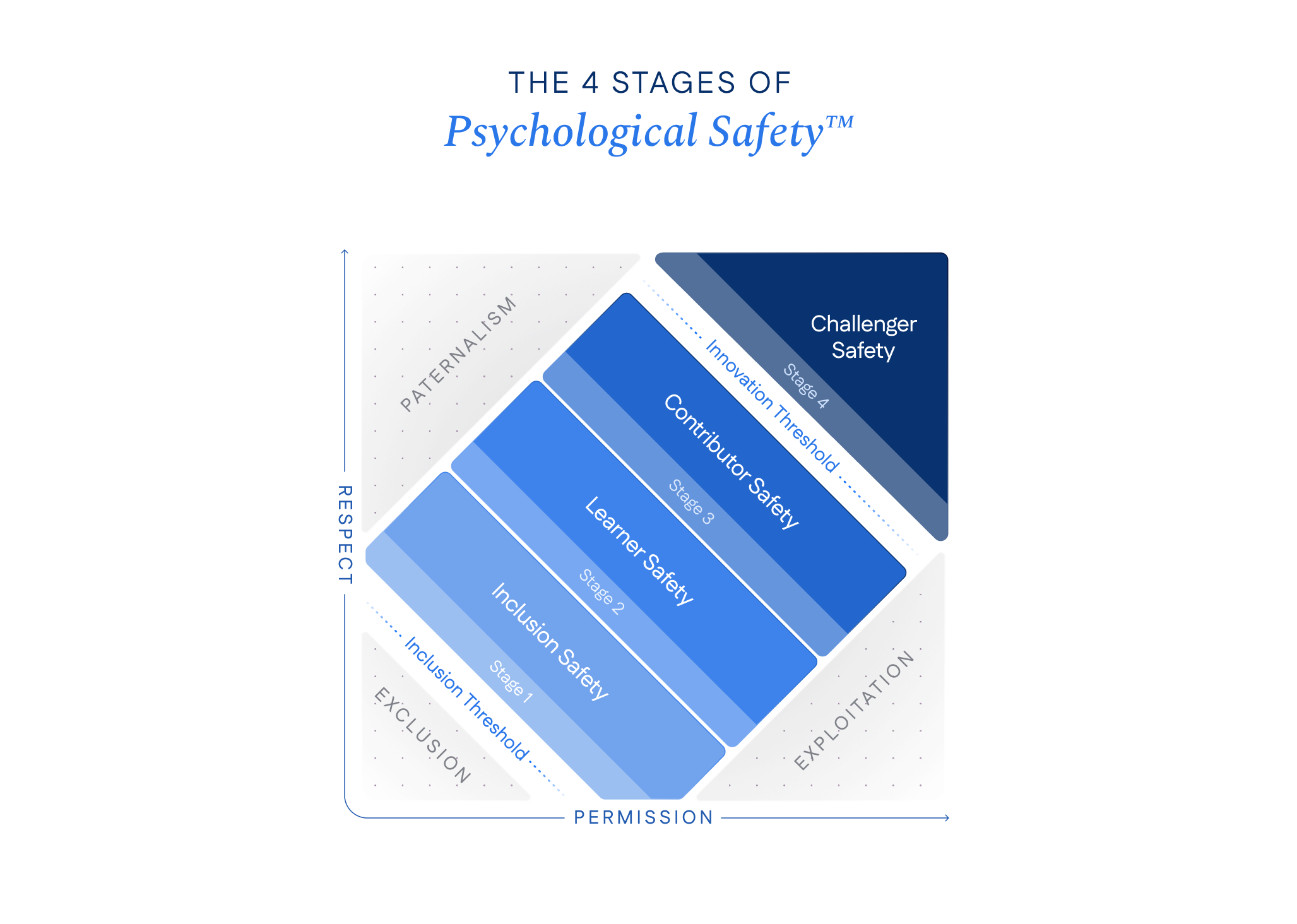
The direction of the fix comes from LeaderFactor’s framing of psychological safety as a culture of rewarded vulnerability. Every habit in the innovation mindset is an act of vulnerability — the naive question, the test that might flop, the challenge to the current way — and habits of vulnerability form only where vulnerability is rewarded. In 4 Stages terms: learner safety makes the questions affordable, challenger safety makes the heresies affordable, and a team below those stages will rent the mindset for the duration of the workshop, then return it.
Building it in the right order
For leaders, the sequence is: price first, practice second, language last.
Change the price. Respond to the next public failure and the next challenge to your plan as if the room is taking notes, because it is. A leader who debriefs their own flopped experiment first, plainly, has done more mindset installation than a quarter of workshops. The full environmental build is covered in building a culture of innovation and the specific obstacles in barriers to innovation.
Then train the habits, small. Once deviation is survivable, the four habits respond quickly to structure: a standing “why does this work this way?” slot, one bounded experiment per team per month with a named review date, generation separated from judgment (the creativity mechanics are in fostering creativity at work), and failure debriefs that end on what changes.
Let the language arrive last. Vocabulary that follows behavior sticks; vocabulary that precedes it curdles into slogan.
It’s a Friday in July at a community bank in Des Moines, and the retail-banking VP is comparing two branches that got the identical innovation-mindset workshop eighteen months ago. Branch one: the workbooks are on a shelf, and the manager still opens meetings with the numbers and closes them with assignments. Branch two runs a monthly “dumb question and one experiment” ritual the manager started the week after training — she asked the first dumb question herself, and the first experiment (hers) failed usefully in public. Same workshop, same materials, same market. The difference was never the curriculum. It was which room made the posture affordable.
The measurable version of “which room”: LeaderFactor’s PSindex® baselines the safety stages the mindset depends on, and the Psychological Safety skill trains the leader behaviors that change the price. Start there, and let the mindset be the harvest instead of the seed — or start cheaper still: ask your team one genuinely curious question about your own process this week, and reward whoever answers honestly.
Frequently asked questions
- What is an innovation mindset?
- An innovation mindset is a working posture toward the status quo: curiosity about why things are the way they are, a bias toward testing over debating, comfort with being wrong en route to being right, and the assumption that current methods are beatable. It's a set of practiced habits, not a personality type.
- How is an innovation mindset related to growth mindset?
- They're cousins. Carol Dweck's growth mindset is a belief about ability — that capability grows with effort. An innovation mindset applies the same posture to methods and products: the current way is a draft, improvable through experiments. Both convert failure from a verdict into information, which is what makes them generative.
- Can you train an innovation mindset?
- The habits are trainable: question-asking, running small experiments, separating idea generation from judgment, debriefing failures for information. What training can't do is outrun the environment — a team taught experimental habits inside a culture that punishes visible failure will practice the habits privately or not at all.
- Why do innovation mindset programs fail?
- Because mindset is downstream of consequences. People adopt the posture their environment actually rewards, and if challenging the status quo costs standing, workshops produce vocabulary rather than behavior. Programs succeed when leaders change the price of deviation first, then teach the habits into a room where they're survivable.