





Barriers to innovation: name the one that's actually yours
The real barriers to innovation, diagnosed: fear of deviation first, then structure, silos, and starvation — and the two leadership patterns that cause the fear.
Barriers to innovation come in lists, and the lists are accurate enough: fear of failure, rigid hierarchy, siloed teams, no time, no budget, misaligned incentives. What the lists don’t do is rank, and ranking is the useful part — because barriers don’t bind equally, and organizations routinely spend years fixing the third-most-binding constraint while the first one holds everything in place. This page ranks them, gives you a way to find your binding one, and names the two leadership patterns that generate the biggest barrier of all.
The binding constraint is usually fear
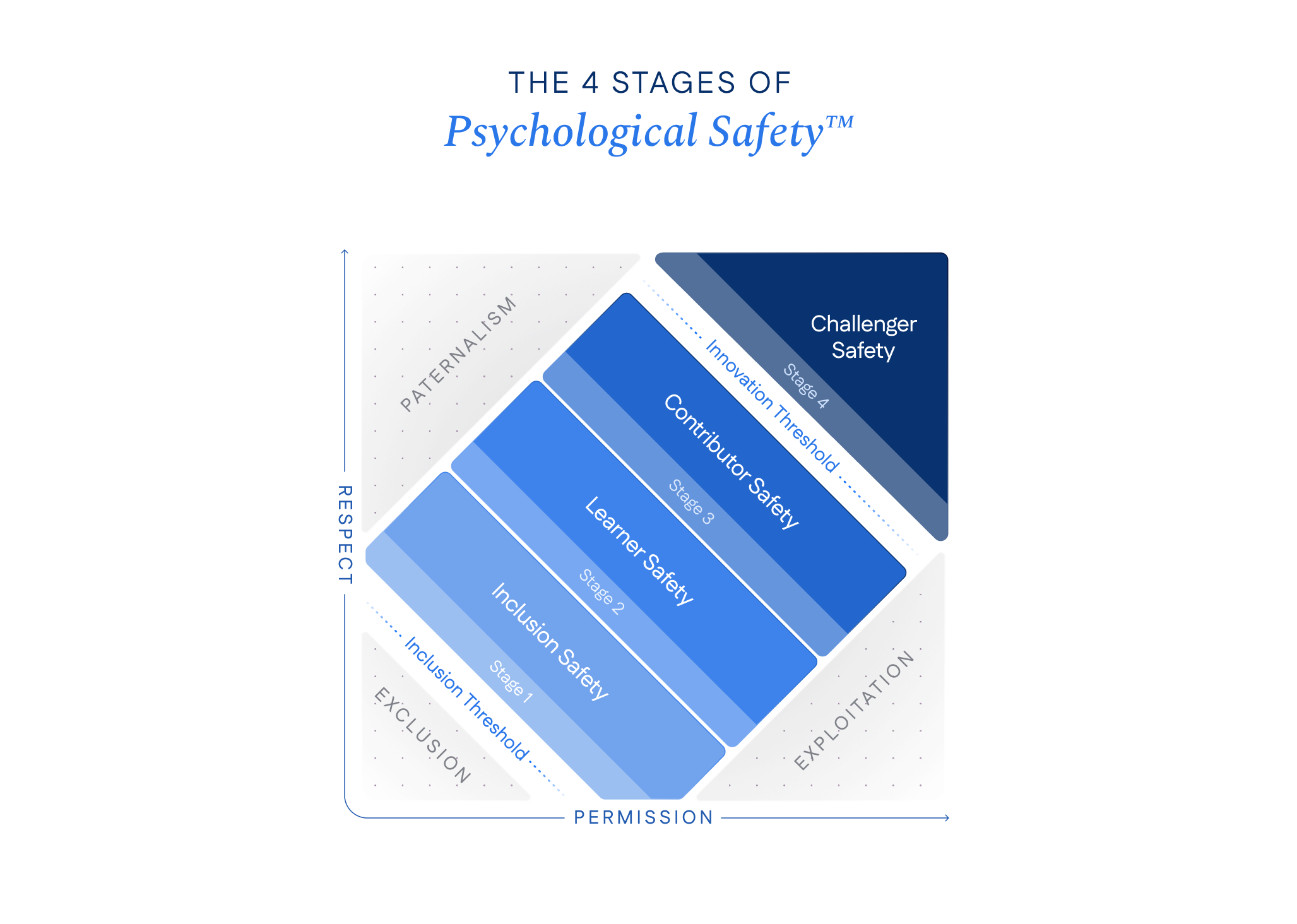
Every genuine innovation begins with someone proposing that the current way is beatable, and that proposal is an interpersonal risk: it criticizes something that exists, risks public failure, and challenges whoever owns the status quo. Innovation requires deviation, deviation requires a person willing to deviate visibly — and where that’s expensive, everything downstream is academic. The consulting studies of innovation barriers keep circling this same finding in different vocabulary: everyday fear, loss aversion, “frontline manager behavior.” The behavioral name for it is low challenger safety, Stage 4 in LeaderFactor’s 4 Stages of Psychological Safety™ — the environment where challenging the status quo costs standing, so nobody does.
Fear is the barrier that hides the others’ irrelevance. Fix the approval process, fund the lab, tear down the silos: if voicing a deviant idea still carries a social tax, you’ve built superb infrastructure for ideas that will not be said.
The two leadership patterns that manufacture it
The fear barrier isn’t weather; it’s produced, usually by one of two patterns leaders fall into with the best intentions. LeaderFactor names them precisely. Paternalism is high respect with low permission: the leader genuinely cares about people and quietly retains all deviation rights — every idea welcome, every idea routed through me, nothing tested without blessing. The team is comfortable and silent. Exploitation is the mirror: high permission, low respect — bring your ideas, watch them leave the room under someone else’s name, and see what happens if the experiment embarrasses the boss. The team is productive and guarded.
Both patterns read as functional cultures from the inside. Both produce the same output: a team that has learned the real price sheet, whatever the values slide says.
The rest of the ranking
Structural friction binds second: when testing an idea requires three approvals and a steering committee, ideas queue and queues kill. The fix is shrinking test size until permission becomes unnecessary — one team, one week, one measure. Silos bind third, and they’re where good tested ideas go to die in handoffs; frameworks like Doblin’s ten types are useful here mostly for showing how many innovation opportunities live between functions, exactly where nobody owns them. Starvation — no time, no slack, everyone at 103% utilization — binds last but absolutely: exploration is the first casualty of a fully-loaded calendar, and “innovate in your spare time” is a policy of having none.
The diagnostic that sorts your own stack is cheap and slightly brutal: trace the last five improvement ideas you know died, and mark where each stopped. Never voiced: fear. Voiced, never tested: friction. Tested, never spread: silos. Approved, never resourced: starvation. Five autopsies almost always show one dominant cause of death.
What removal looks like
It’s a Monday in May at a packaging manufacturer in Grand Rapids, and the new plant manager inherits what the last leadership review called “an innovation problem” plus the standard prescription: an idea portal and a continuous-improvement budget, both a year old, both nearly unused. Her five-idea autopsy takes one afternoon and rewrites the diagnosis — four of the five died unvoiced, and the fifth was tested, worked, and quietly shelved after its proposer transferred out with a reputation for being difficult. The portal was never the problem. The price of speaking was. Her first intervention costs nothing: in Thursday’s production meeting, she asks the floor leads what the plant does that makes no sense, thanks the first honest answer in front of everyone, and has the fix running within two weeks — with the proposer’s name on it.
That’s barrier removal in its actual order: make deviation safe, then cheap, then connected, then resourced. The affirmative build-out of that sequence is covered in building a culture of innovation and the tactical moves in how to foster innovation in the workplace; the day-to-day picture of what you’re unblocking is in innovation in the workplace.
Because the biggest barrier is behavioral, it’s also measurable: LeaderFactor’s PSindex® baselines a team’s challenger safety directly — a low Stage 4 score is the fear barrier, quantified — and the Psychological Safety skill trains the leader behaviors that dismantle it. Run the autopsy this week, measure the base, and fix the barrier you actually have.
Frequently asked questions
- What are the biggest barriers to innovation?
- In most organizations, in order: fear (the social cost of proposing or failing), structural friction (approvals and hierarchy that make testing expensive), silos (ideas dying in handoffs between functions), and starvation (no time or resources for exploration). Fear binds first, and fixing the others without it changes little.
- Why do organizations struggle to innovate?
- Because the same machinery that makes them reliable resists deviation. Processes standardize, hierarchies filter, and incentives reward predictability — all rational, all anti-innovation. Struggling organizations usually don't lack ideas; they price idea-voicing and testing so high their people rationally stop offering.
- How does fear block innovation?
- Innovation requires proposing that the current way is beatable, which is an interpersonal risk. Where challenge costs standing — a mocked idea, a punished failure, a manager who takes critique personally — people run the math and go quiet. The ideas continue existing; they just stop being said.
- How do you identify your organization's barriers to innovation?
- Trace the last five improvement ideas you know died, and note where each stopped: never voiced (fear), voiced but untestable (friction), tested but stuck in a handoff (silos), or approved but starved (resources). Five dead ideas usually reveal one dominant pattern, and that pattern is your binding constraint.