





How to foster innovation in the workplace this quarter
How to foster innovation in the workplace with leader moves, not programs: lower the price of dissent, protect challengers, and make small tests cheap.
How to foster innovation in the workplace is usually answered with programs — idea platforms, innovation sprints, dedicated time policies. Programs are the visible tools, and they all share a failure mode: they assume the ideas are ready and waiting for a channel. In practice, what’s scarce isn’t ideas; it’s people willing to say them, because every genuinely innovative idea criticizes something that exists, and someone built what exists. Fostering innovation is therefore mostly the work of lowering the price of dissent — leader behavior first, mechanisms second. Here are the moves, sized to start this quarter.
Lower the price of the first draft
Ideas arrive unpolished, and the reception of unpolished ideas is your real innovation policy. The core discipline is what LeaderFactor calls rewarded vulnerability: when someone risks a half-formed proposal or an inconvenient observation, the response they get — in front of the room — either rewards the risk or taxes it, and the room recalibrates instantly either way.
Concretely: engage the substance before the flaws (“what’s interesting in this” precedes “what’s wrong with it”), thank challenges to your own plans before evaluating them, and when a proposal beats yours, adopt it loudly and credit it precisely. None of this is niceness; ideas still get killed on evidence. It’s pricing — making the act of proposing reliably safe while keeping the quality bar reliably high. Teams that conflate the two either go soft on ideas or brutal on people, and both ends stop the flow.
Protect challengers; don’t excuse agitators
Fostering innovation means giving air cover in exchange for candor: the team brings honest dissent, the leader visibly absorbs the political cost of it. But the exchange has a boundary that keeps it credible — the difference between an innovator and an agitator is the intent behind the dissent. Someone challenging the process to improve it gets protection even when they’re wrong; someone performing grievance gets a different conversation. Leaders who can’t draw that line end up either shutting down all dissent or hosting endless recreational criticism, and the team reads both as the exchange being fake.
Then engineer the collisions on purpose: creative abrasion — ideas hitting each other hard while the people stay safe — is what fostered innovation actually sounds like. Run it structurally: ask junior voices first, assign a real devil’s advocate, argue positions on evidence, and close with the decision and its reasoning. Direction for all this arguing helps too — Clayton Christensen’s jobs-to-be-done lens (“what is the customer actually hiring this for?”) aims abrasion at problems worth having ideas about.
Make experiments cheap and failures survivable
An idea that requires three approvals to test isn’t in an innovation pipeline; it’s in a queue. Fostering means shrinking test size until permission is unnecessary: one team, one week, one measure, reviewed on a named date. Bounded tests also solve the explore-versus-exploit tension honestly — operations stays protected because no experiment is big enough to hurt it.
And when tests fail, the debrief is the whole game: what did we learn, what does it change, and the experimenter’s standing intact or improved. An emotionally bruised learner is a cognitively impaired learner — the phrase comes from LeaderFactor’s learner-safety work, and it describes exactly what a punished failure does to the next quarter’s idea flow.
It’s a Wednesday in April at a dental-insurance company in Sacramento, and the claims director has just watched her Friday-question ritual pay for itself. Week one produced safe complaints: parking, the coffee machine. Week four, after she’d visibly fixed two frictions and laughed off a test of her own that flopped, a quiet adjuster finally said the real one — the fraud-flag step that queues 40% of clean claims for manual review. The test took six days; the fix is now policy. The idea was three years old, she learns afterward. It had been waiting for the price to drop.
The order of operations
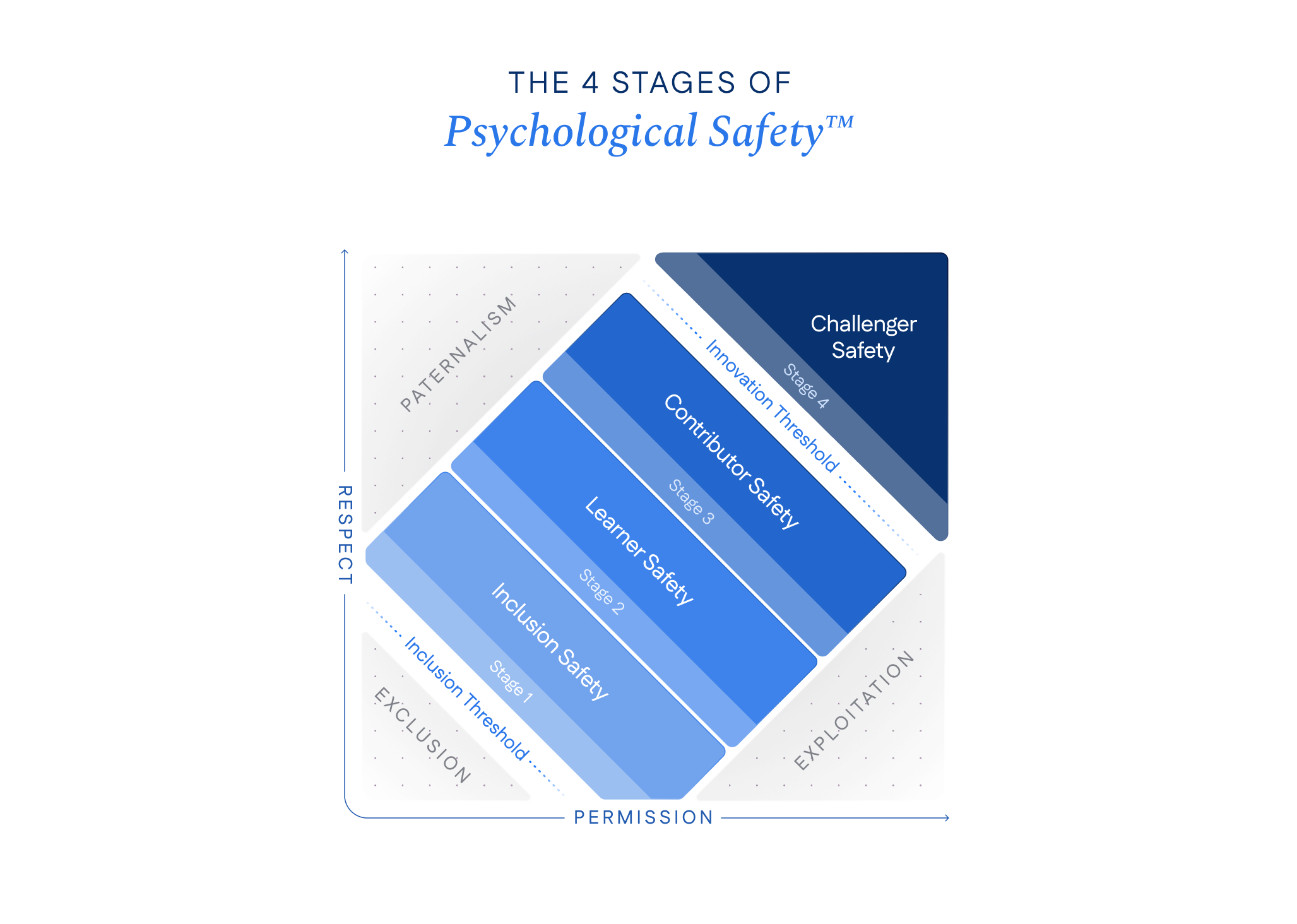
Everything above assumes a floor that many teams don’t yet have: if people aren’t safe asking questions or admitting mistakes, they’re years from proposing heresies. That’s why fostering innovation is stage-sequenced work — the full architecture is in building a culture of innovation, the everyday shape of the goal in innovation in the workplace, and the obstacles worth clearing first in barriers to innovation. LeaderFactor’s PSindex® tells you which stage your team is actually at, and the Psychological Safety skill builds the leader behaviors stage by stage.
Pick your first move by honest self-assessment: if you can’t remember the last time someone challenged you and won, start with your own next response — it’s the only innovation infrastructure you fully control.
Frequently asked questions
- How do you foster innovation in the workplace?
- By lowering the price of deviation, visibly and repeatedly: reward people who challenge the current way, respond to failed experiments in ways that keep the experimenter's standing intact, make small tests cheap to run, and let the best argument beat the highest title. Programs help only after those behaviors are real.
- How do you encourage employees to share ideas?
- Change what sharing costs rather than asking harder. Respond to the next unpolished idea with genuine engagement in front of the room, ask your junior people first in reviews, and thank the challenge before evaluating it. One visible episode of an idea being safely received recruits more ideas than any suggestion box.
- What kills innovation in teams?
- The memory of what happened to the last person who tried. A mocked proposal, a punished failure, or a manager who takes challenges personally teaches the whole room to keep ideas private. Fear is the primary killer; process friction and resource starvation finish whatever fear leaves alive.
- How do you balance innovation with day-to-day operations?
- Keep experiments small and bounded so exploration doesn't threaten execution: one test at a time, cheap enough to fail, with a defined review point. The operational discipline that protects this quarter and the experimentation that builds next year coexist when tests are sized to be survivable.