





Leadership resilience training, without the endurance myth
Leadership resilience training unpacked: what it actually builds — recovery, reframing, team resilience — and the overload it must never be used to excuse.
Leadership resilience training arrives with a credibility problem it earned honestly: too often it’s been deployed as organizational aspirin — a workshop on bouncing back, prescribed to leaders whose actual condition is chronic overload the organization has no intention of fixing. That version deserves its eye-rolls. The defensible version exists, though, and it’s worth separating out, because leaders do face irreducible pressure — markets, crises, hard seasons no redesign eliminates — and the capacity to absorb it, recover, and keep leading well is real, trainable, and has a team-level half that the individual-toughness framing misses entirely.
What the credible curriculum contains
Recovery as discipline, not reward. The evidence-backed core of resilience work is unglamorous: capacity is built in the off-cycles — sleep, genuine detachment, deliberate recovery blocks — and depleted leaders make measurably worse calls and read rooms measurably worse. Training that treats recovery as a schedulable discipline (and audits the calendar accordingly) beats every inspirational framing of grit.
Reframing that isn’t denial. The cognitive layer: practicing the move from setback-as-verdict to setback-as-information — the same move that powers decision review discipline and honest post-mortems. The distinction that keeps it honest: reframing metabolizes real difficulty; it doesn’t relabel it. “This quarter failed and here’s what it taught us” is resilience. “This quarter was secretly a win” is spin, and teams smell the difference.
Composure under acute pressure. Rehearsable moves for the hard moments — the pause before responding, the steady reception of bad news, the practiced recovery from being publicly wrong. Composure is a behavior family, not a temperament, and it overlaps heavily with what presence training calls gravitas.
The boundary skills. Saying no with reasons, renegotiating load before breaking, declining the meeting — the skills servant-hearted leaders especially skip, at documented cost.
The team half, which is the leadership half
Here’s what makes leadership resilience training different from personal resilience training, and it’s the part vendor pages mention and never unpack: a leader’s resilience job is mostly building a resilient team — and team resilience is a system property, not a sum of individual toughness. A team absorbs shocks well when load redistributes early (which requires people admitting strain before breaking — a safety behavior), when problems surface fast (same mechanism), and when recovery is normalized rather than performed around (“take the day” said by a leader who visibly never does is a policy nobody believes).
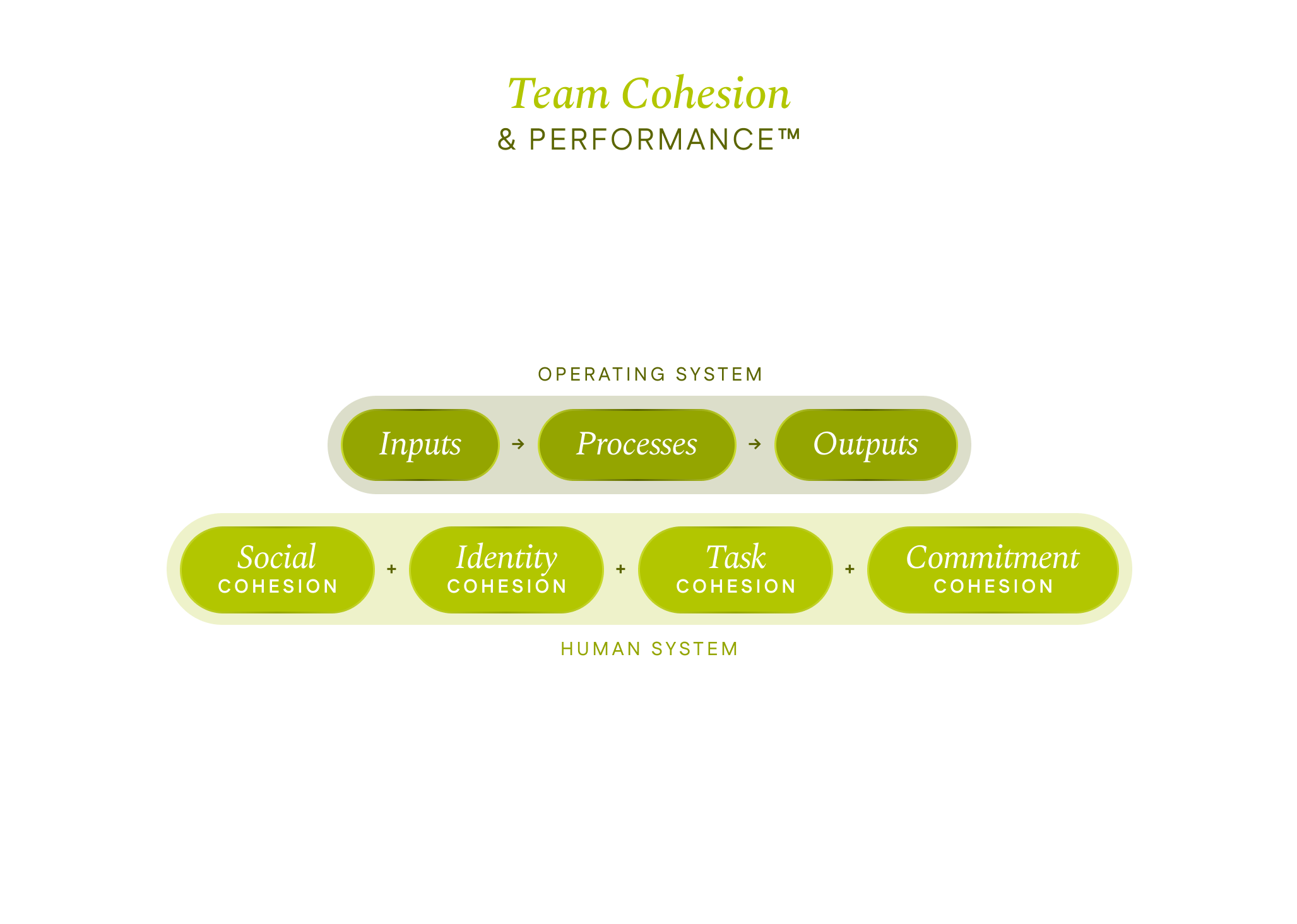
Which yields the training’s most counterintuitive content: the leader’s own visible sustainability is a team-resilience intervention. The leader who models recovery licenses it; the one who models martyrdom mandates it, whatever the wellness deck says. And the team’s resilience is measurable as a team property — cohesion and commitment under load are exactly what a whole-team instrument reads — which is why serious resilience work for leaders runs through the Team Performance discipline rather than alongside it: build the team system that absorbs shocks, and the leader stops being the sole shock absorber.
The line that keeps it honest
The misconception to refuse, in buying or building: “our leaders are burning out — get them resilience training.” Burnout from chronic overload is a system diagnosis — sustained excessive load, insufficient recovery, low control — and training individuals to endure it is teaching people to tolerate what should be redesigned; the burnout returns with interest, plus a new cynicism about development. The honest engagement starts with the sorting question: what fraction of this pressure is irreducible? Market turbulence, yes; a permanently understaffed function, no — that’s a leadership and design problem wearing a wellness costume. Good vendors ask that question themselves; the ones who don’t are selling aspirin by the pallet.
It’s a Tuesday in November at a hospital network in Spokane, and the CHRO is pushing back on her own proposal after a nursing director’s comment in the pilot session: “You’re teaching me to recover from a schedule you control.” The redesigned program that emerges runs both tracks explicitly — a system track (two staffing policies changed, one reporting requirement killed) and a capacity track (recovery discipline, composure practice, and each director building their unit’s early-strain flags). The following year’s numbers move on both: directors’ own team-level scores up, and — the one she quotes — mid-year resignations among the directors themselves: zero, from four. “Turns out resilience training works,” she tells the executive team, “once it stops being an apology.”
Buy it, or build it, on that model: system first, capacity second, team half weighted — and the usual evidence standards throughout. Endurance was never the curriculum. Sustainable leading is.
Frequently asked questions
- What is leadership resilience training?
- Development that builds a leader's capacity to absorb pressure, recover, and keep leading well under sustained load: energy and recovery practices, cognitive reframing of setbacks, composure under stress, and — the half often missed — the behaviors that build a team's collective resilience rather than just the leader's.
- What does resilience training actually teach?
- The credible core: recovery as a discipline (energy management, deliberate off-switches), reframing setbacks as information rather than verdicts, composure practices for acute pressure, and boundary skills. For leaders specifically, it adds the team layer — modeling sustainable pace and keeping honesty safe under stress.
- Can resilience training fix burnout?
- No — and using it that way backfires. Burnout from chronic overload is a system problem: unrealistic load, no recovery time, low control. Training individuals to endure a broken system teaches endurance of the wrong thing; honest resilience work fixes what's fixable in the system and builds capacity for the pressure that remains.
- How is team resilience different from personal resilience?
- Personal resilience is one person's capacity; team resilience is a property of how the group works — whether load gets redistributed early, problems surface fast, and recovery is normalized. Leaders build it less through their own toughness than through the safety and habits that let a team absorb shocks together.