







Bad news slows down around some leaders.
If your team checks your mood before they bring you bad news, you're getting the late, softened version. Inside are one simple model, five warning signs, a six-question check, and four habits that get the truth back.
What’s inside
On Tuesday a project lead learns the launch will slip three weeks. Her boss hears about it on Friday. By then, “three weeks late” has become “a risk we’re watching.” She didn’t lie. She remembered what happened to the last person who brought him bad news, so she waited and softened it.
This guide is built on Dr. Timothy R. Clark’s argument that a leader’s sense of self decides what that leader gets told. It shows how one reaction to bad news shapes the next piece of news, how to spot a team that has started editing what it brings you, and what to say instead, starting this week.
What’s inside
- The problem. Why bad news reaches some leaders days late and a size smaller.
- The simple model. How what a leader does decides what the leader hears, and the scale from fragile to secure.
- Five warning signs. The mood check, the lag, the soft wording, the same messengers, and the quiet meeting.
- The 4 Stages. Why bringing bad news and disagreeing with the boss both live on the top rung, Challenger Safety.
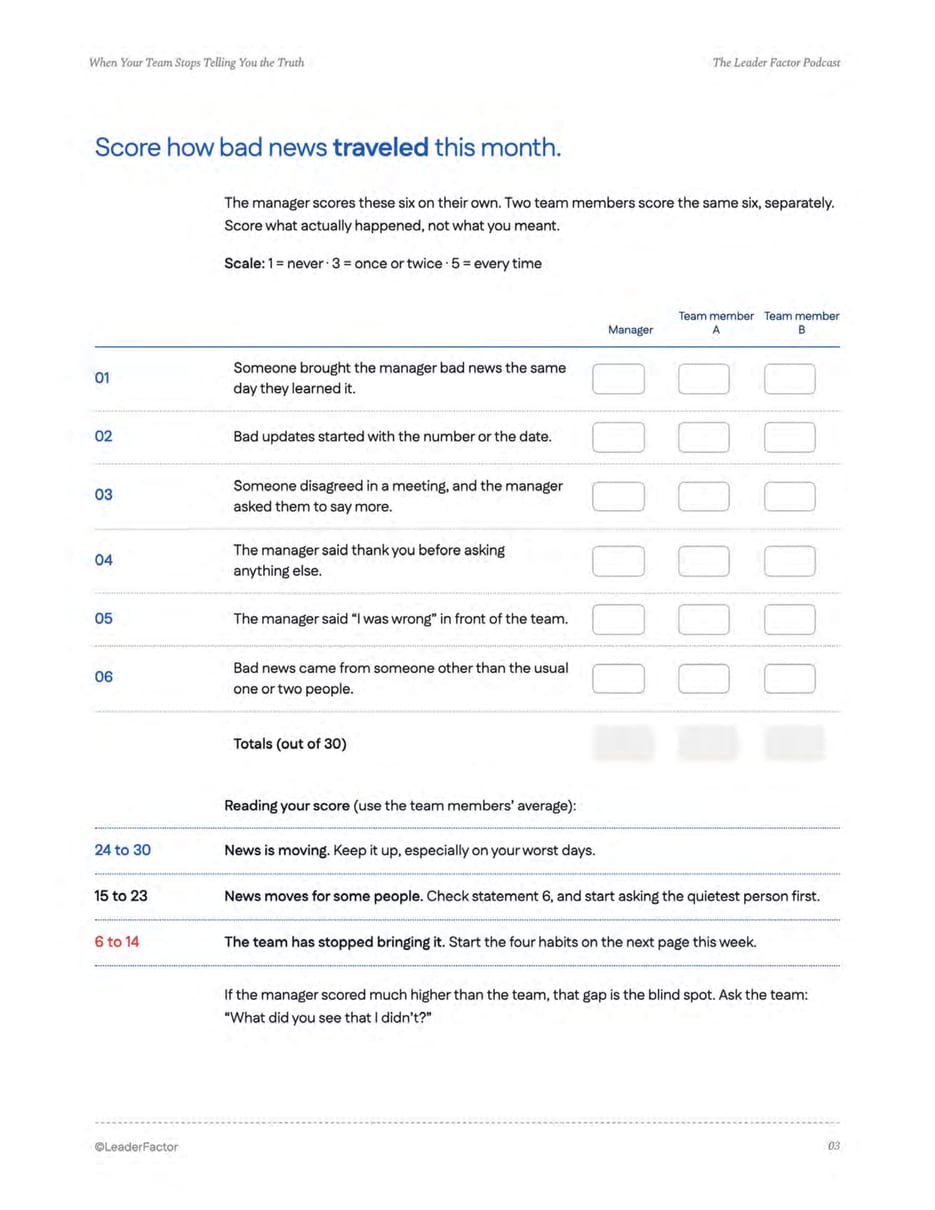
- Quick check. Six statements the manager and two team members score separately, and what the gap between them tells you.
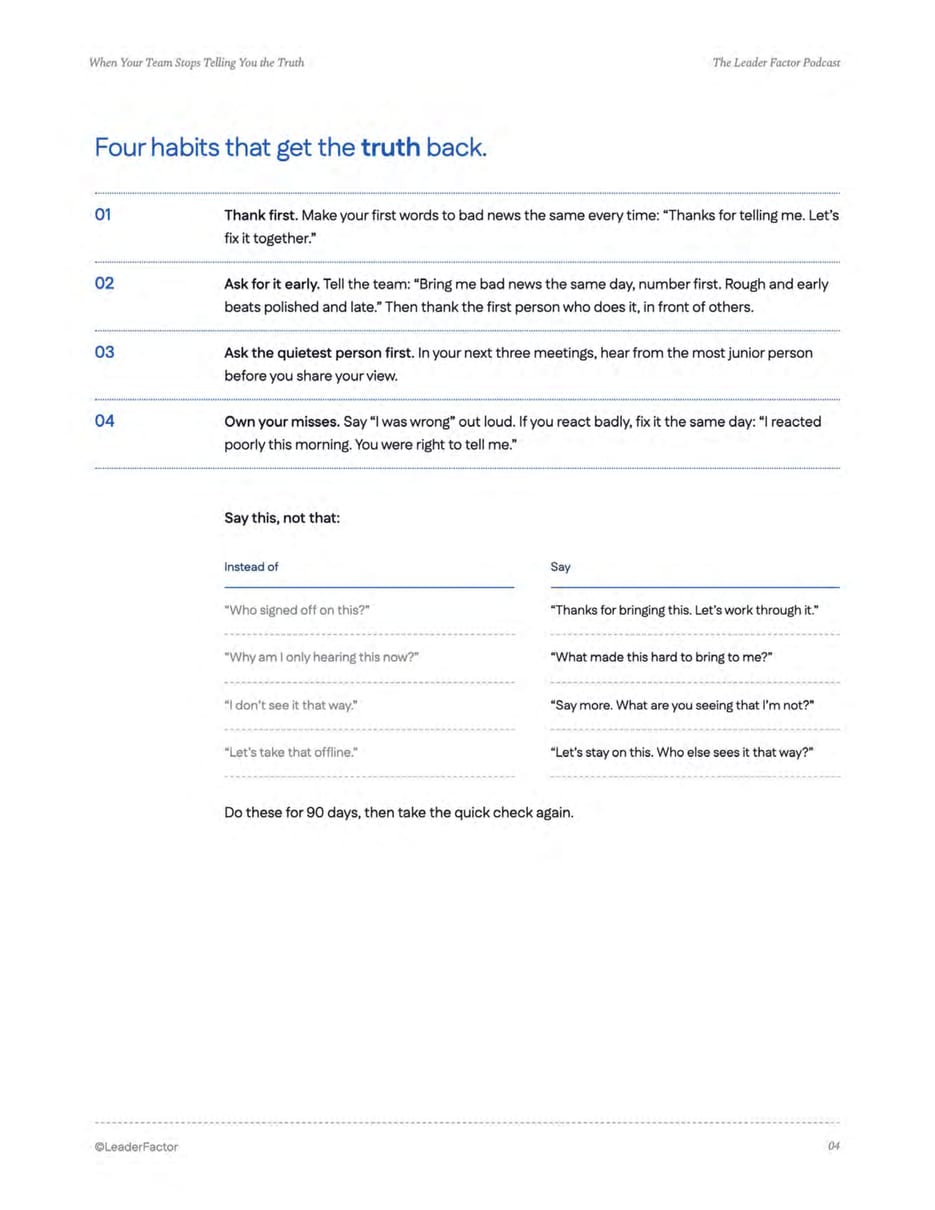
- Four habits. Thank first, ask for it early, ask the quietest person first, and own your misses, plus a “say this, not that” table.
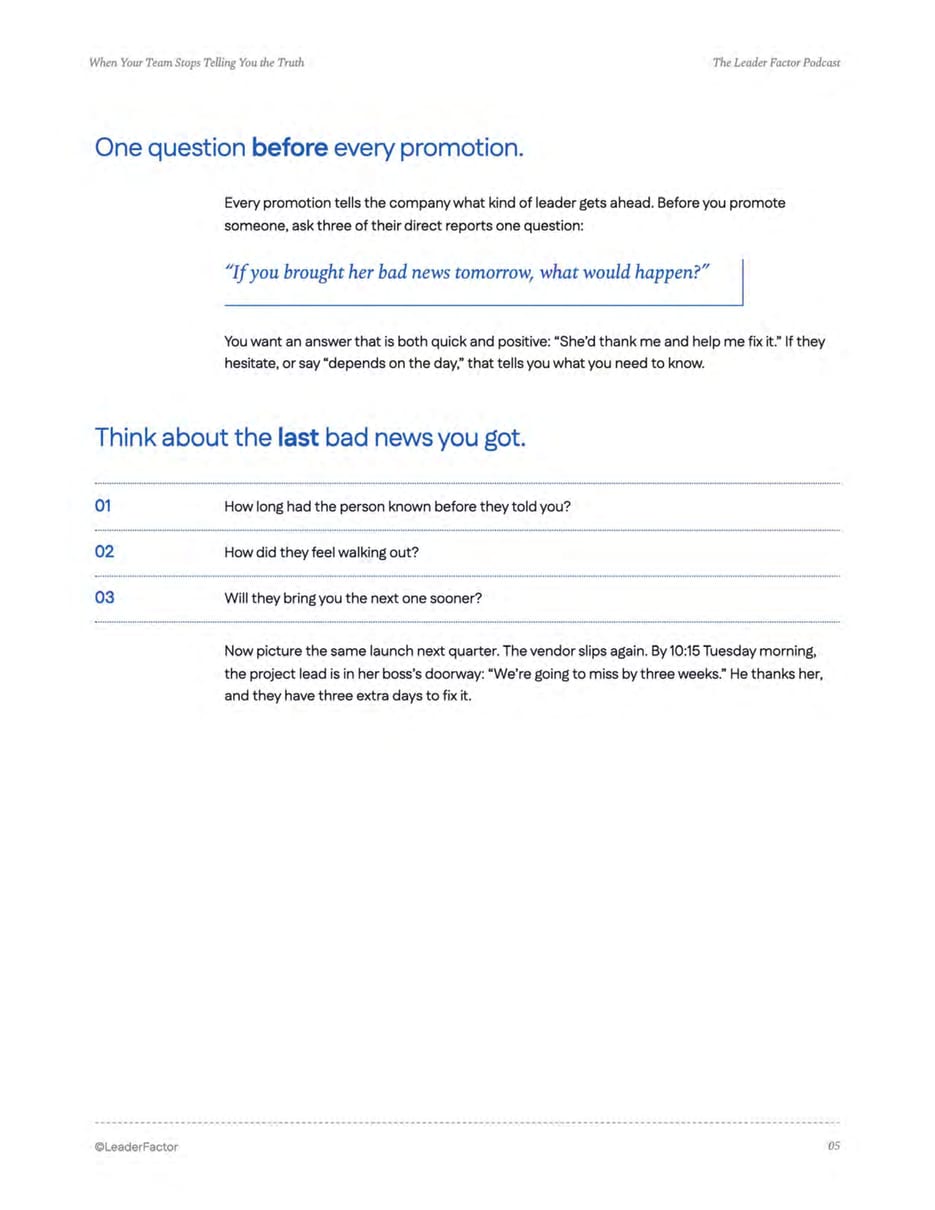
- For HR. One question to ask a candidate’s direct reports before every promotion.
- Close. Three questions about the last bad news you got.
Get the guide.
When Your Team Stops Telling You the Truth: A Field Guide for Leaders