Invite the quietest voice first.
When we open a discussion, I will ask the quietest person for their take before I share mine.
How consistently did you invite the quietest voice this week?
12/30 days complete 2/5 active weeks Checked in

 The 4 Stages of Psychological Safety™
  The 6 Domains of Emotional Intelligence™
  Coaching & Accountability Matrix™
  EPIC Change & Transformation™
  DECIDER Critical Thinking™
  Team Cohesion & Performance™
  Leading Through AI™
Free field guide · By Dr. Timothy R. Clark
In high-hazard work, the cost of silence isn’t a missed deadline — it’s a fatality. The free field guide shows you how to make speaking up a rational choice, not an act of courage.
In many major industrial accidents, someone knew. Someone saw the gauge anomaly, noticed the skipped procedure — and said nothing, because the culture made silence the rational choice.
r = .87 correlation between speaking up and physical safety outcomes
2.3M occupational deaths worldwide, every year
374M non-fatal workplace injuries annually
The silence chain
Voice gets punished — intentionally or not — until silence becomes intelligent self-protection. Interpersonal risk upstream becomes physical risk downstream.
The speak-up chain
Leaders reward voice until speaking up stops being an act of courage and becomes normal behavior. Continuous feedback finds hazards before they become harm.
Everything in the argument above, worked out in full — with the diagnostics and Monday moves to run it on your own floor.
What's inside

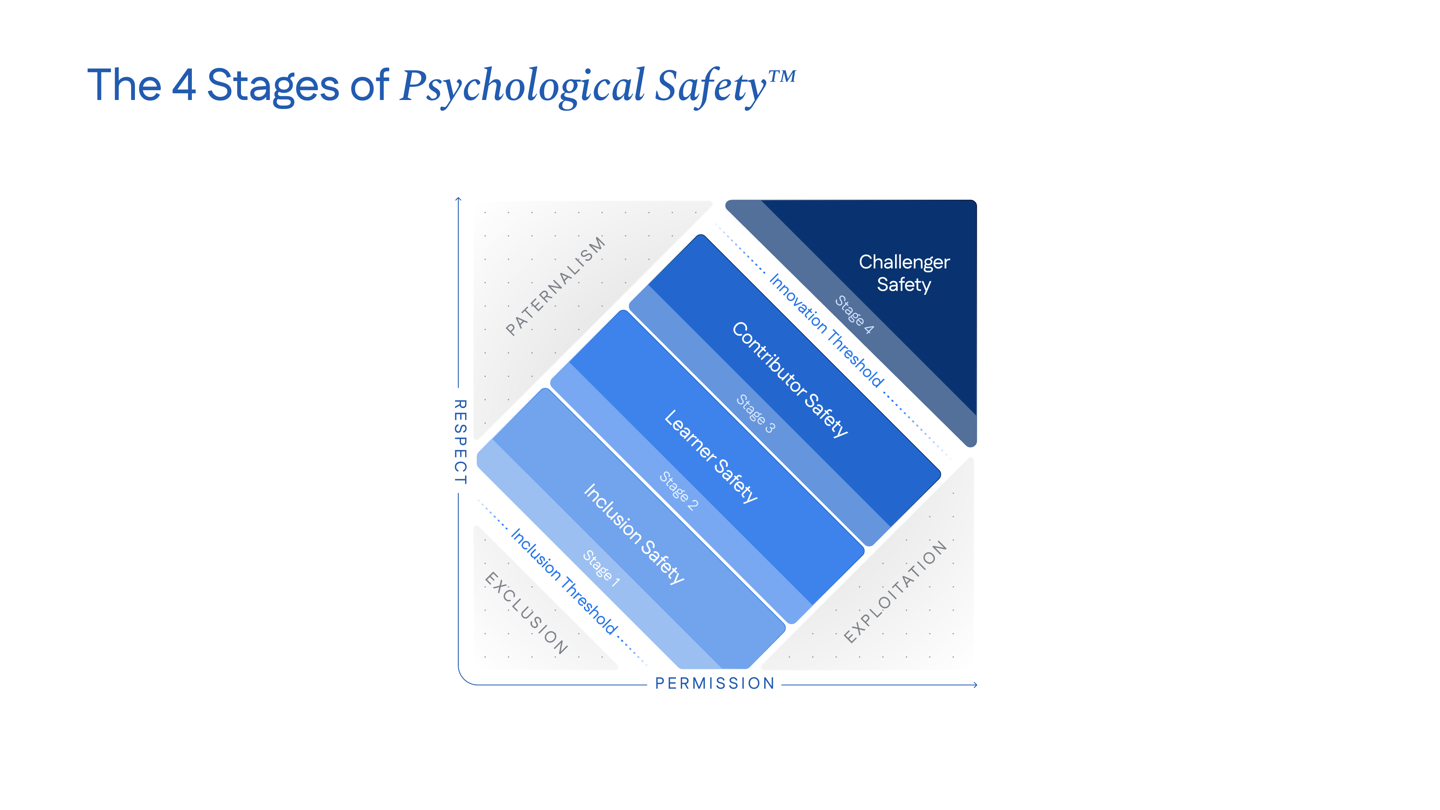
The 4 Stages of Psychological Safety™ course gives every leader a measured PSindex® baseline — stage by stage, team by team — and the specific behaviors that move it.
The 4 Stages of Psychological Safety™
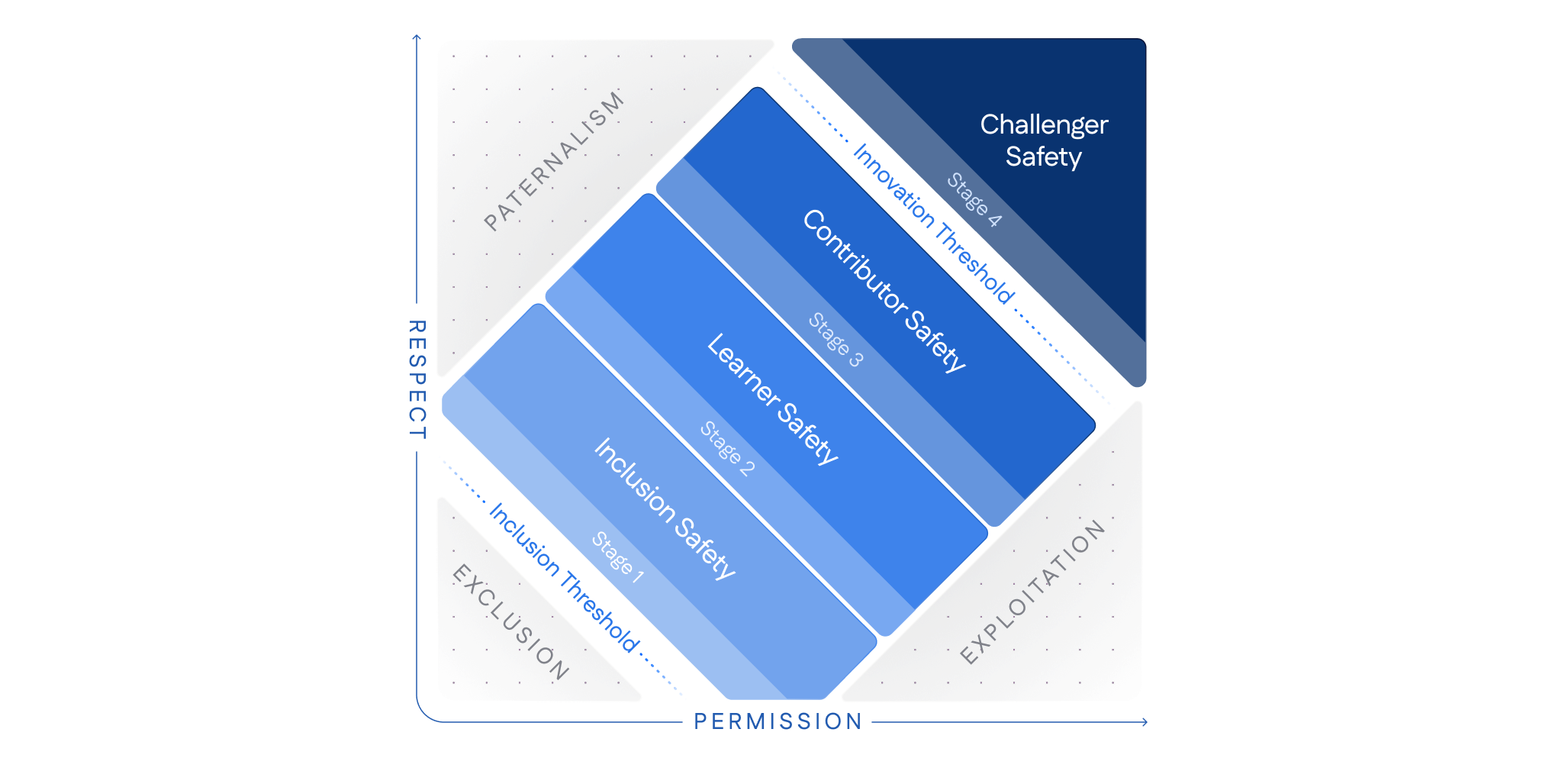
1Inclusion Safety
"I’m accepted here."
The newest person on the crew sees the most and is granted the least standing. Nobody risks anything for a team they don’t belong to.
2Learner Safety
"I can ask and admit."
A worker who can’t safely say "show me again" will guess instead — and guessing around live hazards is how people get hurt.
3Contributor Safety
"I’m trusted to act."
Where stop-work authority becomes real. The test isn’t the policy — it’s what happens the tenth time someone uses it.
4Challenger Safety
"I can challenge anyone."
Stopping the line. Questioning the surgeon. The stage physical safety depends on — and it stands on the three below it.
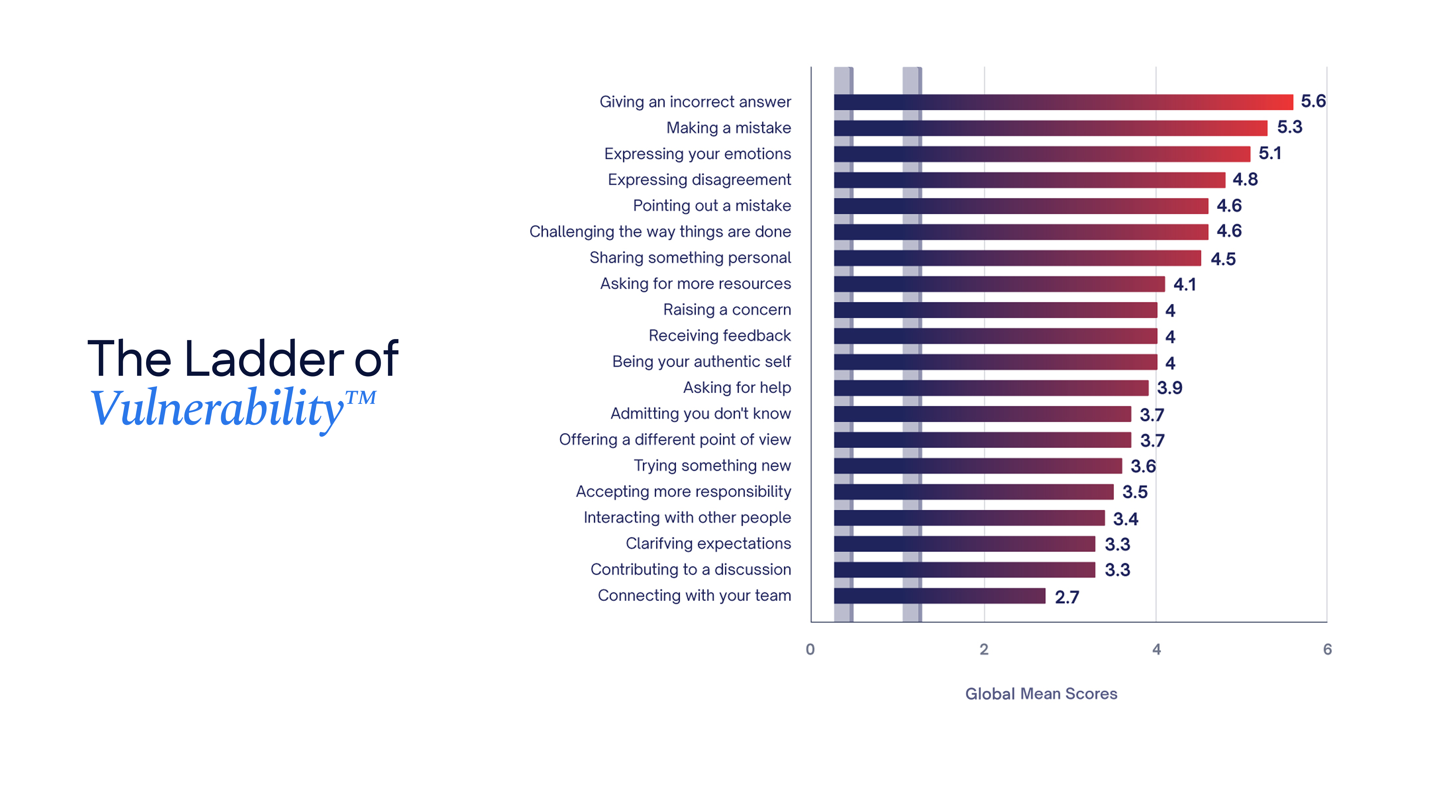
86% of 3,366 employees surveyed put "challenge the way things are done" last — your workers already run this sequence. The course makes your safety program run it too.

Take The 4 Stages™ off the shelf, or have us build a version around your safety program. Same course engine. Your world.
Tim and Junior walk the full chain in eighteen minutes — the fifth hazard category, why authority isn't psychological permission, and the litmus test to take back to your floor.
A large US health system
$20.50 back for every dollar invested.
Read the case studyA global data-center services provider
Challenger Safety, up 61%.
Read the case studyA $40B+ semiconductor leader
A movement, not a program.
Read the case studyA global diagnostics leader
From 48 to 64 — on measurement alone.
Read the case studyA working preview of the course platform — what learners see, and what your facilitators and admins run.
Day 0 Take PSindex® — self and external raters. Truth first, not a hunch.
Everyone on my team is accepted for who they are — no one has to earn basic respect.
Facilitator certification
Keep going to complete your certification.
Facilitator resources
Program roadmap · FY26
Upcoming
Also scheduled: People leaders · wave 2 (140 · live-virtual · Q3) and All teams (900 · on-demand · Q4).
Delivery · people leaders, wave 1
Live-virtual
Next session Thu · 32 enrolled
Facilitated by your certified team
In person
On-site workshop · Oct 12
Your facilitators or LeaderFactor experts
On-demand
210 active learners
Self-paced, same curriculum and assessment
Presenter mode
Presenting · live-virtual

Introduction · Lesson 6
Why safety is built on rewarded vulnerability
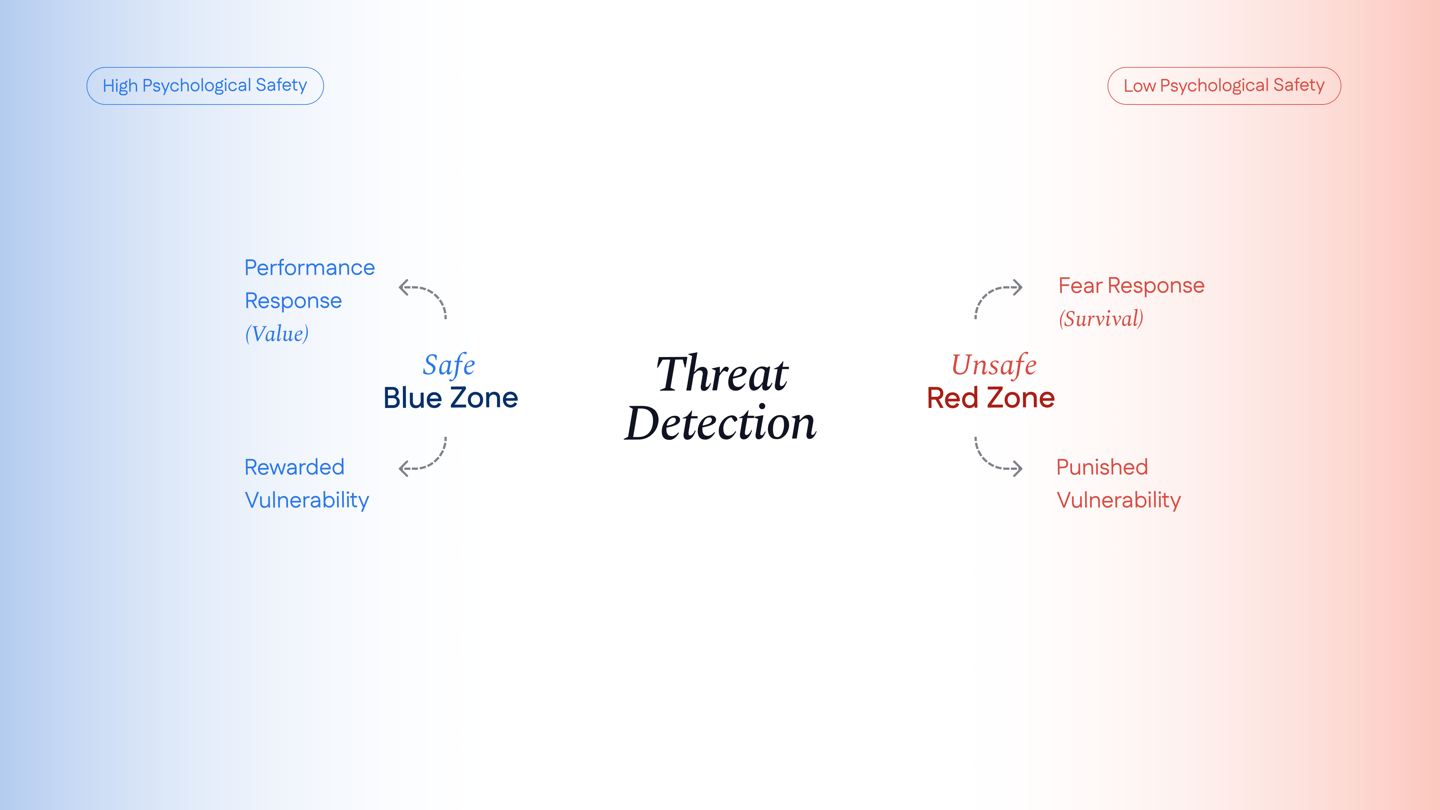
Reward vulnerability and you get more of it. Punish it once and it quietly disappears.
When did someone on your team take a risk by speaking up — and what did you do next?
In last week’s retro, Maya flagged that our estimates were consistently optimistic. I thanked her in front of everyone and we changed the process — first time anyone’s challenged a team norm out loud.
Reward the next person who surfaces a problem — out loud, in the moment, in front of the team.
PSindex® · individual
Dimension breakdown · in stage order
Do I help others feel included?
You and your raters see this the same way.
Sub-dimensions
Do I help others feel safe to learn?
You rate this higher than others experience it — start here.
Sub-dimensions
Do I help others feel safe to contribute?
Others experience this more strongly than you give yourself credit for.
Sub-dimensions
Do I help others feel safe to challenge the status quo?
You and your raters see this the same way.
Sub-dimensions
In their words · qualitative
“What is one thing preventing people from learning on this team?”
Questions get answered, but the tone makes you think twice before asking the next one.
Mistakes get fixed quietly instead of talked about.
“What should this leader keep doing?”
Giving real ownership. You get trusted with the whole problem, not just the task.
Illustrative sample data, normalized to 0–100 for display — each instrument reports on its own scale.
In the flow of work
Invite the quietest voice first.
When we open a discussion, I will ask the quietest person for their take before I share mine.
How consistently did you invite the quietest voice this week?
Reward the messenger.
When someone surfaces a mistake or bad news, I will thank them for surfacing it before we talk fixes.
How consistently did you reward the messenger this week?
Start working on a new commitment
You have 12 planned skills — time to get started.
Planned commitments
Saved for later. When you're ready, move one to your plan. Psychological Safety 56/100 Emotional Intelligence 58/100 PSindex® · aggregate reporting
Pre / post by stage
Baseline 90-day BenchmarkBenchmark = the PSindex® research base across participating organizations.
Participation & engagement
474 invitedBy cohort
4 cohorts · 3 modalitiesIllustrative sample data, normalized to 0–100 for display — each instrument reports on its own scale.

Walk the floor this week and ask the litmus test question. The honest answer tells you where to start — and we can tell you how fast you can get there.