







The same amount of heat can improve a plan or shut down the person who wrote it.
Two meetings can get equally heated and end in very different places. One ends with a better plan, the other with the person who wrote it deciding not to bring the next one; inside are six triage questions and 42 moves for each kind of friction.
What’s inside
Two meetings can get equally heated. One ends with a better plan. The other ends with the person who wrote the plan deciding not to bring the next one. If all you measured was how tense those two meetings got, you’d call them the same, and that’s how most leaders judge a meeting: when it gets heated, they calm it down, and when nobody raised their voice, they call it a good meeting.
This guide is built on Dr. Timothy R. Clark’s line between a meeting that’s tense and one that’s intense. It follows an idea through the three phases where friction shows up, from the time someone spends alone with it to the moment it gets decided, and gives you six questions that tell you which kind of friction you’re dealing with, and 42 moves for each.
What’s inside
- The problem. Why two equally heated meetings end so differently, and what the research on task and relationship conflict leaves out.
- Two kinds of friction. Tense versus intense, and the 2×2 of intellectual and social friction.
- False harmony. Six signs a calm team is keeping its objections out of the meeting.
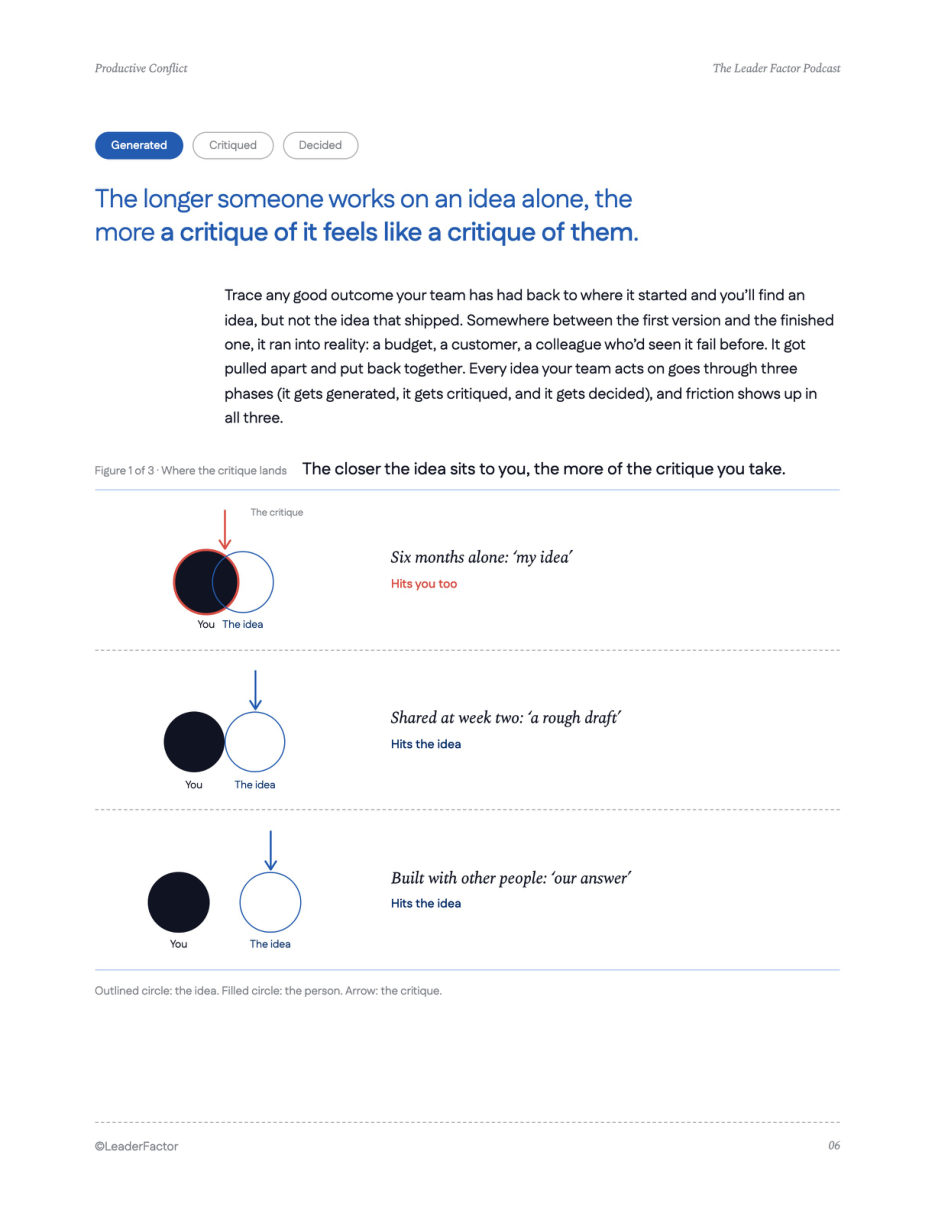
- When the idea is generated. Why the time someone spends alone with an idea decides how hard a critique of it lands.
- When the idea is critiqued. How trust decides whether a critique lands on the idea or on the person, and how to come in at 45 degrees.
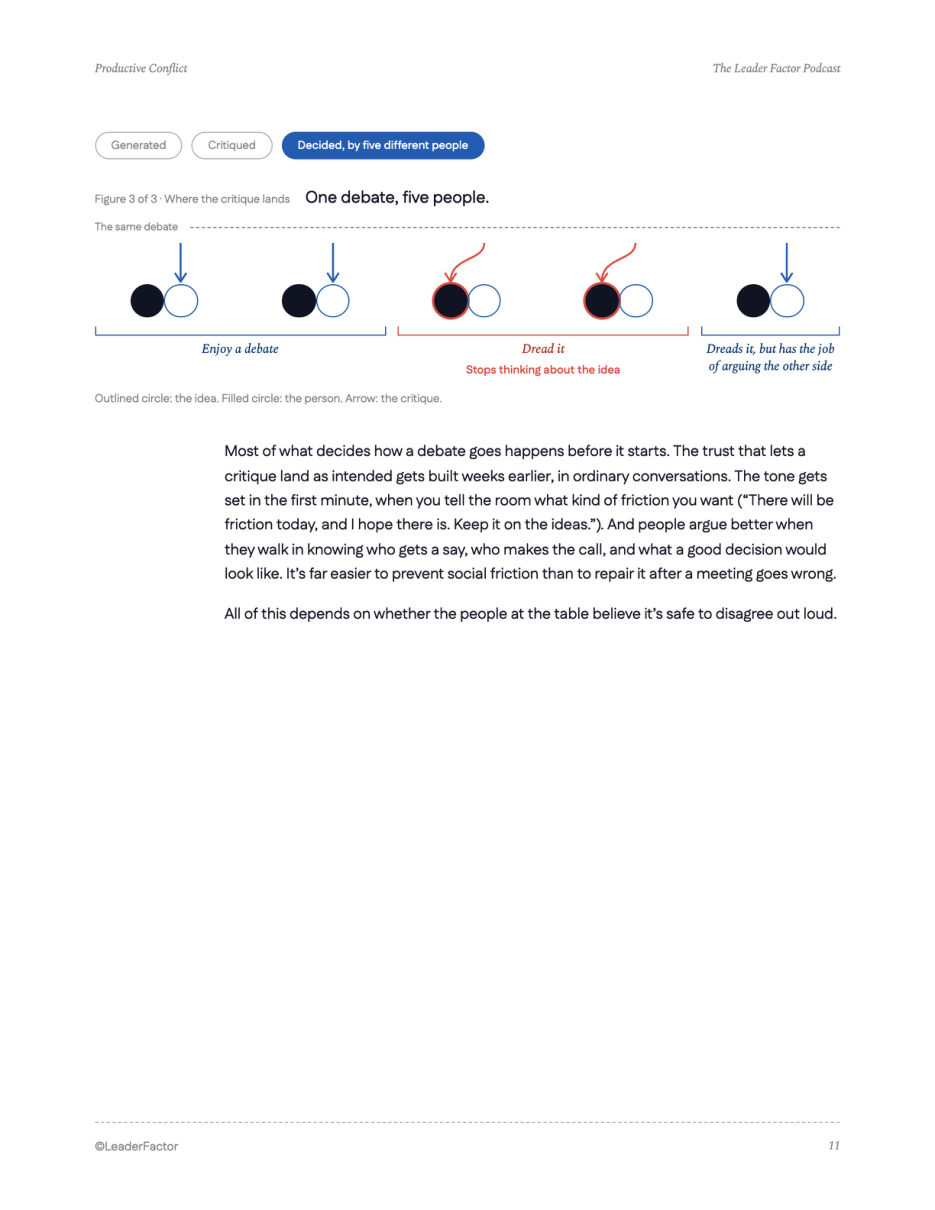
- When the idea is decided. Why five people handle the same debate five different ways, and what a dissent role does.
- The pivot. What Challenger Safety shows you that watching meetings can’t.
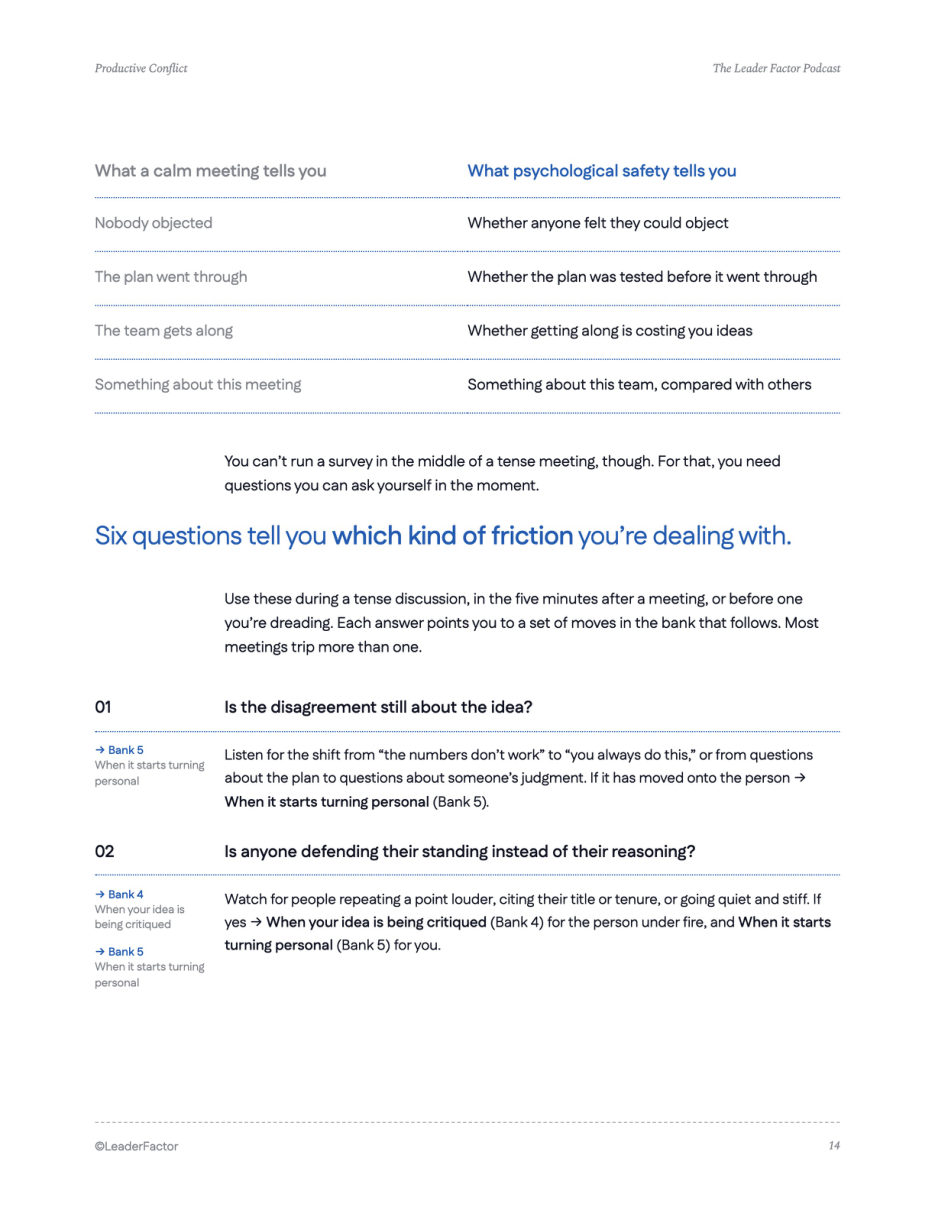
- Triage. Six questions that tell you which kind of friction you’re dealing with.
- The bank. 42 moves in eight sections, from before the meeting to after it.
- Close. Three questions to take into your next hard meeting.
Get the guide.
Productive Conflict: How to Get More Debate and Less Drama