







Your boss asks about the number every week, and nobody asks whether your team tells you the truth.
You were told to hit the number and build psychological safety. This guide follows four people on one team to show what putting the number first does for you now and what it does to them over time.
What’s inside
Think back over last week. Did you move a one-on-one for the third time because the board deck was due? Did you answer a mistake more sharply than you meant to? None of that makes you a bad manager. The instruction to build psychological safety landed on you the same way the number did, with a deadline and from leaders who mostly haven’t built it for you, and an hour spent on the number shows up in this week’s report while an hour spent on your team shows up months later as a launch that didn’t slip. So the number wins most weeks, and for a while that works.
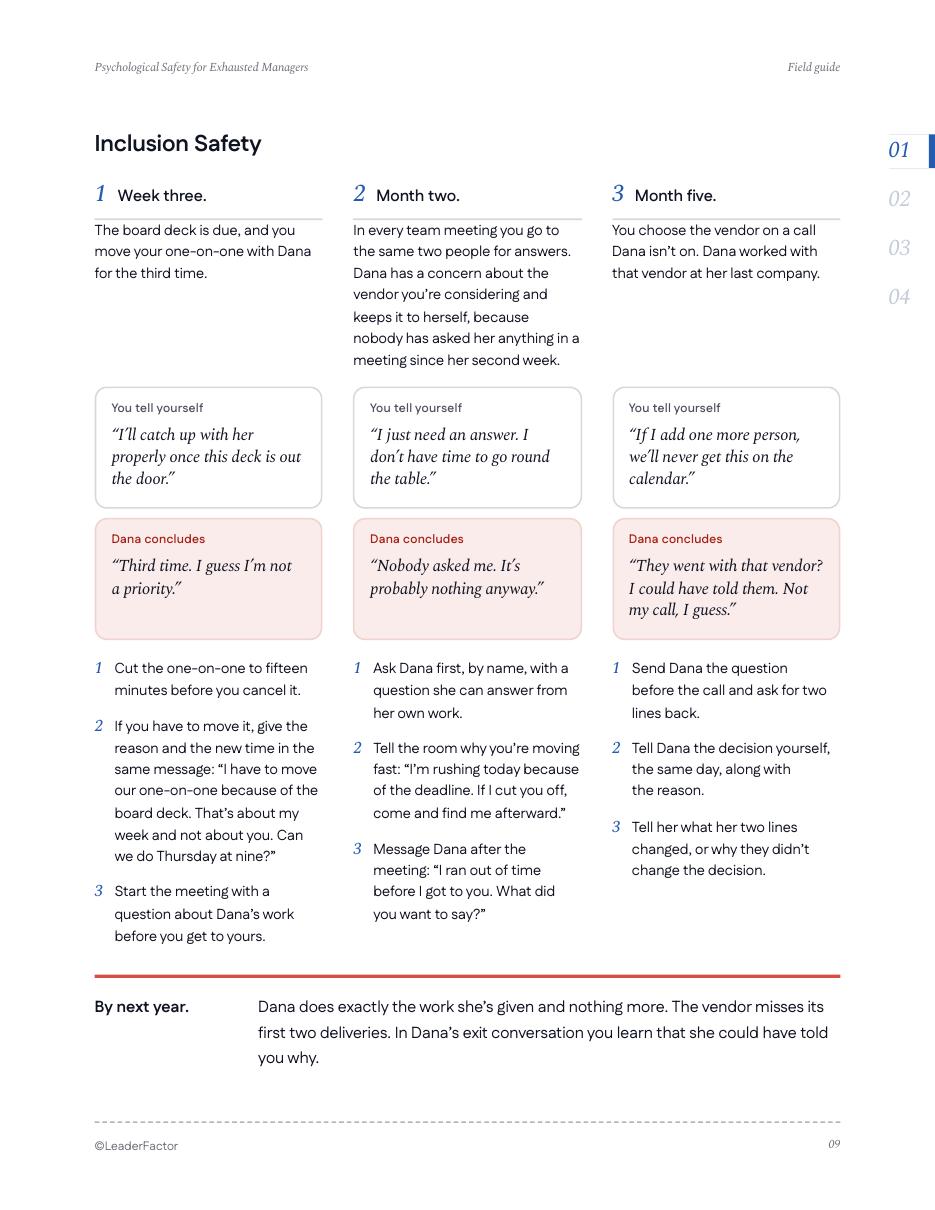
This guide is the companion to the episode with Dr. Timothy R. Clark and Junior. It follows four people on one team, one per stage of psychological safety, through three moments each when the number came first, and shows what you told yourself, what they concluded, and the few seconds that would have changed how each story ends.
What’s inside
- Where you are. The four moments from last week when the number won, and why none of them makes you a bad manager.
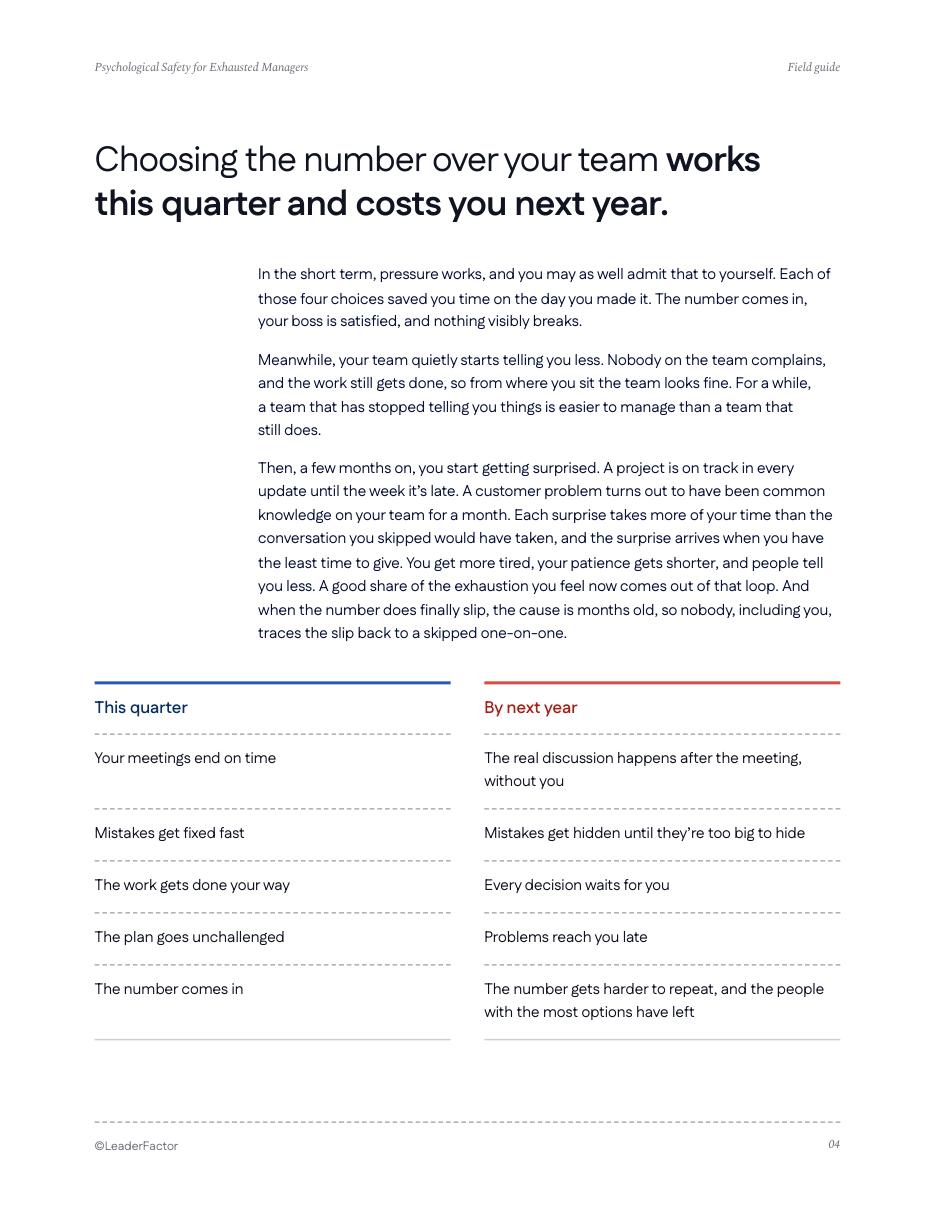
- Short term and long term. What choosing the number gets you this quarter, and the loop that makes you more tired by next year.
- Why do it anyway. Why nobody builds psychological safety for managers, and the practical reason to go first.
- Where it gets decided. The small moments where your team decides what to tell you, and the four stages of psychological safety.
- Inclusion Safety. Dana, the new hire whose one-on-one keeps moving.
- Learner Safety. Luis, who brought you a mistake two days before the forecast.
- Contributor Safety. Priya, whose deck you rewrote at six o’clock.
- Challenger Safety. Omar, who said the launch date couldn’t be met.
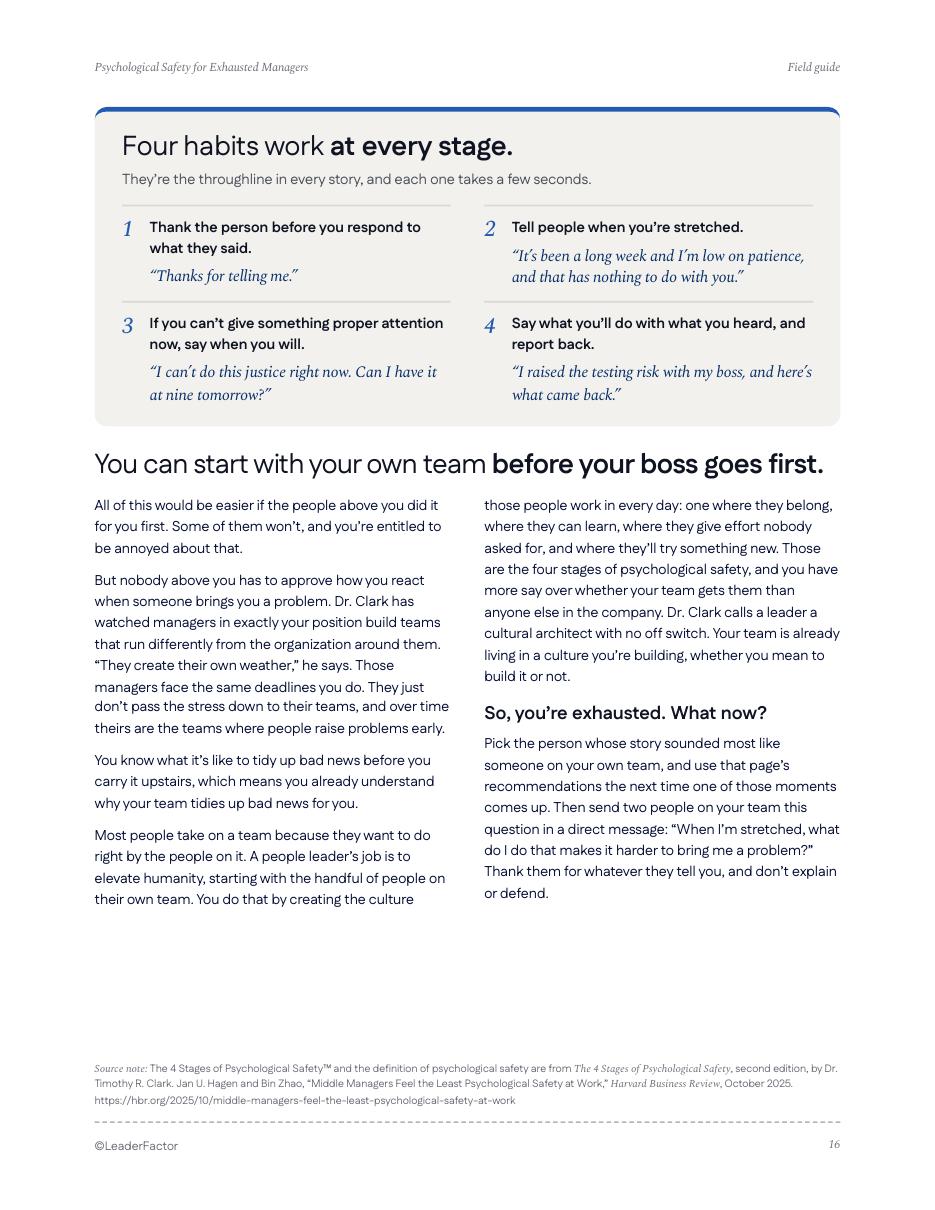
- Four habits that work at every stage, on a card to screenshot or print.
- Start with your own team, before your boss goes first.
Get the guide.
How to Build Psychological Safety When Your Managers Are Exhausted