





Psychological safety vs. trust: what's the difference?
Trust and psychological safety are not the same thing — here's how they differ, how they relate, and why your team needs both to speak up.
Trust and psychological safety are not the same thing, and treating them as interchangeable is one of the most common mistakes leaders make. Trust is your confidence in a specific person. Psychological safety is a property of the team environment. A team can trust you completely and still feel unsafe to speak up — which is why trust alone won’t get people to take the risks that move work forward.
What is trust?
Trust is positive predictability. It’s the confidence that another person will behave the way you expect them to — that they’ll do what they say, act with competence, and follow through on their intentions. Trust is fundamentally a one-to-one judgment you make about an individual: can I rely on this person? It accrues over repeated interactions as someone proves, again and again, that they are who they appear to be.
What is psychological safety?
Psychological safety is a culture of rewarded vulnerability. It’s a condition of the team — not a judgment about any one person — that determines whether it’s safe to take interpersonal risks: to ask a question, admit you don’t know, raise a concern, share a half-formed idea, or challenge the way things are done. In a psychologically safe environment, acts of vulnerability are consistently rewarded rather than punished. It is not niceness, consensus, comfort, or a shield from accountability. It’s the permission and the expectation that people will be candid.
How are trust and psychological safety different?
The core difference is the question each one answers. Trust answers “can I rely on you?” Psychological safety answers “is it safe for me to be vulnerable here?”
| Trust | Psychological safety | |
|---|---|---|
| What it is | Positive predictability | Rewarded vulnerability |
| Where it lives | Between two people | Across the whole team |
| What it measures | Confidence in a person | Safety to take interpersonal risk |
| The question it answers | Can I rely on you? | Is it safe to be vulnerable? |
Trust is directional and personal — you extend it to someone. Psychological safety is environmental and collective — the team either rewards vulnerability or it doesn’t. That’s why the two can move independently: you can find a leader entirely predictable and still learn, through experience, that speaking up gets you penalized.
Can you have trust without psychological safety?
Yes, and this is the half of the picture most leaders miss. A team can trust your competence, your follow-through, and your good intentions, and still hold back the questions, concerns, and dissent that drive better decisions. Trust tells people you’re reliable; it doesn’t tell them that being vulnerable in front of you — and in front of their peers — is safe. When leaders assume their trust has automatically produced psychological safety, they stop seeing the silence as a problem and start mistaking it for alignment.
How do trust and psychological safety relate?
Trust contributes to psychological safety, but it doesn’t guarantee it. Trust is a building block — it’s hard to feel safe being vulnerable around someone you can’t rely on. But psychological safety requires something more: the team has to consistently reward acts of vulnerability over time. One trusted relationship doesn’t create a safe environment; a pattern of rewarded vulnerability across the whole team does. Trust gets you part of the way; psychological safety is what turns reliability into candor.
What should leaders do with the distinction?
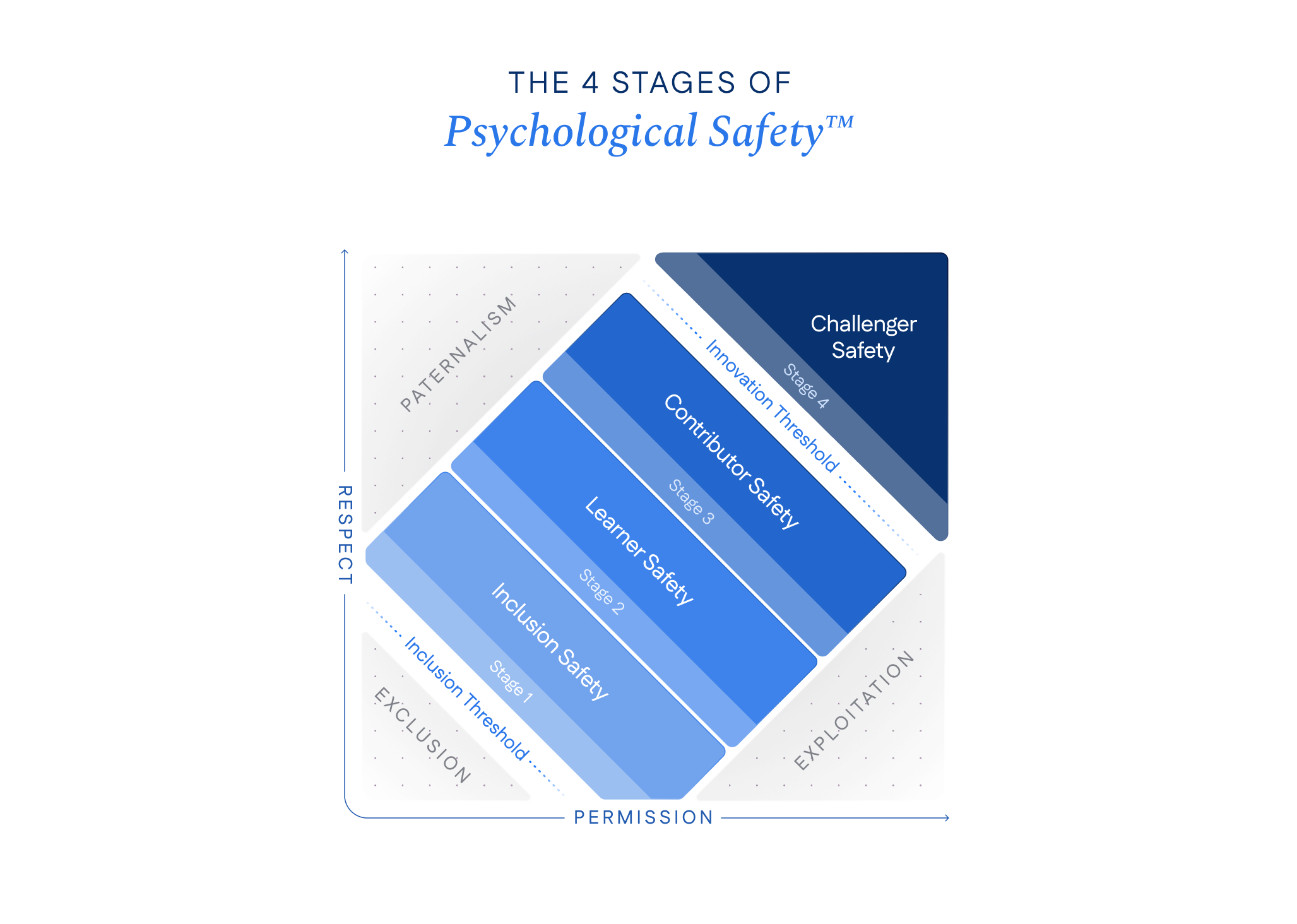
Stop treating trust as a finish line. The leadership move is to keep building trust and deliberately reward vulnerability — model it yourself, respond to questions and mistakes with appreciation rather than punishment, and make candor the expected behavior rather than the brave exception. To go deeper, explore the four stages of psychological safety and how to start building psychological safety in teams.
Frequently asked questions
- What is the difference between psychological safety and trust?
- Trust is positive predictability — your confidence that another person will behave the way you expect. Psychological safety is rewarded vulnerability — a property of the team environment that determines whether it's safe to take interpersonal risks like asking a question, admitting a mistake, or challenging the status quo. Trust is a one-to-one judgment; psychological safety is a condition of the group.
- Can a team trust its leader and still lack psychological safety?
- Yes. People can find a leader completely predictable and reliable and still hold back, because trust answers 'can I rely on you?' while psychological safety answers 'is it safe for me to be vulnerable here?' A team can have high trust and low psychological safety at the same time.
- Does trust create psychological safety?
- Trust contributes to psychological safety but does not guarantee it. Psychological safety also depends on the team consistently rewarding acts of vulnerability rather than punishing them. You can trust someone's competence and intentions and still learn, through experience, that speaking up gets penalized.
- Which matters more, trust or psychological safety?
- Both matter, but they do different jobs. Trust tells you whether you can depend on a specific person. Psychological safety determines whether the whole team will take the interpersonal risks — questions, candor, dissent, admitted mistakes — that actually move work forward. Leaders need both, and most overestimate how much psychological safety their trust has produced.