





Can you have too much psychological safety?
Discover how psychological safety fuels innovation and accountability in the workplace, debunking common myths and offering strategies for leaders.
The conversation about psychological safety in the workplace has taken a provocative turn with the question: is it possible to have too much psychological safety? Inspired by critiques that suggest an excessive amount of psychological safety might detract from performance and accountability, this question demands a careful examination of what psychological safety truly is and how it affects organizational culture.
Understanding psychological safety
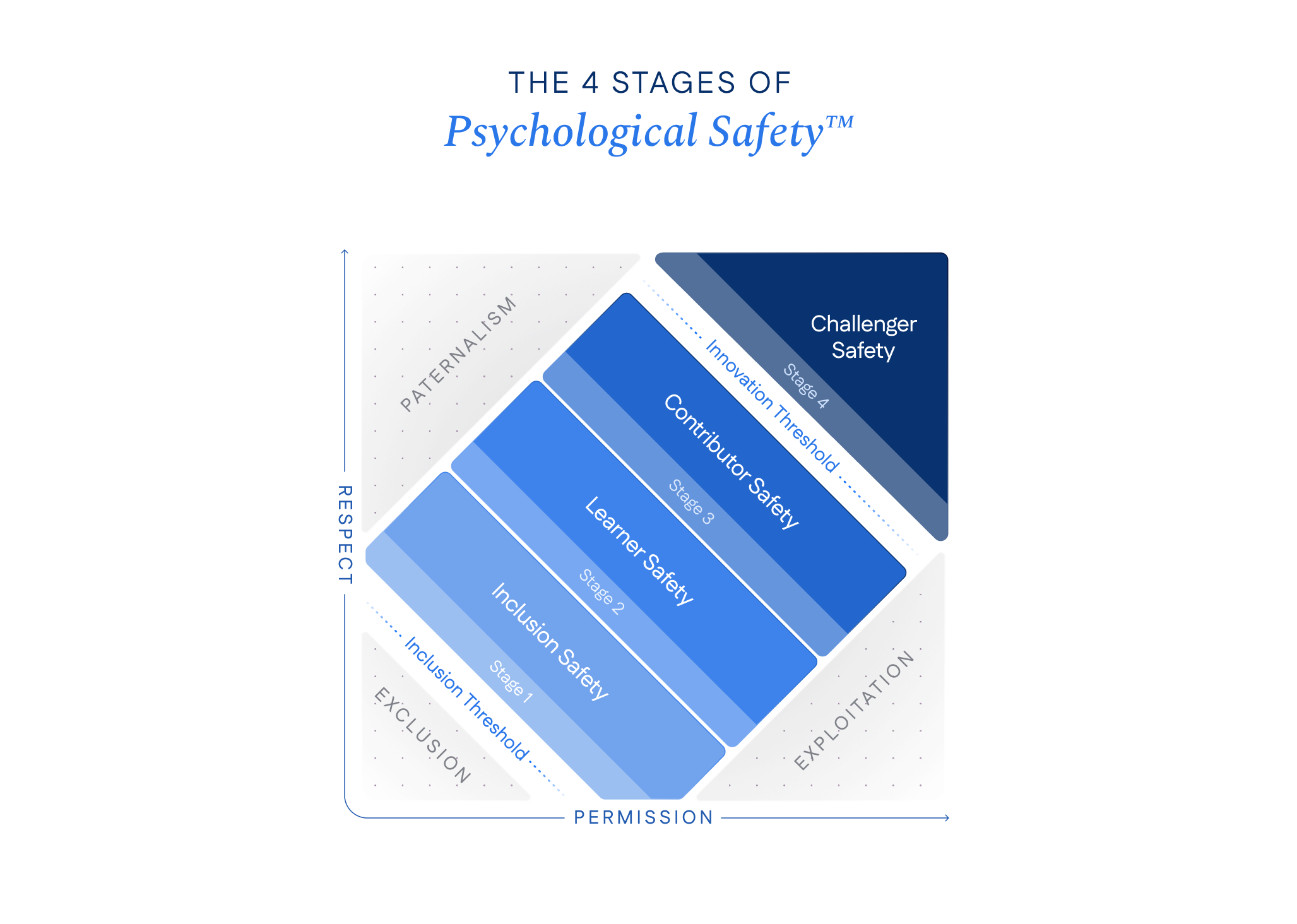
Psychological safety is defined as an environment of rewarded vulnerability, which embraces four pivotal behaviors: inclusion, learning, contribution, and challenging the status quo. Clarifying common misunderstandings, psychological safety is not about pampering employees, sidestepping accountability, or encouraging hazardous risk-taking. It’s about fostering an atmosphere where employees feel encouraged to share their ideas, identify issues, pose questions, and acknowledge mistakes without the dread of reprisal. To grasp the full scope of this concept, exploring the four stages of psychological safety elucidates its transformative potential within any organization.
Misconceptions around psychological safety
Misinterpretations regarding the adverse effects of excessive psychological safety largely arise from a flawed understanding of its core principles. Contrary to the belief that psychological safety erodes accountability and promotes unlimited risk-taking, true psychological safety actually nurtures a setting where accountability is addressed more openly due to the culture’s inherent aspects of respect and permission.
The relationship between psychological safety and accountability
A critical aspect of the conversation is the positive interplay between psychological safety and accountability. High levels of psychological safety enhance the effectiveness of holding individuals accountable, since people are more receptive to feedback and inclined to take corrective action. Far from impeding performance, psychological safety, when intertwined with accountability, propels the progress of organizational health. This synergy is reflective of meaningful personal relationships where supportive dynamics coexist with high expectations. For instance, a plant manager in the steel industry, by emphasizing psychological safety alongside strict accountability, underscores the preservation of life without invoking fear among workers.
Psychological safety, risk, and innovation
The notion that psychological safety may lead to unchecked risk-taking is debunked. Psychological safety actually encourages calculated risks within the confines of one’s roles and responsibilities. It’s the essence of psychological safety that fuels innovation by welcoming diverse perspectives, fostering learning from setbacks, and nurturing an environment conducive to continual growth across various sectors, from the manufacturing floor to the executive boardroom.
Cultivating psychological safety
For leaders aiming to enhance their workplace’s psychological safety without impeding performance or accountability, the following strategies are essential:
- Clearly establish and communicate the parameters for employee innovation and norm challenging.
- Promote a culture where errors are viewed as opportunities for growth.
- Cultivate an environment that rewards vulnerability, enabling team members to freely express ideas, concerns, and mistakes.
- Remove the fear associated with accountability by showing that it’s possible to have high expectations within a nurturing framework.
Conclusion
The assertion that too much psychological safety is detrimental to organizational health stems from a misinterpretation of the essence of psychological safety. Psychological safety and accountability are not mutually exclusive but are complementary forces that, when adeptly fostered, significantly enhance performance, innovation, and agility within organizations. For leaders, the challenge lies not in limiting psychological safety but in deepening its principles to create a workplace where accountability is embraced and innovation flourishes.
Frequently asked questions
- Can you have too much psychological safety?
- No. The idea that too much psychological safety harms organizational health stems from a misunderstanding of what psychological safety is. Psychological safety and accountability are complementary forces, not opposites, and when fostered well they enhance performance, innovation, and agility.
- Does psychological safety reduce accountability?
- No. High psychological safety actually makes accountability more effective, because people are more receptive to feedback and more inclined to take corrective action. Accountability is addressed more openly in a culture built on respect and permission.
- Does psychological safety encourage reckless risk-taking?
- No. Psychological safety encourages calculated risks within the boundaries of a person's role and responsibilities. It fuels innovation by welcoming diverse perspectives and learning from setbacks, not by promoting unchecked or hazardous risk-taking.