





Managing organizational culture
Managing organizational culture means running it on a cadence, not a poster: how to read, measure, sustain, and course-correct culture before it drifts.
Managing organizational culture is the ongoing work of reading, measuring, sustaining, and course-correcting how people interact — long after any values statement is written or any change initiative ends. It is not a launch; it is an operating discipline. LeaderFactor defines culture simply as the way we interact, which means managing organizational culture is really about managing the patterns of behavior your people repeat every day, and steering them deliberately before they drift.
That distinction matters because culture doesn’t hold still. Every team already has a culture whether anyone tends it or not, and left alone it decays toward whatever behavior leaders are willing to tolerate. Building a culture and changing a culture are projects with a beginning and an end. Managing a culture never ends — which is why so many organizations run the launch well and then quietly lose the ground they gained.
What does managing organizational culture mean?
Managing organizational culture means treating culture as a live system you continuously observe and adjust, rather than a project you complete. Three things separate ongoing management from a one-time culture change: it is continuous rather than time-boxed, measured on a cadence rather than assessed once, and owned by a named leader rather than outsourced to an initiative.
The unit of management is behavior. Because culture is the way people interact, the only thing a leader can actually manage is the pattern of interaction — who speaks up, whose ideas get built on, whether a mistake gets punished or turned into learning. Attitudes, beliefs, and values are real, but they’re subterranean; they only surface when people interact. So managing culture is not managing what people believe. It’s managing what they do, repeatedly, until those behaviors harden into norms — which is freeing, because behavior is observable and measurable in a way that values on a wall never are.
Who owns and manages organizational culture?
Everyone contributes to culture, but the senior leader owns it. This is the most important — and most dodged — question in culture management: who owns the culture here, really? Ask it in most organizations and you get a shrug. HR runs a survey, leadership has values on a wall, everyone “contributes.” But contribution is not ownership.
LeaderFactor draws the line cleanly. Every person on a team is a cultural architect — you radiate influence to the people around you every day, and there’s no off switch. You can’t decide not to shape the culture; it’s embedded in how you show up. But shaping is not owning. Ownership requires authority, and only the person with senior authority can hold a culture accountable and change what gets rewarded and punished. That’s why cultural stewardship can’t be abdicated or delegated: a leader who hands culture to a committee still owns the outcome, because the tone at the top is set whether they manage it or not.
This is not a new idea, but it’s a neglected one. Organizational psychologist Edgar Schein argued that creating and managing culture may be the only thing of real importance that leaders do. Managing organizational culture isn’t an HR program running alongside the “real” work of leadership. For a senior leader, it is the real work — HR’s job is to equip leaders and run the measurement, not to own the result.
How do you read organizational culture?
You read a culture at the human interface — the observable patterns of how people interact — not at the artifacts. Managers often gauge culture from the visible trappings: the mission on the wall, the perks, the all-hands energy. Those can mislead. The reliable read comes from watching the interaction itself, where three signals tell you almost everything:
- Response patterns to vulnerability. When someone admits a mistake, asks a naive question, or floats a half-formed idea, what happens? Is that vulnerability rewarded, punished, or met inconsistently? The pattern of responses is the culture.
- Distribution of participation. Is airtime broad or captured by a few voices? Do quieter or more junior people contribute, or has participation narrowed to the confident and the senior?
- The presence of generative friction. Healthy cultures have a generative phase — ideas colliding, people sparring and testing and building on each other. When that disappears and meetings go quiet and uniformly agreeable, something is wrong.
You don’t need a quarter of data to get a bead on this. Observe a team’s real interaction for fifteen minutes and the dynamics reveal themselves — because in our efforts to conceal what’s really happening, we tend to reveal it. Reading the interface is the daily half of culture management; measurement is what turns those reads into something you can track and defend.
How do you measure and monitor organizational culture over time?
Measure culture continuously with a validated instrument, then re-measure on a cadence — because a single annual survey can’t sustain a culture. An annual engagement survey is baseline data at one point in time: it tells you where you were, not where you’re heading, and it’s far too slow to catch drift while you can still act. Ongoing management needs pulse indicators, both quantitative and qualitative.
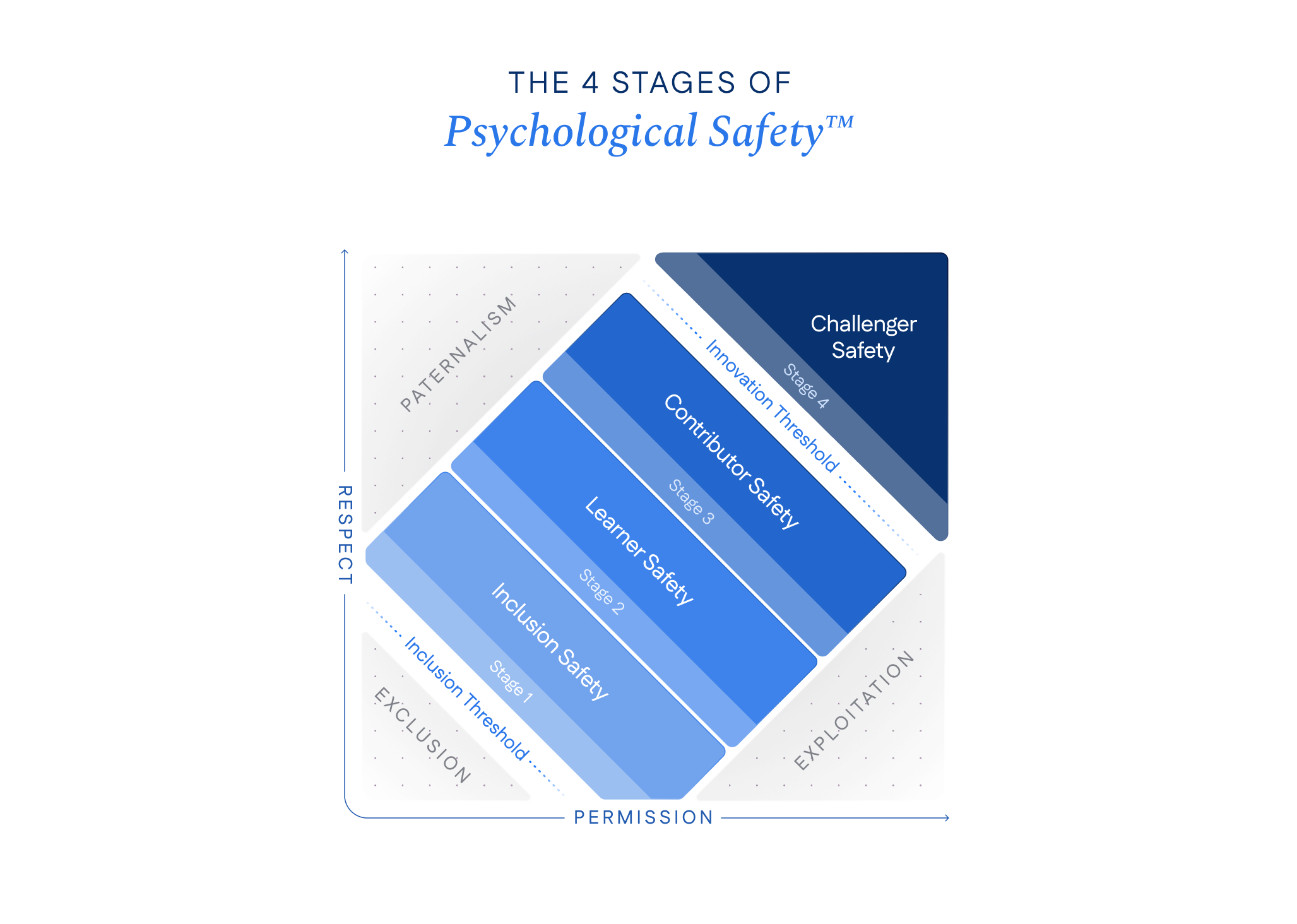
LeaderFactor measures the lead indicator of a healthy culture — psychological safety — with the PSindex®, a psychometrically validated instrument. Rather than a vague satisfaction rating, PSindex® scores a team across the four stages of psychological safety on twelve behavioral items, sorting every response into one of three zones:
- Blue Zone (a consistent pattern of rewarded vulnerability) — a psychologically safe environment
- Neutral Zone (an inconsistent, unpredictable pattern) — safety in doubt
- Red Zone (a consistent pattern of punished vulnerability) — a psychologically unsafe environment
A team’s score is its Blue Zone percentage minus its Red Zone percentage — a number from -100 to +100 that leaders track exactly like a business metric. Because it’s administered at the intact team level, the smallest divisible unit of culture, it localizes which teams and which stages are slipping. Then you re-assess: LeaderFactor re-measures roughly every 90 days, so movement shows up while it’s still correctable. That re-test cadence, paired with the qualitative reads from the human interface, is what turns “how’s the culture?” from an annual guess into a continuous signal.
The LeaderFactor lens: manage culture by design, not by default
You always have a choice in how you approach culture — by design or by default, by choice or by chance — even though having a culture is not a choice at all. This is the heart of LeaderFactor’s psychological safety framework, and the difference between managing culture and merely hosting one. Manage by default and the culture forms around accidents, personalities, and whatever bad behavior nobody stopped. Manage by design and you deliberately shape the norms.
The mechanism for shaping norms is specific and, usefully, small — LeaderFactor calls it the central mechanism of culture formation, and it has two parts:
This is why psychological safety is the right thing to manage toward. LeaderFactor defines psychological safety as a culture of rewarded vulnerability, and the research ties it to ten organizational outcomes — including engagement, retention, learning agility, productivity, and innovation. Manage the safety and you’re managing the conditions for all ten. It also guards against a common failure mode: psychological safety is not niceness, not a shield from accountability, and not a license for consensus decision-making. A culture that mistakes safety for niceness paints a thin layer of nice over a thick layer of fear — which looks calm right up until it fails.
How do you course-correct culture before it degrades?
Course-correct culture by catching moments of truth — reinforcing or correcting a behavior the instant it surfaces — because culture drifts toward exactly what leaders tolerate. Every day, behaviors appear that either belong in your culture or don’t, and a moment of truth is the instant a leader chooses to weigh in or let it slide. Miss the moment and you’ve just normalized something you don’t want normalized. The current state of any culture is, in large part, a running total of what its leaders have decided to tolerate.
The most valuable moments of truth are corrective and immediate. A single senior leader who stops a meeting to say “time out — I never want to hear that again” can reset a norm the culture had drifted into, and word travels fast precisely because it’s rare and it’s meant. That’s management in real time: not a quarterly initiative, but a reflex.
To course-correct early, you have to know what drift looks like before the damage is obvious. Two patterns are your early-warning system:
- The team goes quiet and nice. Superficial collegiality, shrinking candor, defensive routines, people managing personal risk instead of contributing. Calm is not the same as healthy.
- Challenger Safety erodes first. When norms move the wrong way, you don’t lose inclusion first — you lose the willingness to challenge the status quo. Innovation is the canary in the coal mine: the lifeblood of the organization, and the first thing to disappear long before things look bad.
Watch both ends of the spectrum. Culture can rot toward pathological conflict — impasse, politics, personal battles — but also toward pathological compliance — echo chambers, groupthink, quiet agreement. The compliant end is easy to miss because it looks peaceful, but it’s decay all the same.
How do you sustain a healthy culture long-term?
Sustain culture by giving it an operating cadence — run accountability on culture the same way you run accountability on a P&L. A culture you manage only in a crisis will always regress. What holds it in place is rhythm: reported, reviewed, owned, on a schedule. Concretely, sustaining culture long-term looks like this:
- Keep a live measurement running. Re-assess psychological safety on a cadence (roughly every 90 days), and pair it with continuous reads at the human interface.
- Put culture on the leadership agenda, not just the offsite. Review how people are interacting — where vulnerability got rewarded, where a moment of truth got missed — on the same rhythm you review the numbers.
- Coach leaders on the mechanism. Your leaders sustain the culture team by team, so hold them accountable for modeling vulnerability and rewarding it in others, and give them the behaviors to practice.
- Embed the culture in the machinery. Align hiring, onboarding, feedback, recognition, and promotion with the behaviors you want, so the system reinforces the norms even when leaders aren’t watching.
The organizations that keep a strong culture aren’t the ones that ran the best launch. They’re the ones that made culture a review cadence instead of a vibe, and kept managing it long after everyone else declared victory. If you’re weighing whether the ongoing work is worth it, the case is in why organizational culture matters; the cost of neglect is steep, with research from MIT Sloan finding a toxic culture roughly 10.4 times more predictive of attrition than compensation.
Managing organizational culture, done well, is unglamorous and continuous: read the interface, measure the safety, catch the moments of truth, and never assume the work is finished. Culture is the way your people interact — and that’s happening right now, whether you’re managing it or not.
Frequently asked questions
- What does managing organizational culture mean?
- Managing organizational culture means actively reading, measuring, sustaining, and course-correcting how people interact over time — not launching a one-off change. LeaderFactor frames it as running culture like a line of business: pulse measurement, a review cadence, and leaders reinforcing the behaviors they want in the moments that surface them.
- Who is responsible for managing organizational culture?
- Everyone contributes to culture, but the senior leader owns it. Contribution isn't ownership — only the person with authority can hold the culture accountable. Managing culture is embedded in a leadership role by virtue of position; it can't be delegated to HR or a committee, though HR equips leaders and runs the measurement.
- How do you monitor organizational culture on an ongoing basis?
- Monitor culture at the human interface — the patterns of how people interact. Watch whether vulnerability is rewarded or punished, whether participation is broad or narrow, and where energy and candor are dropping. Pair that observation with pulse measurement like PSindex®, so you track movement continuously instead of relying on one annual survey.
- How often should you measure organizational culture?
- Measure culture continuously, not once a year. An annual engagement survey is a single point in time and can't sustain a culture. Use a validated baseline like PSindex®, then re-measure at intervals — LeaderFactor re-assesses roughly every 90 days — combining that quantitative signal with ongoing qualitative observation of daily interaction.
- How do you keep company culture from drifting or degrading over time?
- Culture drifts toward whatever leaders tolerate, so keep it from degrading by catching moments of truth — reinforcing or correcting a behavior the instant it appears. Watch for early warning signs like quiet, superficially nice meetings and shrinking dissent. Challenger Safety erodes first, so falling candor and innovation are your earliest signals to course-correct.