





Examples of inclusion in the workplace
Inclusion is what activates the power of diversity. Learn how to create inclusion in the workplace using The 4 Stages of Psychological Safety™.
What is workplace inclusion?
Workplace inclusion is creating a work environment where all employees feel valued and supported, regardless of their background or identity. Inclusive workplaces are those where diversity is celebrated, and where employees feel comfortable being their authentic selves. Inclusive workplaces are also those where employees are given equal opportunities for growth and advancement.
Benefits of inclusion
Inclusive workplaces have been shown to have a positive impact on employee engagement and retention, as well as on the overall performance of the organization. When employees feel included and valued, they are more likely to be productive, creative, and committed to their work. Inclusive workplaces also tend to have more diverse perspectives and ideas, which can lead to better problem-solving and decision-making.
Examples of inclusive practices
There are many different ways that companies can practice inclusion in the workplace. Some examples include:
Employee resource groups
These are groups of employees who share a common identity or interest, and who come together to support each other and advocate for their needs within the organization. Examples of employee resource groups include groups for women, LGBTQ employees, and employees with disabilities.
Mentoring programs
These programs pair employees with more experienced colleagues who can offer guidance and support as they navigate their careers. Mentoring programs can help employees feel supported and valued, and can also help them develop new skills and perspectives.
Diverse hiring
Hiring practices that prioritize diversity and inclusion can help ensure that all employees feel welcome and valued from the moment they join the organization. This can include practices such as blind resume screening, diversity recruiting events, and diversity and inclusion training for hiring managers.
Flexible work arrangements
Flexible work arrangements such as remote work and flexible hours can help employees balance their work and personal lives, and can also help create a more inclusive workplace culture.
The 4 Stages of Psychological Safety™
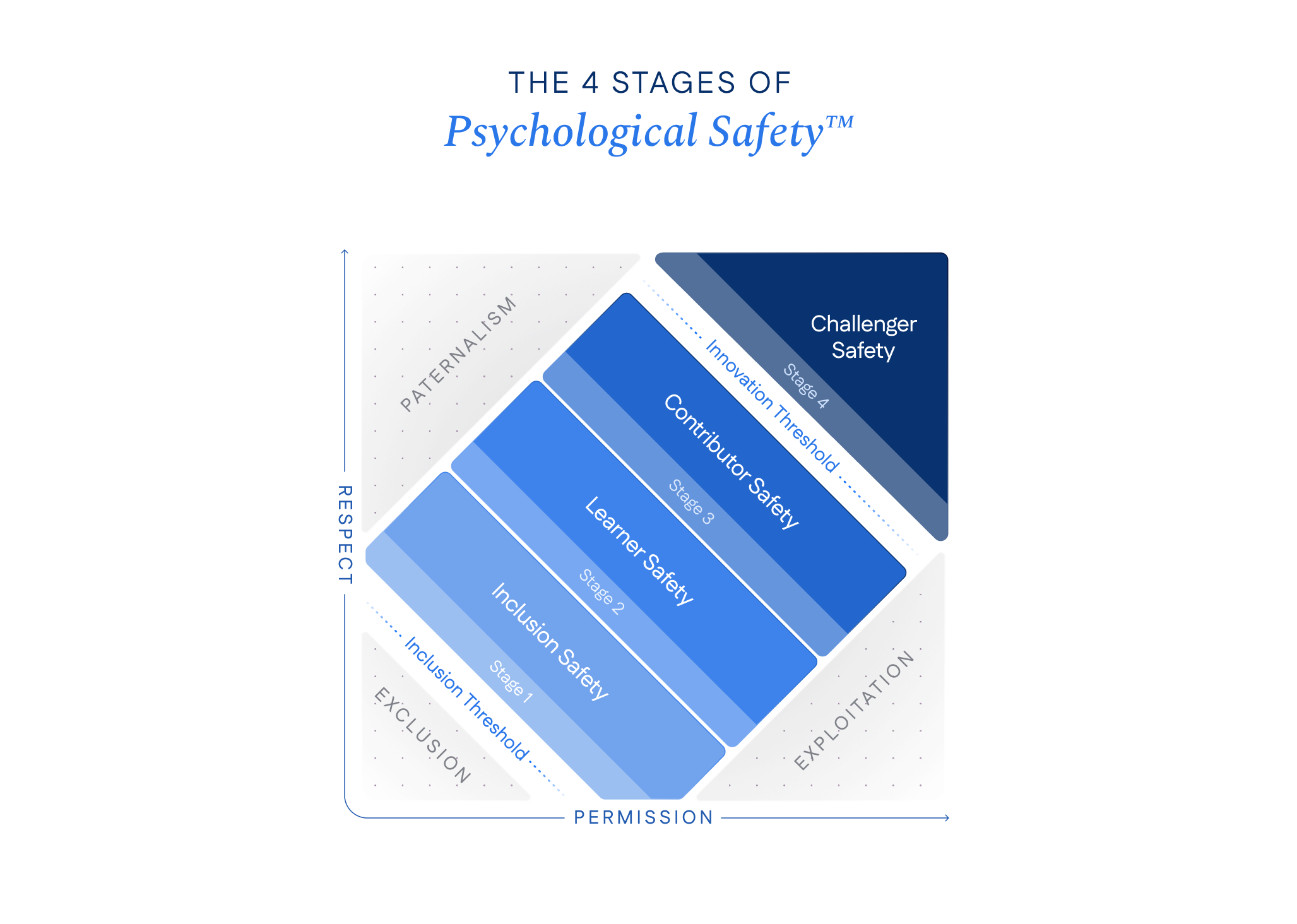
Many companies have successfully implemented inclusive practices in their workplaces. Creating inclusive environments is a team-specific challenge, as teams have specific microcultures that affect their ability to interact as their authentic selves. Dr. Timothy R. Clark’s framework, The 4 Stages of Psychological Safety™, highlights that inclusion is the foundation of any psychologically safe workplace. Once team members feel valued and accepted as themselves, they’re more likely to give discretionary effort, try new things, innovate, and grow with their organization. Here are four ways you can foster a culture of inclusion and psychological safety on your teams:
Be diverse in your interactions.
It’s easy to become habitual in your daily interactions with your team. Who do you interact with infrequently? Take a step outside of your department and meet someone new. Not only will that increase team interaction, but you might find a thing or two to implement within your own department.
Reduce social status barriers.
Be conscious of differences in social status or hierarchy that exist in any organization. What’s currently preventing your team from interacting meaningfully with their superiors or with other departments? Take steps to reduce those barriers through humility and genuine interest in others.
Give people space to talk.
Don’t immediately respond with your own story or perspective. Keep your colleagues talking and encourage them to share more. The more validation they feel when sharing something personal, the more likely they will be to engage again in the future. This can create a more meaningful relationship for both of you.
Take someone up on an invitation.
If you get an invite to connect with your team outside of work, accept! You don’t have to accept every invitation, but saying no every time can result in the invitations drying up. Invitations require some risk on the part of the person inviting. Saying yes and thanking the person for the invitation can help strengthen your relationship.
Overcoming challenges
While creating an inclusive workplace is a worthy goal, it can also be challenging. One common obstacle is unconscious bias, which can lead to hiring and promotion decisions that are not truly inclusive. To overcome this challenge, companies can provide training and education on diversity and inclusion, and can also implement blind resume screening and other hiring practices that help reduce bias.
Another challenge is creating a culture of inclusion in the workplace. This can be difficult if negative team dynamics or a lack of leadership support are present. To address this, companies can prioritize communication and feedback, encourage active listening, and promote an open and inclusive culture from the top down.
In conclusion, creating an inclusive workplace is an important goal for companies seeking to promote employee engagement and innovation and create psychological safety on their teams. By implementing inclusive practices such as employee resource groups, mentoring programs, diverse hiring, and flexible work arrangements, companies can create a positive work environment where all employees feel valued and supported.
Frequently asked questions
- What is inclusion in the workplace?
- Workplace inclusion is creating a work environment where all employees feel valued and supported regardless of their background or identity, can be their authentic selves, and have equal opportunities for growth and advancement. In LeaderFactor's framework, The 4 Stages of Psychological Safety, inclusion is the foundation on which every psychologically safe workplace is built. Inclusion is what activates the power of diversity.
- What are some examples of inclusive practices companies can use?
- Common examples include employee resource groups that let people with a shared identity or interest support each other and advocate for their needs, mentoring programs that pair employees with more experienced colleagues, diverse hiring practices like blind resume screening and diversity recruiting events, and flexible work arrangements such as remote work and flexible hours. These practices help ensure employees feel welcome and valued from the moment they join the organization.
- How do you foster a culture of inclusion on a team?
- Because teams have specific microcultures, inclusion is a team-specific challenge, and LeaderFactor recommends four everyday behaviors: be diverse in your interactions by stepping outside your department to meet someone new, reduce social status and hierarchy barriers through humility and genuine interest in others, give people space to talk instead of immediately responding with your own perspective, and take someone up on an invitation to connect outside of work. Each behavior signals that team members are valued and accepted as themselves.
- Why is inclusion the foundation of psychological safety?
- In Dr. Timothy R. Clark's framework, The 4 Stages of Psychological Safety, inclusion is the foundation of any psychologically safe workplace because people must first feel valued and accepted as themselves before they will take further risks. Once that foundation is in place, team members are more likely to give discretionary effort, try new things, innovate, and grow with their organization.