







Hearing people out and changing your mind are two different things, and your team knows which one you do.
Pick a decision with your name on it. Is there anything someone on your team could say that would make you undo it? This guide asks four questions, one for each stage of psychological safety, and shows you how to check your answers.
What’s inside
You’d say you’re open to other opinions, and you probably mean it. But pick a decision you’ve made recently, one with your name on it that is still in play. Is there anything someone on your team could say about it that would make you undo it? If you can’t picture what that argument would look like, you’re open to being told you’re wrong, and not open to being wrong. Your team already knows which one you are. They learned it from what happened to the last person’s idea.
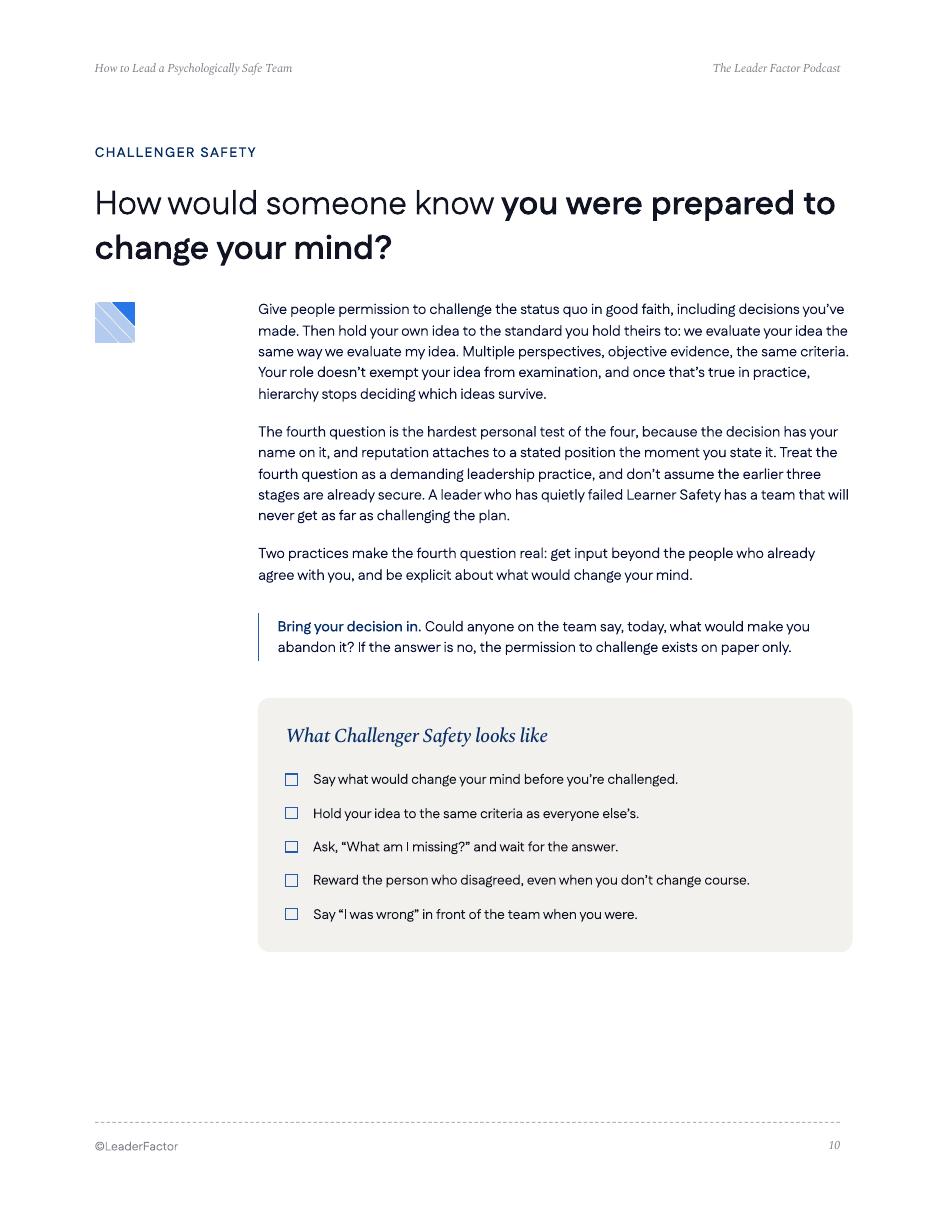
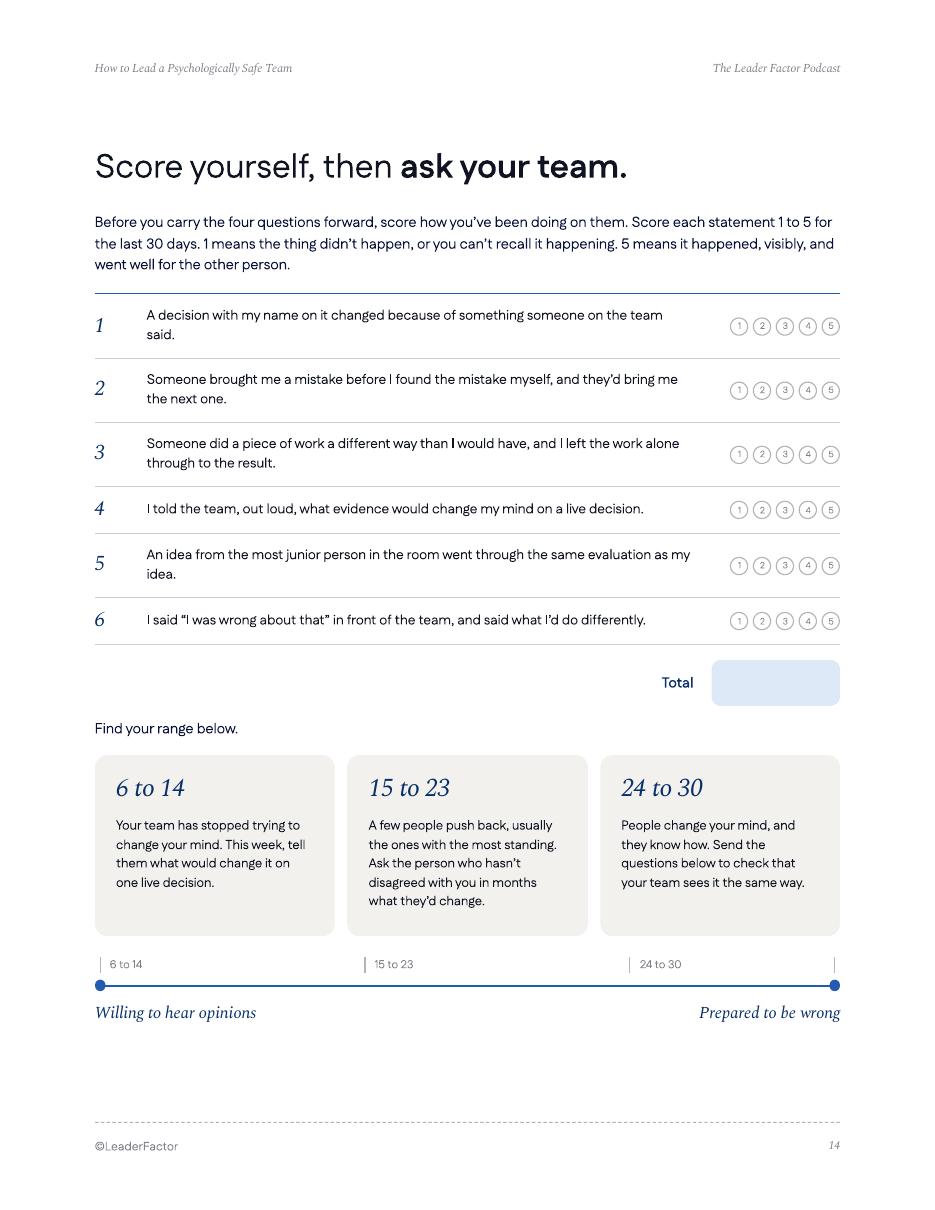
This guide is the companion to the episode with Dr. Timothy R. Clark and Junior. You write your decision down on page 2 and carry it through four questions, one for each stage of psychological safety, with the five behaviors that show each stage is real. Then you score yourself on the last 30 days and send four questions to your team to find out whether they see it the same way.
What’s inside
- The spectrum. Willing to hear opinions at one end, prepared to be wrong at the other. Mark where you sit on the decision you wrote down.
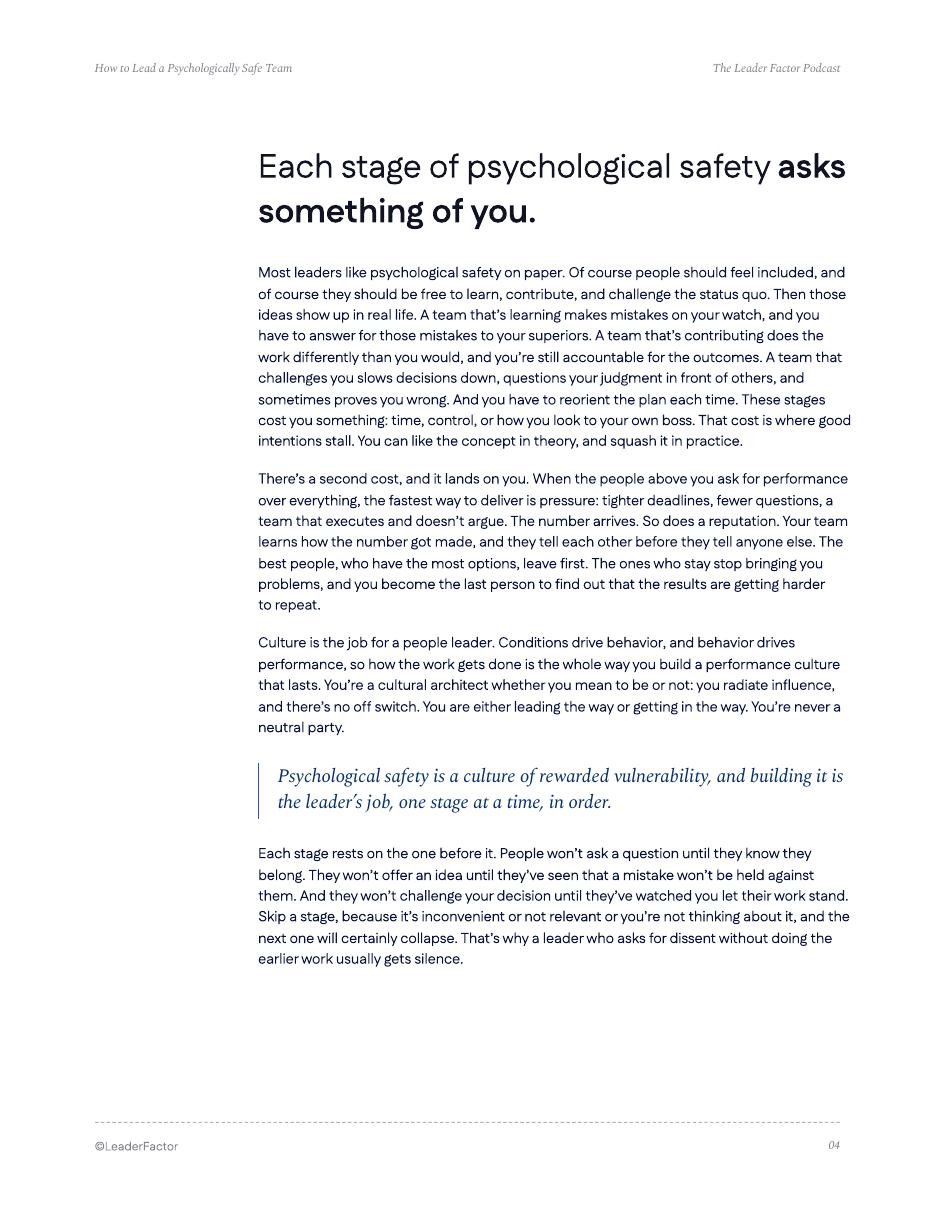
- What each stage asks of you. Why the stages cost you time, control, or how you look to your boss, and why that cost is where good intentions stall.
- The four questions. One page per stage, each with a “bring your decision in” prompt and a five-behavior panel to circle.
- Get input beyond the people who already agree. A table of seven perspectives: where to find them and what to ask.
- Name the evidence before it arrives. Seven kinds of evidence a team member can bring, and how you test each one.
- The 30-day self-score. Six statements, your range, and what to do this week in each band.
- Then ask your team. Four direct messages, one per stage, to copy and send.
Get the guide.
How to Lead a Psychologically Safe Team: 4 Questions to Start With