








The five moves that lower the cost of speaking up, the data showing challenger safety is the lowest stage in 99.3% of organizations, and a five-day practice with a self-check to tell whether it's working.
What’s inside
Every organization says it wants a speak-up culture. Almost none of them are willing to pay the price of one, so they pay the price of silence instead. This isn’t a motivation problem: when an employee weighs whether to challenge the status quo, they’re running a risk calculation, and under most conditions the calculation returns the same answer — stay quiet. This companion guide to the podcast episode with Dr. Tim Clark and Junior treats speaking up as an engineering problem. There are exactly two options: employees pay the cost of speaking up, or leaders reduce it. The guide is about the second option — what it costs you, what it looks like in your calendar and your language, and how to tell within a week whether it’s working.
What’s inside
- Why silence is rational — personal risk beats institutional risk every time, which is why “have the courage to speak up” fails as a strategy.
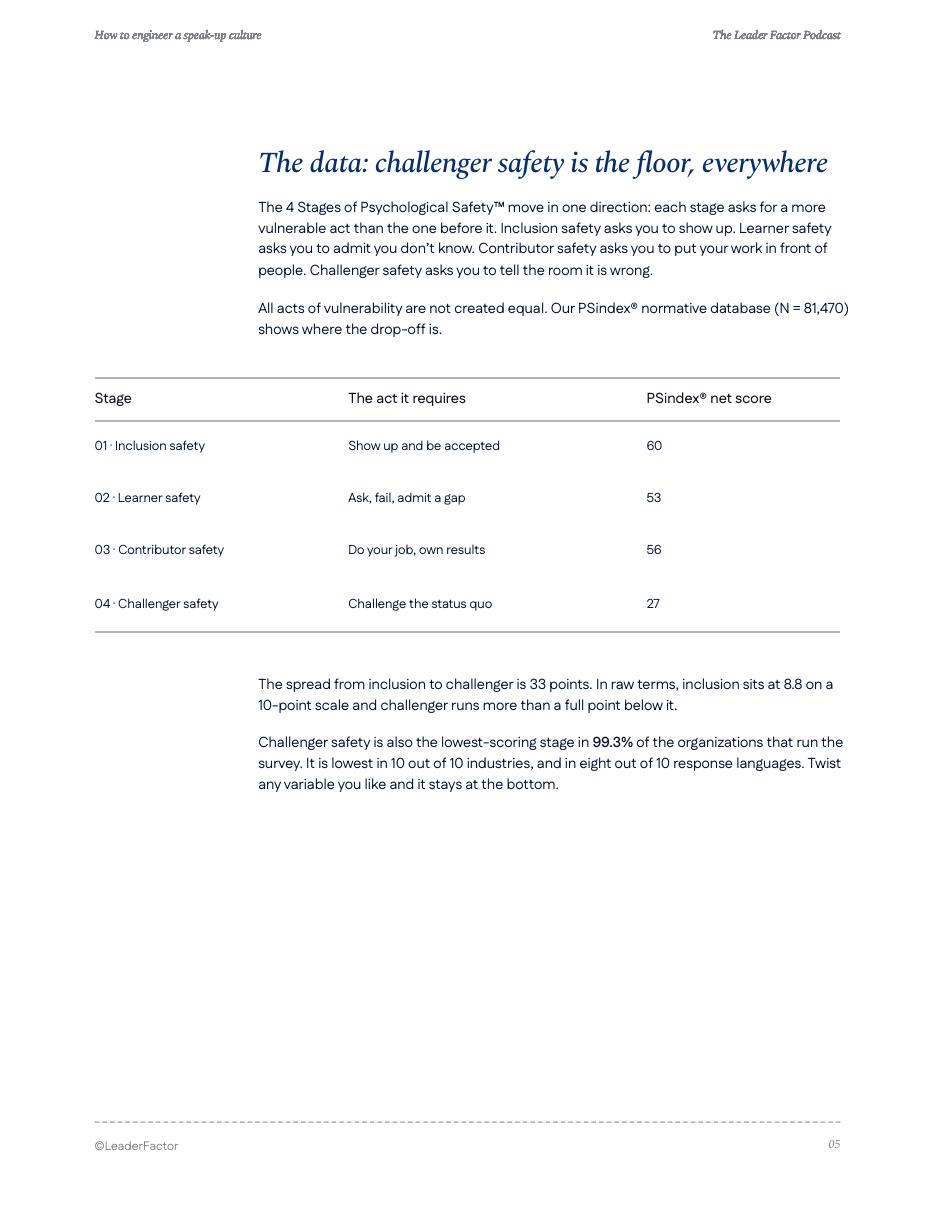
- The data — across 81,470 PSindex® responses, challenger safety is the lowest-scoring stage in 99.3% of organizations, 33 points below inclusion.
- The A-player exit — why the people with the highest drive to challenge leave first when the cost gets too high, with a 2×2 to map your own team.
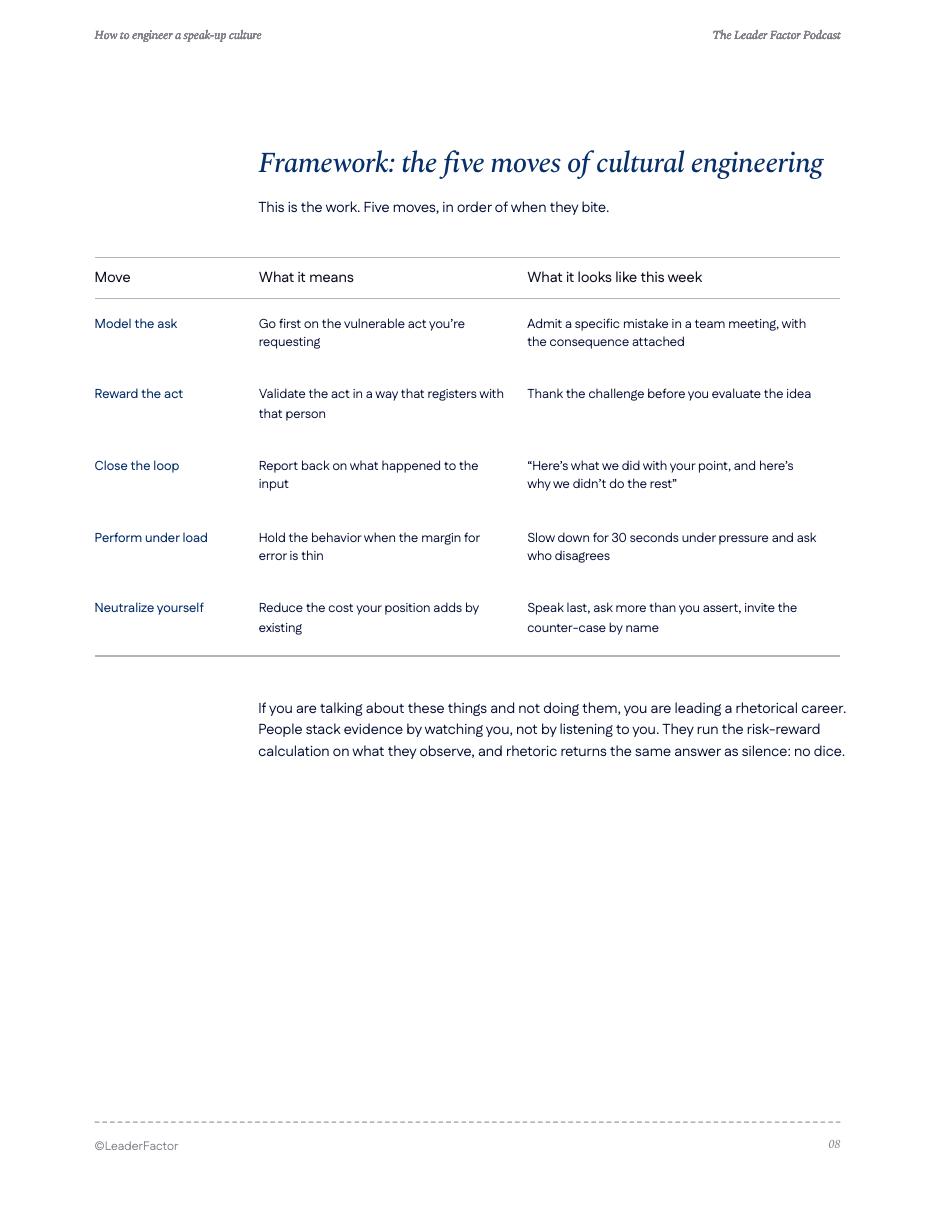
- The five moves of cultural engineering — model the ask, reward the act, close the loop, perform under load, neutralize yourself — each with what it looks like this week.
- The language table — what to say instead of “good point, but…” so the person reads their act as validated rather than tolerated.
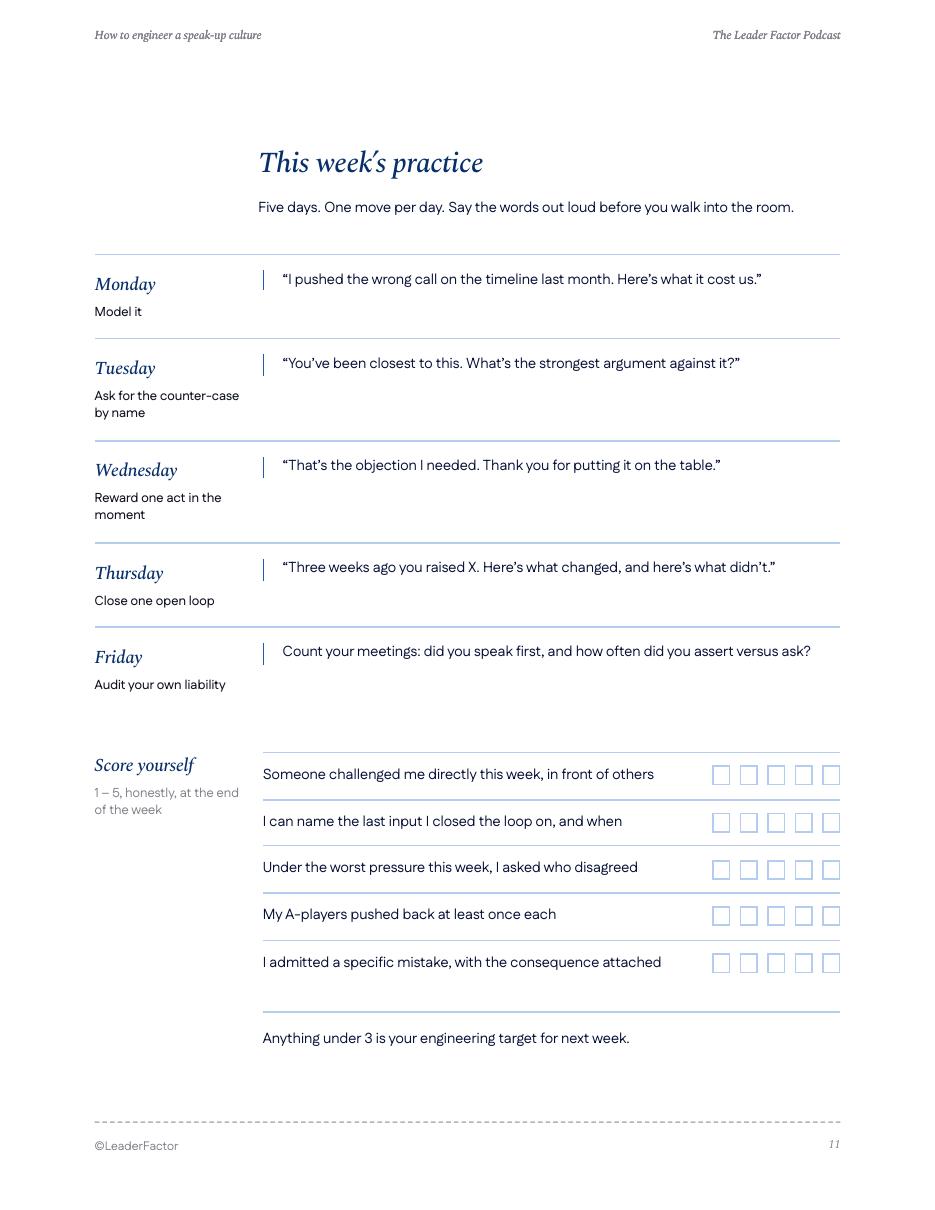
- This week’s practice — five days, one move per day, plus a five-line self-check; anything under 3 is your engineering target for next week.
Get the guide.
How to Engineer a Speak-Up Culture