Skip to content
Book 2nd edition

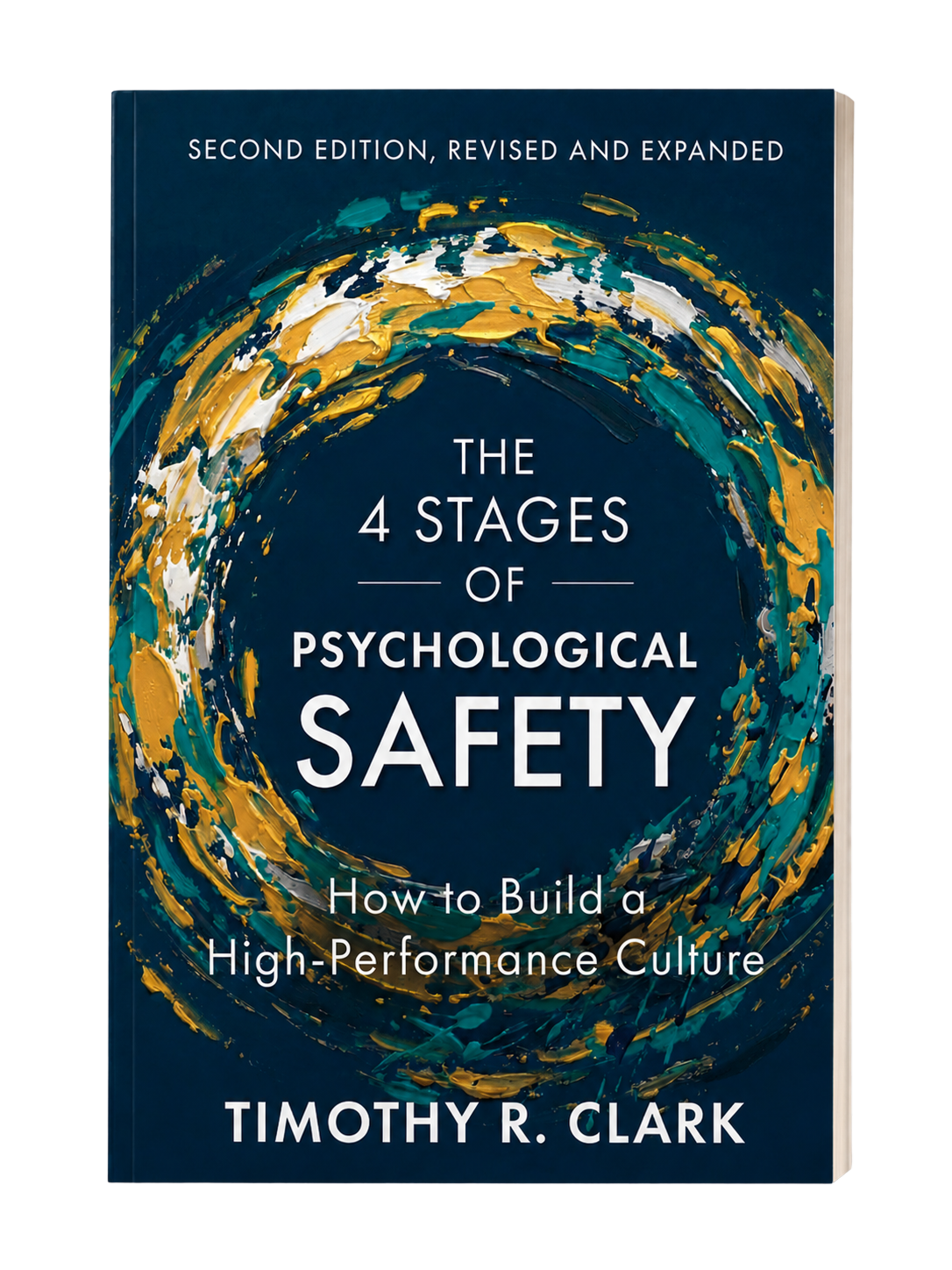
The 4 Stages of Psychological Safety

How to Build a High-Performance Culture

The definitive, fully revised guide to building psychological safety on purpose. This expanded second edition of Dr. Timothy R. Clark's bestseller shows leaders how to create an environment where people feel included, safe to learn, free to contribute, and empowered to challenge the status quo — the four stages every high-performing team moves through.

Edition
Second edition
Publisher
Berrett-Koehler
Format
Paperback · eBook · Audiobook
Framework
The 4 Stages of Psychological Safety™

A framework focused on human needs.

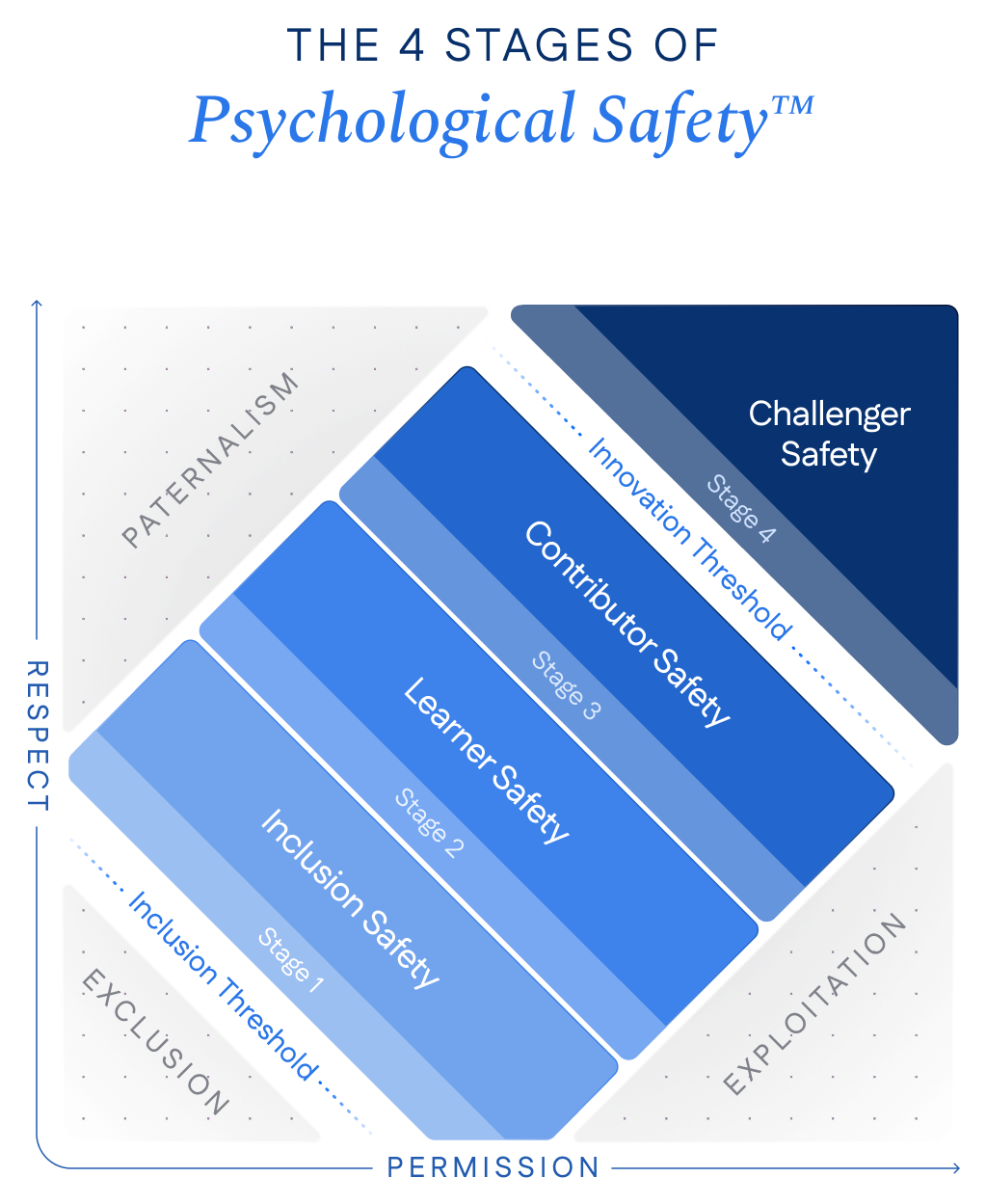
Psychological safety is a culture of rewarded vulnerability, built on two drivers — respect and permission. As both increase, a team climbs four sequential stages, moving from inclusion all the way to innovation. Each stage meets a deeper human need and runs on a simple social exchange.

The 4 Stages of Psychological Safety — a respect-and-permission model that rises from exclusion through inclusion, learner, contributor, and challenger safety.
  1. 01

    Inclusion safety · Can I be my authentic self?

    The need to connect and belong. You're accepted for who you are — your unique attributes and defining characteristics. It's not expensive to be yourself.

    Social exchange Inclusion in exchange for being human and harmless

  2. 02

    Learner safety · Can I learn and grow?

    The need to learn and develop mastery. You feel safe to ask questions, give and take feedback, experiment, and make mistakes as part of the learning process.

    Social exchange Encouragement in exchange for engagement

  3. 03

    Contributor safety · Can I make a difference?

    The need to contribute with autonomy. You're trusted to use your skills to do meaningful work with appropriate independence, guidance, and support.

    Social exchange Autonomy in exchange for results

  4. 04

    Challenger safety · Can I challenge the status quo?

    The need to make things better. You feel safe to dissent and challenge the status quo in good faith — high intellectual friction, low social friction — without fear of reprisal.

    Social exchange Air cover in exchange for candor

The 10 outcomes

Safety is an independent variable.

As an independent variable, psychological safety correlates moderately or strongly with ten distinct outcomes — and increasing it sets off a cascade that reaches far beyond the team where it started.

  1. 01 Customer experience
  2. 02 Inclusion
  3. 03 Mental health & wellness
  4. 04 Engagement
  5. 05 Physical safety
  6. 06 Resilience
  7. 07 Learning agility
  8. 08 Retention
  9. 09 Productivity
  10. 10 Innovation
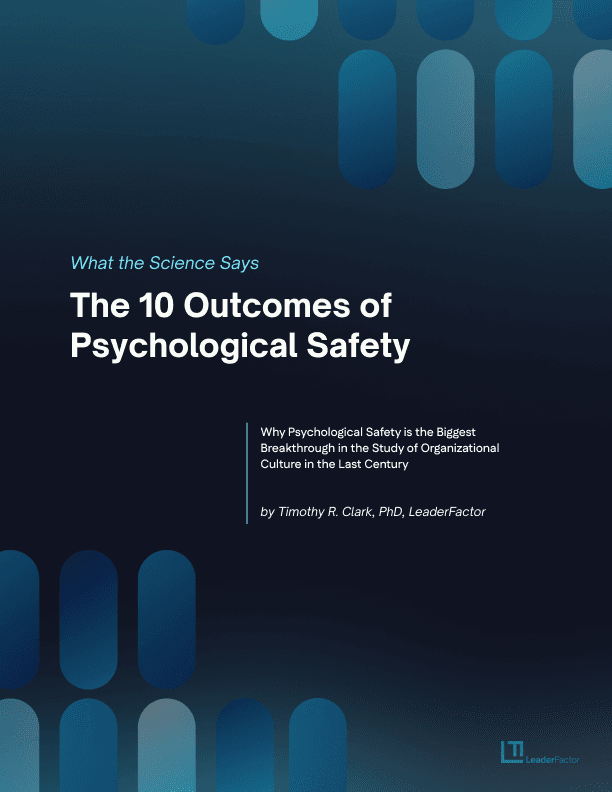
The 10 outcomes of psychological safety cover
Free guide

See the data behind the ten.

The research behind each outcome, the correlation strengths, and where to look for the return — in one free download.

Get the free guide

What's new

Revised, expanded, and battle-tested.

Since the first edition, hundreds of thousands of leaders have put the 4 Stages to work. The second edition folds in what they learned — new research, new stories, and sharper tools.

  • Updated research and data on how psychological safety drives performance, learning, and innovation.
  • New case studies and examples from leaders who have applied the framework across industries.
  • Expanded, practical guidance for building each stage in hybrid and distributed teams.
  • Refined tools, reflection questions, and behavioral cues to move from concept to action.
  • A clearer through-line from the framework to measurement — knowing where a team is stuck and what to do next.

Breakthroughs in every relationship of your life.

This is not just a book, it is an urgent invitation to the kind of rigorous self-examination that will lead to breakthroughs in every relationship of your life. Timothy Clark offers us both a case for and a path to creating the kind of healthy social systems that all of us crave and that modern corporate flourishing demands.

Joseph Grenny · Co-author, Crucial Conversations

Dr. Timothy R. Clark
Meet the author

Dr. Timothy R. Clark

Founder & CEO, LeaderFactor

Timothy R. Clark is the founder and CEO of LeaderFactor, a global consulting, training, and assessment organization focused on leadership, culture, and change. An organizational anthropologist, Dr. Clark is an international authority on psychological safety and innovation, large-scale change and transformation, and senior leadership development. He has personally advised more than 300 executive teams around the world.

With a PhD in social science from the University of Oxford, Dr. Clark is the author of five books, including his bestseller, The 4 Stages of Psychological Safety. He has written more than 200 articles in publications such as the Harvard Business Review, Forbes, and Fast Company, and was a Fulbright Scholar.

His mantra to leaders is, “Lead as if you have no power.”

What readers say

Praise from the field.

“The 4 Stages framework is exceptionally insightful and perfectly logical. With the ongoing diversification of the workplace, Clark's defined path to inclusion and innovation can't be ignored. This book showed me how to improve my performance as both a team member and leader. ”
Martin Shell VP at Stanford University
“As a person responsible for the development of employees in 65 countries, I can tell you that this book outlines a must-have culture. A safe space is table stakes for any organization looking to attract and retain talent and innovate from every chair. A powerful call to action. ”
Simone Ciafardini VP, Clinique Global Education
Preorder

Preorder the second edition.

Available August 18th — reserve your copy now.
Beyond the book

Bring the framework to your team.

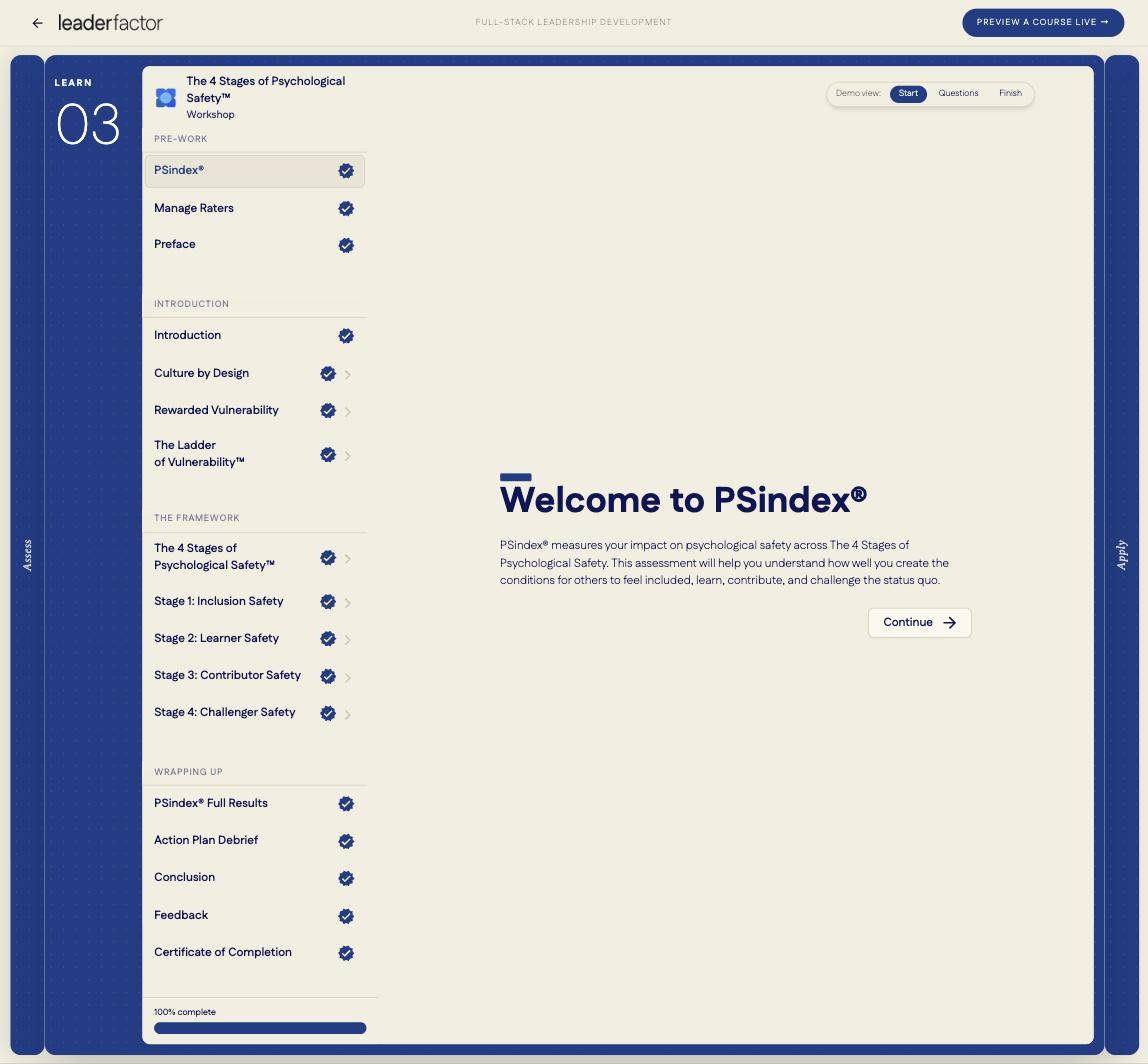
The 4 Stages course on the LeaderFactor learning platform.
The course

The 4 Stages of Psychological Safety™

Move your team from inclusion to innovation across four sequential stages.

Explore the course

About The 4 Stages of Psychological Safety

What is The 4 Stages of Psychological Safety about?
It's Dr. Timothy R. Clark's practical guide to building psychological safety on purpose. It lays out four sequential stages — inclusion safety, learner safety, contributor safety, and challenger safety — that teams move through as members feel safe to belong, learn, contribute, and challenge the status quo.
How is the second edition different from the first?
The second edition is revised and expanded with updated research, new case studies, additional guidance for hybrid and distributed teams, and refined tools for putting each stage into practice. The core 4 Stages framework is unchanged. (See "What's new" above.)
Do I need the book to run the framework with my team?
No — the book is the foundation, and the LeaderFactor course brings the framework to your teams with a validated assessment, a shared language, and a cohort experience. Many leaders start with the book and then roll out the course.

Build a culture where people feel safe to contribute.

Start with the book, then bring the framework to your teams.