Free guide
See the data behind the ten.
The research behind each outcome, the correlation strengths, and where to look for the return — in one free download.
Get the free guide
 The 4 Stages of Psychological Safety™
  The 6 Domains of Emotional Intelligence™
  Coaching & Accountability Matrix™
  EPIC Change & Transformation™
  DECIDER Critical Thinking™
  Team Cohesion & Performance™
  Leading Through AI™
 How to Build a High-Performance Culture
The definitive, fully revised guide to building psychological safety on purpose. This expanded second edition of Dr. Timothy R. Clark's bestseller shows leaders how to create an environment where people feel included, safe to learn, free to contribute, and empowered to challenge the status quo — the four stages every high-performing team moves through.
Psychological safety is a culture of rewarded vulnerability, built on two drivers — respect and permission. As both increase, a team climbs four sequential stages, moving from inclusion all the way to innovation. Each stage meets a deeper human need and runs on a simple social exchange.
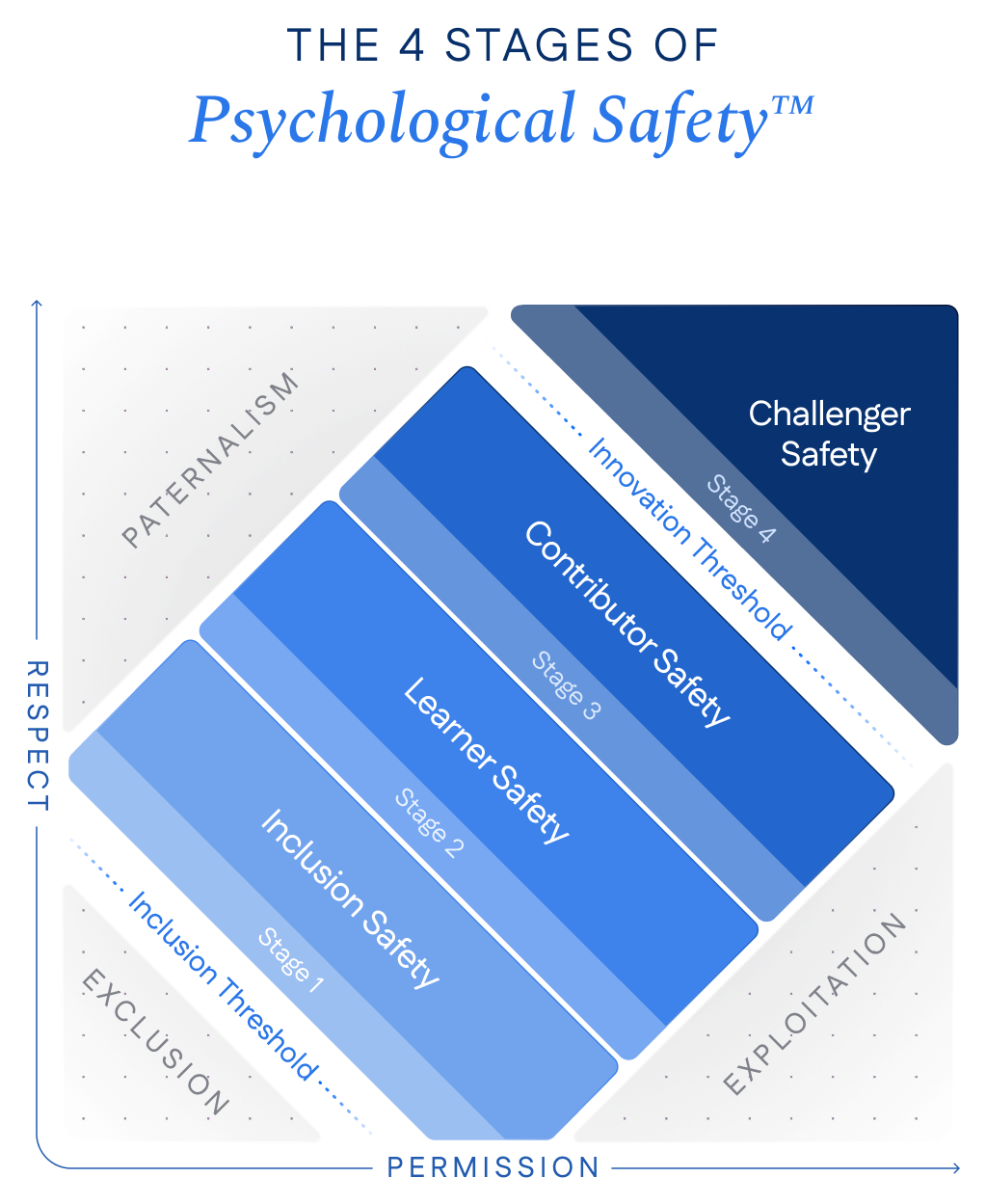
The need to connect and belong. You're accepted for who you are — your unique attributes and defining characteristics. It's not expensive to be yourself.
Social exchange Inclusion in exchange for being human and harmless
The need to learn and develop mastery. You feel safe to ask questions, give and take feedback, experiment, and make mistakes as part of the learning process.
Social exchange Encouragement in exchange for engagement
The need to contribute with autonomy. You're trusted to use your skills to do meaningful work with appropriate independence, guidance, and support.
Social exchange Autonomy in exchange for results
The need to make things better. You feel safe to dissent and challenge the status quo in good faith — high intellectual friction, low social friction — without fear of reprisal.
Social exchange Air cover in exchange for candor
As an independent variable, psychological safety correlates moderately or strongly with ten distinct outcomes — and increasing it sets off a cascade that reaches far beyond the team where it started.
The research behind each outcome, the correlation strengths, and where to look for the return — in one free download.
Get the free guideSince the first edition, hundreds of thousands of leaders have put the 4 Stages to work. The second edition folds in what they learned — new research, new stories, and sharper tools.
Breakthroughs in every relationship of your life.
This is not just a book, it is an urgent invitation to the kind of rigorous self-examination that will lead to breakthroughs in every relationship of your life. Timothy Clark offers us both a case for and a path to creating the kind of healthy social systems that all of us crave and that modern corporate flourishing demands.
Joseph Grenny · Co-author, Crucial Conversations

“The 4 Stages framework is exceptionally insightful and perfectly logical. With the ongoing diversification of the workplace, Clark's defined path to inclusion and innovation can't be ignored. This book showed me how to improve my performance as both a team member and leader. ”
“As a person responsible for the development of employees in 65 countries, I can tell you that this book outlines a must-have culture. A safe space is table stakes for any organization looking to attract and retain talent and innovate from every chair. A powerful call to action. ”
Available now — get your copy.
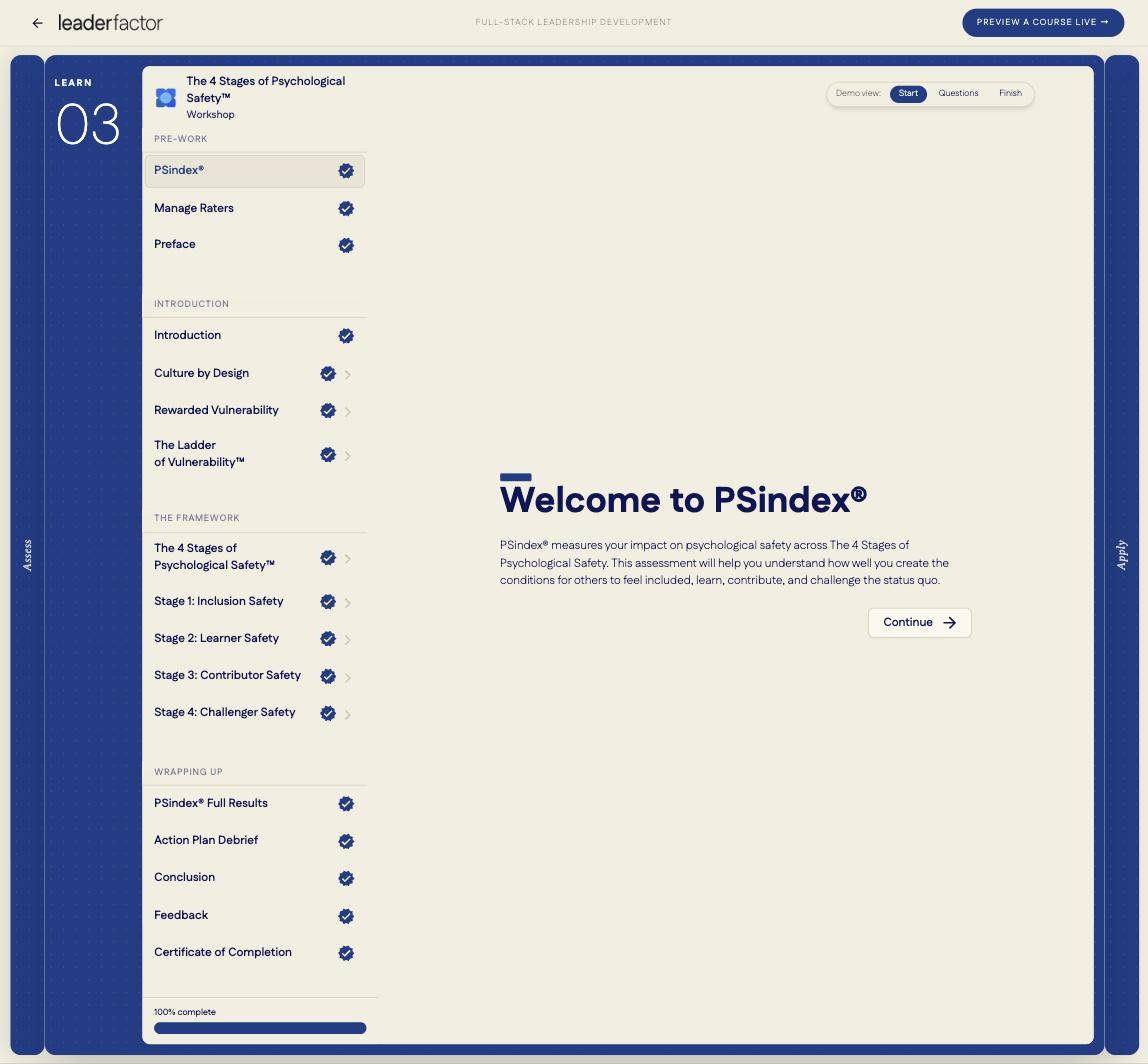
Move your team from inclusion to innovation across four sequential stages.
Explore the courseStart with the book, then bring the framework to your teams.